
如何使用 Kotlin 在 Android 中监听 WebView 完成 URL 加载?
kotlin apps/applicationsmobile developmentandroid
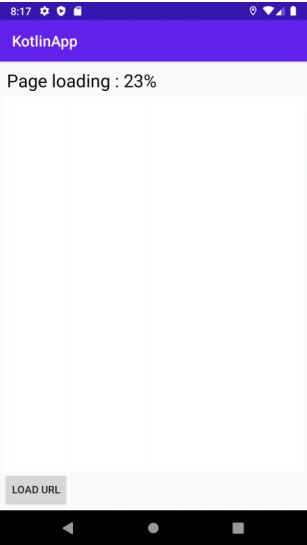
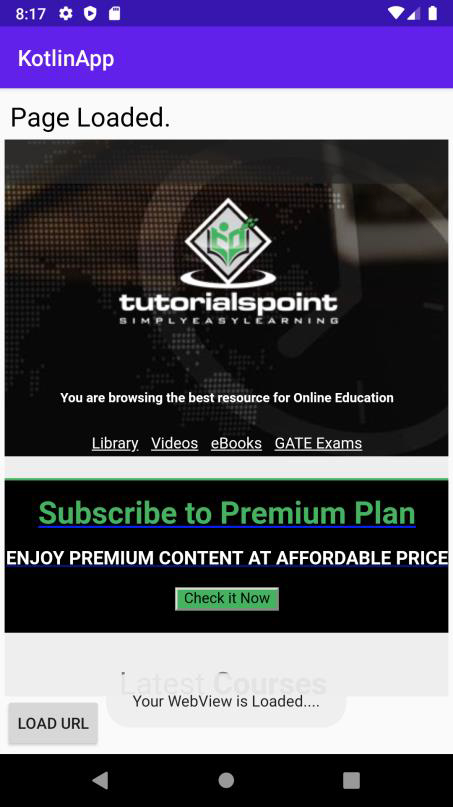
本示例演示如何使用 Kotlin 在 Android 中监听 WebView 完成 URL 加载。
步骤 1 - 在 Android Studio 中创建一个新项目,依次点击"文件">"新建项目",并填写所有必需信息以创建一个新项目。
步骤 2 - 将以下代码添加到 res/layout/activity_main.xml 文件中。
<?xml version="1.0" encoding="utf-8"?>
<RelativeLayout xmlns:android="http://schemas.android.com/apk/res/android"
   xmlns:tools="http://schemas.android.com/tools"
   android:layout_width="match_parent"
   android:layout_height="match_parent"
   android:padding="4dp"
   tools:context=".MainActivity">
   <TextView
      android:id="@+id/textView"
      android:layout_width="wrap_content"
      android:layout_height="wrap_content"
      android:padding="5dp"
      android:textColor="#000000"
      android:textSize="24sp" />
   <WebView
      android:id="@+id/webView"
      android:layout_width="match_parent"
      android:layout_height="match_parent"
      android:layout_above="@id/btnLoad"
      android:layout_below="@id/textView" />
   <Button
      android:id="@+id/btnLoad"
      android:layout_width="wrap_content"
      android:layout_height="wrap_content"
      android:layout_alignParentBottom="true"
      android:text="Load URL" />
</RelativeLayout>
步骤 3 − 将以下代码添加到 src/MainActivity.kt
import android.os.Bundle
import android.webkit.WebChromeClient
import android.webkit.WebView
import android.webkit.WebViewClient
import android.widget.Button
import android.widget.TextView
import android.widget.Toast
import androidx.appcompat.app.AppCompatActivity
class MainActivity : AppCompatActivity() {
   lateinit var webView: WebView
   lateinit var textView: TextView
   private lateinit var btnLoad: Button
   override fun onCreate(savedInstanceState: Bundle?) {
      super.onCreate(savedInstanceState)
      setContentView(R.layout.activity_main)
      title = "KotlinApp"
      textView = findViewById(R.id.textView)
      btnLoad = findViewById(R.id.btnLoad)
      webView = findViewById(R.id.webView)
      webView.webViewClient = WebViewClient()
      btnLoad.setOnClickListener {
         webView.webViewClient = object : WebViewClient() {
            override fun onPageFinished(view: WebView, weburl: String) {
               Toast.makeText(this@MainActivity, "Your WebView is Loaded....",
               Toast.LENGTH_LONG).show()
            }
         }
         webView.webChromeClient = object : WebChromeClient() {
            override fun onProgressChanged(view: WebView, newProgress: Int) {
               textView.text = "Page loading : $newProgress%"
               if (newProgress == 100) {
                  textView.text = "Page Loaded."
               }
            }
         }
         webView.loadUrl("https://www.tutorialspoint.com")
      }
   }
}
步骤 4 − 将以下代码添加到 androidManifest.xml
<?xml version="1.0" encoding="utf-8"?>
<manifest xmlns:android="http://schemas.android.com/apk/res/android" package="com.example.q11">
   <uses-permission android:name="android.permission.INTERNET" />
   <application
      android:allowBackup="true"
      android:icon="@mipmap/ic_launcher"
      android:label="@string/app_name"
      android:roundIcon="@mipmap/ic_launcher_round"
      android:supportsRtl="true"
      android:theme="@style/AppTheme">
      <activity android:name=".MainActivity">
         <intent-filter>
            <action android:name="android.intent.action.MAIN" />
            <category android:name="android.intent.category.LAUNCHER" />
         </intent-filter>
      </activity>
   </application>
</manifest>
让我们尝试运行您的应用程序。我假设您已将 Android 移动设备连接到计算机。要从 Android Studio 运行应用程序,请打开项目中的一个 Activity 文件,然后单击工具栏中的"运行"图标  。选择您的移动设备作为选项,然后选中您的移动设备,它将显示您的默认屏幕。
相关文章
打印
下一节:如何使用 Kotlin 在 Android 中以编程方式获取设备的 IMEI/ESN? ❯❮ 上一节:如何在 Android Kotlin 中使用 InputFilter 限制 EditText 中的字符数?