
如何在 Android 应用中显示通知数量?
androidapps/applicationsmobile development
此示例演示了如何在 Android 应用启动器中显示通知数量。
步骤 1 − 在 Android Studio 中创建一个新项目,前往"文件"->"新建项目",并填写所有必填信息以创建新项目。
步骤 2 − 将以下代码添加到 res/layout/activity_main.xml。
<?xml version="1.0" encoding="utf-8"?>
<RelativeLayout xmlns:android="http://schemas.android.com/apk/res/android"
   xmlns:app="http://schemas.android.com/apk/res-auto"
   xmlns:tools="http://schemas.android.com/tools"
   android:layout_width="match_parent"
   android:layout_height="match_parent"
   android:padding = "16dp"
   tools:context=".MainActivity">
   <Button
      android:onClick = "createNotification"
      android:text = "create notification"
      android:layout_centerInParent = "true"
      android:layout_width = "match_parent"
      android:layout_height = "wrap_content" />
</RelativeLayout>
步骤 3 − 将以下代码添加到 src/MainActivity.java
package com.app.sample;
import androidx.appcompat.app.AppCompatActivity;
import androidx.core.app.NotificationCompat;
import android.annotation.SuppressLint;
import android.os.Bundle;
import android.app.NotificationChannel ;
import android.app.NotificationManager ;
import android.app.PendingIntent ;
import android.content.Intent ;
import android.os.Bundle ;
import android.view.View ;
import static android.app.Notification. BADGE_ICON_SMALL ;
public class MainActivity extends AppCompatActivity {
   static int count = 0 ;
   public static final String NOTIFICATION_CHANNEL_ID = "10001" ;
   private final static String default_notification_channel_id = "default" ;
   @Override
   protected void onResume () {
      super .onResume() ;
      count = 0 ;
   }
   @Override
   protected void onCreate(Bundle savedInstanceState) {
      super.onCreate(savedInstanceState);
      setContentView(R.layout.activity_main);
   }
   @SuppressLint("WrongConstant")
      public void createNotification (View view) {
      count ++ ;
      Intent notificationIntent = new Intent(getApplicationContext() , MainActivity.class ) ;
      notificationIntent.putExtra( "fromNotification" , true ) ;
      notificationIntent.setFlags(Intent. FLAG_ACTIVITY_CLEAR_TOP | Intent. FLAG_ACTIVITY_SINGLE_TOP ) ;
      PendingIntent pendingIntent = PendingIntent. getActivity ( this, 0 , notificationIntent , 0 ) ;
      NotificationManager mNotificationManager = (NotificationManager) getSystemService( NOTIFICATION_SERVICE ) ;
      NotificationCompat.Builder mBuilder = new NotificationCompat.Builder(getApplicationContext() , default_notification_channel_id ) ;
      mBuilder.setContentTitle( "My Notification" ) ;
      mBuilder.setContentIntent(pendingIntent) ;
      mBuilder.setContentText( "Notification Listener Service Example" ) ;
      mBuilder.setSmallIcon(R.drawable. ic_launcher_foreground ) ;
      mBuilder.setAutoCancel( true ) ;
      mBuilder.setBadgeIconType( BADGE_ICON_SMALL ) ;
      mBuilder.setNumber( count ) ;
      if (android.os.Build.VERSION. SDK_INT >= android.os.Build.VERSION_CODES. O ) {
         int importance = NotificationManager. IMPORTANCE_HIGH ;
         NotificationChannel notificationChannel = new NotificationChannel( NOTIFICATION_CHANNEL_ID , "NOTIFICATION_CHANNEL_NAME" , importance) ;
         mBuilder.setChannelId( NOTIFICATION_CHANNEL_ID ) ;
         assert mNotificationManager != null;
         mNotificationManager.createNotificationChannel(notificationChannel) ;
      }
      assert mNotificationManager != null;
      mNotificationManager.notify(( int ) System. currentTimeMillis () ,
      mBuilder.build()) ;
   }
}
步骤 4 − 将以下代码添加到 Manifests/AndroidManifest.xml
<?xml version="1.0" encoding="utf-8"?>
<manifest xmlns:android="http://schemas.android.com/apk/res/android"
   package="com.app.sample">
   <uses-permission
      android:name="android.permission.VIBRATE" />
   <uses-permission
      android:name = "android.permission.RECEIVE_BOOT_COMPLETED" />
   <application android:allowBackup="true"
      android:icon="@mipmap/ic_launcher"
      android:label="@string/app_name"
      android:roundIcon="@mipmap/ic_launcher_round"
      android:supportsRtl="true"
      android:theme="@style/AppTheme">
      <activity android:name=".MainActivity">
         <intent-filter>
            <action android:name="android.intent.action.MAIN" />
            <category android:name="android.intent.category.LAUNCHER" />
         </intent-filter>
      </activity>
   </application>
</manifest>
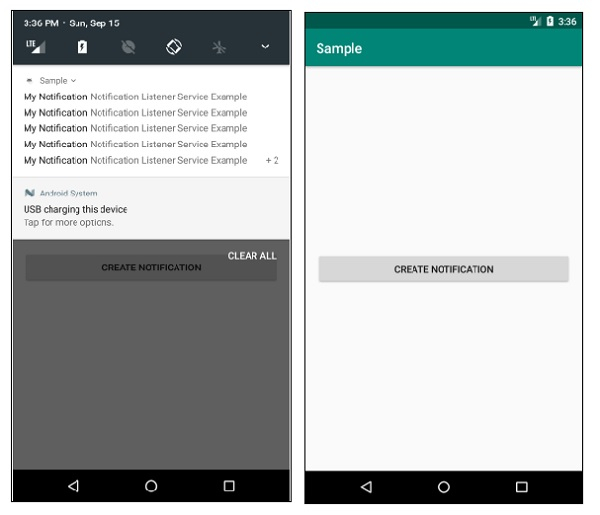
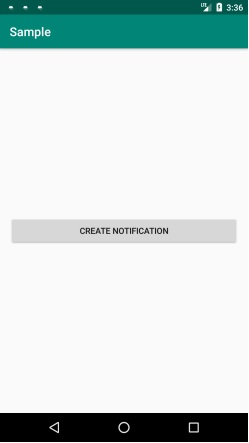
让我们尝试运行您的应用程序。假设您已将实际的 Android 移动设备连接到电脑。要从 Android Studio 运行该应用程序,请打开项目的某个 Activity 文件,然后点击工具栏上的"运行" 图标。选择您的移动设备作为选项,然后检查您的移动设备是否显示您的默认屏幕 −
点击此处下载项目代码。

