Java RMI 应用程序
要编写 RMI Java 应用程序,您必须遵循以下步骤 −
- 定义远程接口
- 开发实现类(远程对象)
- 开发服务器程序
- 开发客户端程序
- 编译应用程序
- 执行应用程序
定义远程接口
远程接口提供特定远程对象的所有方法的描述。 客户端与此远程接口进行通信。
创建远程接口 −
创建一个扩展属于包的预定义接口Remote的接口。
在此接口中声明客户端可以调用的所有业务方法。
由于远程调用时有可能出现网络问题,可能会出现名为RemoteException的异常。
以下是远程接口的示例。 这里我们定义了一个名为 Hello 的接口,它有一个名为 printMsg() 的方法。
import java.rmi.Remote;
import java.rmi.RemoteException;

// Creating Remote interface for our application
public interface Hello extends Remote {
   void printMsg() throws RemoteException;
}
开发实现类(远程对象)
我们需要实现在前面步骤中创建的远程接口。 (我们可以单独写一个实现类,也可以直接让服务端程序实现这个接口。)
开发一个实现类−
- 实现上一步中创建的接口。
- 为远程接口的所有抽象方法提供实现。
下面是一个实现类。 在这里,我们创建了一个名为 ImplExample 的类,并实现了上一步中创建的接口 Hello ,并为此方法提供了 body 来打印消息 。
// Implementing the remote interface
public class ImplExample implements Hello {

   // Implementing the interface method
   public void printMsg() {
      System.out.println("This is an example RMI program");
   }
}
开发服务器程序
RMI服务器程序应该实现远程接口或扩展实现类。 在这里,我们应该创建一个远程对象并将其绑定到RMIregistry。
开发服务器程序 −
创建一个要调用远程对象的客户端类。
通过实例化实现类来创建远程对象,如下所示。
使用属于 java.rmi.server 包的 UnicastRemoteObject 类的方法 exportObject() 导出远程对象。
使用属于 java.rmi.registry 包的 LocateRegistry 类的 getRegistry() 方法获取 RMI 注册表。
使用名为 Registry 的类的 bind() 方法将创建的远程对象绑定到注册表。 向此方法传递一个表示绑定名称和导出对象的字符串作为参数。
以下是 RMI 服务器程序的示例。
import java.rmi.registry.Registry;
import java.rmi.registry.LocateRegistry;
import java.rmi.RemoteException;
import java.rmi.server.UnicastRemoteObject;

public class Server extends ImplExample {
   public Server() {}
   public static void main(String args[]) {
      try {
         // Instantiating the implementation class
         ImplExample obj = new ImplExample();

         // Exporting the object of implementation class
         // (here we are exporting the remote object to the stub)
         Hello stub = (Hello) UnicastRemoteObject.exportObject(obj, 0);

         // Binding the remote object (stub) in the registry
         Registry registry = LocateRegistry.getRegistry();

         registry.bind("Hello", stub);
         System.err.println("Server ready");
      } catch (Exception e) {
         System.err.println("Server exception: " + e.toString());
         e.printStackTrace();
      }
   }
}
开发客户端程序
在其中编写客户端程序,获取远程对象并使用该对象调用所需的方法。
开发客户端程序 −
从您打算调用远程对象的位置创建一个客户端类。
使用属于 java.rmi.registry 包的 LocateRegistry 类的 getRegistry() 方法获取 RMI 注册表。
使用属于java.rmi.registry包的Registry类的方法lookup()从注册表中获取对象。
对于此方法,您需要将表示绑定名称的字符串值作为参数传递。 这将返回远程对象。
lookup() 返回一个远程类型的对象,将其向下转换为 Hello 类型。
最后使用获得的远程对象调用所需的方法。
以下是 RMI 客户端程序的示例。
import java.rmi.registry.LocateRegistry;
import java.rmi.registry.Registry;

public class Client {
   private Client() {}
   public static void main(String[] args) {
      try {
         // Getting the registry
         Registry registry = LocateRegistry.getRegistry(null);

         // Looking up the registry for the remote object
         Hello stub = (Hello) registry.lookup("Hello");

         // Calling the remote method using the obtained object
         stub.printMsg();

         // System.out.println("Remote method invoked");
      } catch (Exception e) {
         System.err.println("Client exception: " + e.toString());
         e.printStackTrace();
      }
   }
}
编译应用程序
编译应用程序 −
- 编译远程接口。
- 编译实现类。
- 编译服务器程序。
- 编译客户端程序。
或者,
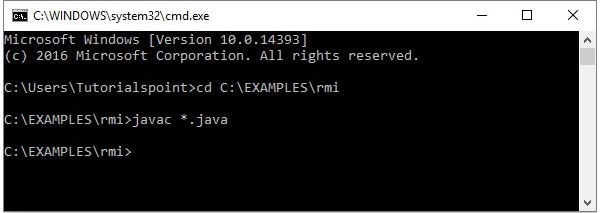
打开存储所有程序的文件夹并编译所有 Java 文件,如下所示。
Javac *.java
执行应用程序
步骤 1 − 使用以下命令启动 rmi 注册表。
start rmiregistry
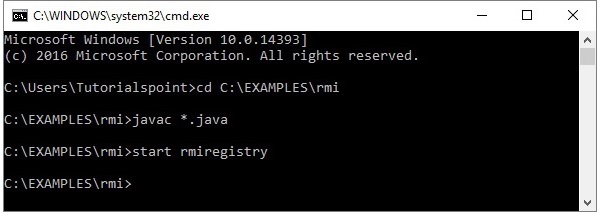
这将在单独的窗口上启动 rmi 注册表,如下所示。
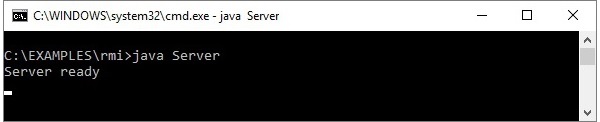
第 2 步 − 运行服务器类文件,如下所示。
Java Server
第 3 步 − 运行客户端类文件,如下所示。
java Client
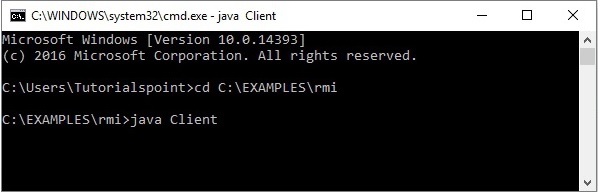
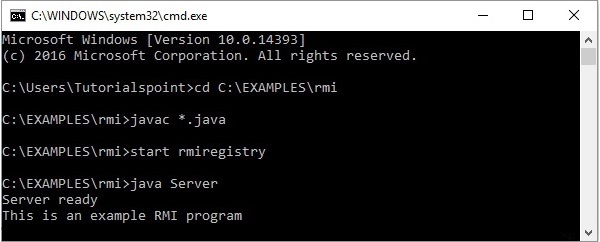
验证 − 一旦启动客户端,您就会在服务器中看到以下输出。