
AVL 树
第一种发明的自平衡二叉搜索树是 AVL 树。AVL 树的名称取自其发明者 Adelson-Velsky 和 Landis 的名字。
在 AVL 树中,左右子树的高度差(称为平衡因子)必须最大为 1。一旦差值超过 1,树就会自动执行平衡算法,直到差值再次变为 1。
平衡因子 =
高度(左子树) - 高度(右子树)
AVL 树的平衡算法中通常有四种旋转情况:LL、RR、LR、RL。
LL 旋转
当节点插入右子树导致树不平衡时,会执行 LL 旋转。这是一个简单的左旋转,可以使树再次平衡 −
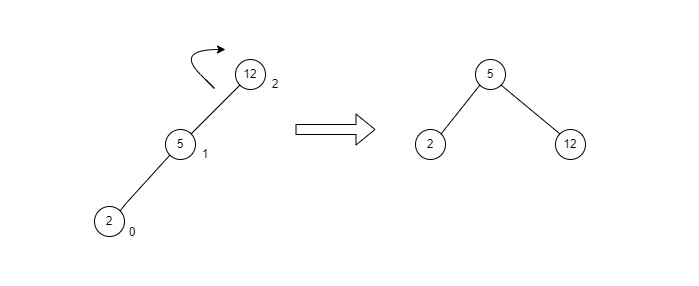
图:LL 旋转
发生不平衡的节点将成为左子树,新添加的节点将成为右子树,中间节点将成为父节点。
RR 旋转
当节点插入左子树导致树不平衡时,会执行 RR 旋转。这是一个单次右旋转,可以使树再次平衡 −
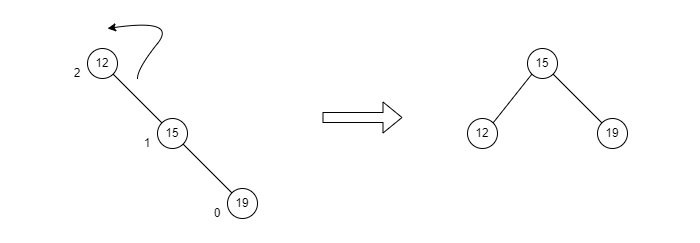
图:RR 旋转
发生不平衡的节点将成为右子节点,新添加的节点将成为左子节点,中间节点将成为父节点。
LR 旋转
LR 旋转是之前单次旋转的扩展版本,也称为双旋转。当将节点插入左子树的右子树时,会执行此操作。LR 旋转是左旋转和右旋转的组合。执行此操作需要遵循多个步骤。
考虑一个示例,其中"A"为根节点,"B"为"A"的左子节点,"C"为"B"的右子节点。
由于不平衡发生在 A 处,因此对 A 的子节点(即 B 和 C)进行左旋转。
旋转后,C 节点成为 A 的左子节点,B 成为 C 的左子节点。
不平衡仍然存在,因此对根节点 A 和左子节点 C 进行右旋转。
最终右旋转后,C 成为根节点,A 成为右子节点,B 成为左子节点。
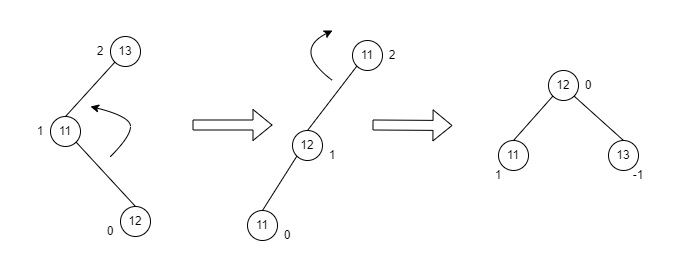
图:LR 旋转
RL 旋转
RL 旋转也是之前单旋转的扩展版本,因此它被称为双旋转,当一个节点插入到右子树的左子树时,就会执行双旋转。RL 旋转是右旋转和左旋转的组合。要执行此操作,需要遵循多个步骤。
考虑一个示例,其中"A"为根节点,"B"为"A"的右子节点,"C"为"B"的左子节点。
由于不平衡发生在 A 处,因此对 A 的子节点(即 B 和 C)进行右旋转。
旋转后,C 节点成为 A 的右子节点,B 成为 C 的右子节点。
不平衡仍然存在,因此对根节点 A 和右子节点 C 进行左旋转。
最后一次左旋转后,C 成为根节点,A 成为左子节点,B 成为右子节点。
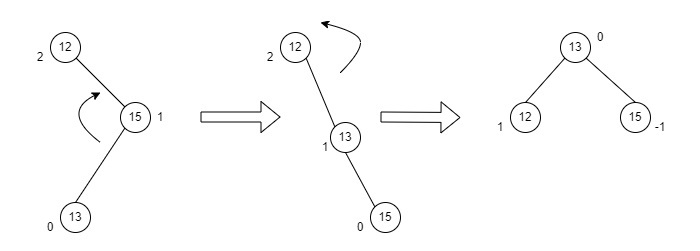
图:RL 旋转
AVL 树的基本操作
AVL 树结构上执行的基本操作包括二叉搜索树上执行的所有操作,因为 AVL 树的核心实际上就是一棵保留其所有属性的二叉搜索树。因此,AVL 树上执行的基本操作包括 − 插入 和 删除。
插入操作
数据插入 AVL 树遵循二叉搜索树的插入属性,即左子树必须包含小于根值的元素,右子树必须包含所有大于根值的元素。
然而,在 AVL 树中,每次插入元素后都会检查树的平衡因子;如果平衡因子不超过 1,则保持树的平衡。如果平衡因子超过 1,则会应用平衡算法重新调整树,使平衡因子再次小于或等于 1。
算法执行 AVL 树的插入操作涉及以下步骤 −
步骤 1 − 创建一个节点
步骤 2 − 检查树是否为空
步骤 3 − 如果树为空,则创建的新节点将成为 AVL 树的根节点。
步骤 4 − 如果树不为空,我们执行二叉搜索树的插入操作,并检查该节点在树中的平衡因子。
步骤 5 −假设平衡因子超过±1,我们对该节点进行适当的
旋转,并从步骤4继续插入操作。
通过构建一个包含1到7个整数的示例AVL树来理解插入操作。
从第一个元素1开始,创建一个节点并测量其平衡度,即0。

由于二分查找属性和平衡因子都满足,我们将另一个元素插入树中。
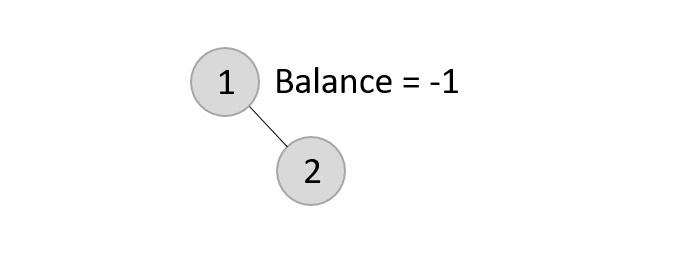
计算两个节点的平衡因子,发现其为-1(左子树的高度为0,右子树的高度为1)。由于它不超过 1,我们向树中添加另一个元素。
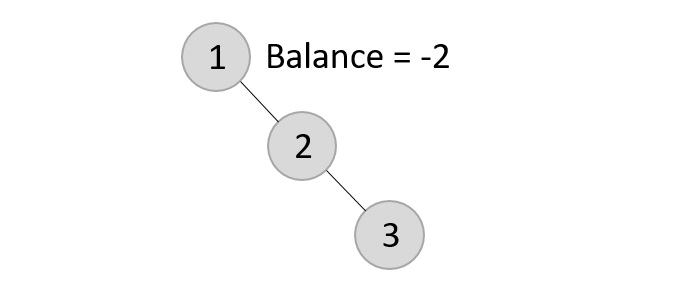
现在,添加第三个元素后,平衡因子超过 1,变为 2。因此,需要进行旋转。在本例中,由于不平衡发生在两个右侧节点,因此应用了 RR 旋转。
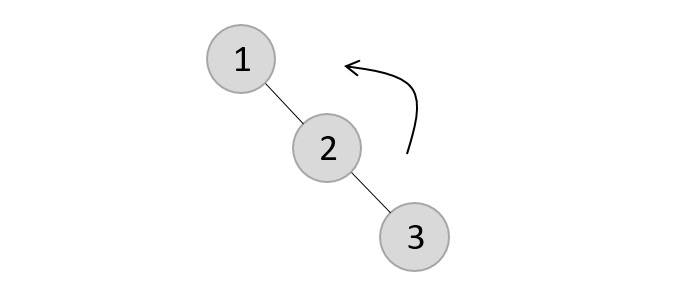
树被重新排列为 −
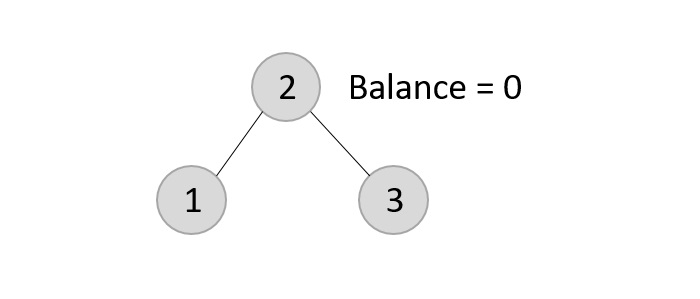
同样,插入下一个元素并使用这些旋转重新排列。重新排列后,我们得到的树为 −
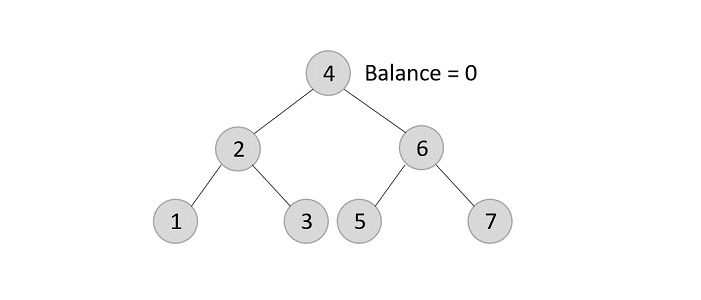 示例
示例
以下是此操作在各种编程语言中的实现 −
#include <stdio.h>
#include <stdlib.h>
struct Node {
   int data;
   struct Node *leftChild;
   struct Node *rightChild;
   int height;
};
int max(int a, int b);
int height(struct Node *N){
   if (N == NULL)
      return 0;
   return N->height;
}
int max(int a, int b){
   return (a > b) ? a : b;
}
struct Node *newNode(int data){
   struct Node *node = (struct Node *) malloc(sizeof(struct Node));
   node->data = data;
   node->leftChild = NULL;
   node->rightChild = NULL;
   node->height = 1;
   return (node);
}
struct Node *rightRotate(struct Node *y){
   struct Node *x = y->leftChild;
   struct Node *T2 = x->rightChild;
   x->rightChild = y;
   y->leftChild = T2;
   y->height = max(height(y->leftChild), height(y->rightChild)) + 1;
   x->height = max(height(x->leftChild), height(x->rightChild)) + 1;
   return x;
}
struct Node *leftRotate(struct Node *x){
   struct Node *y = x->rightChild;
   struct Node *T2 = y->leftChild;
   y->leftChild = x;
   x->rightChild = T2;
   x->height = max(height(x->leftChild), height(x->rightChild)) + 1;
   y->height = max(height(y->leftChild), height(y->rightChild)) + 1;
   return y;
}
int getBalance(struct Node *N){
   if (N == NULL)
      return 0;
   return height(N->leftChild) - height(N->rightChild);
}
struct Node *insertNode(struct Node *node, int data){
   if (node == NULL)
      return (newNode(data));
   if (data < node->data)
      node->leftChild = insertNode(node->leftChild, data);
   else if (data > node->data)
      node->rightChild = insertNode(node->rightChild, data);
   else
      return node;
   node->height = 1 + max(height(node->leftChild),
                     height(node->rightChild));
   int balance = getBalance(node);
   if (balance > 1 && data < node->leftChild->data)
      return rightRotate(node);
   if (balance < -1 && data > node->rightChild->data)
      return leftRotate(node);
   if (balance > 1 && data > node->leftChild->data) {
      node->leftChild = leftRotate(node->leftChild);
      return rightRotate(node);
   }
   if (balance < -1 && data < node->rightChild->data) {
      node->rightChild = rightRotate(node->rightChild);
      return leftRotate(node);
   }
   return node;
}
struct Node *minValueNode(struct Node *node){
   struct Node *current = node;
   while (current->leftChild != NULL)
      current = current->leftChild;
   return current;
}
void printTree(struct Node *root){
   if (root == NULL)
      return;
   if (root != NULL) {
      printTree(root->leftChild);
      printf("%d ", root->data);
      printTree(root->rightChild);
   }
}
int main(){
   struct Node *root = NULL;
   root = insertNode(root, 22);
   root = insertNode(root, 14);
   root = insertNode(root, 72);
   root = insertNode(root, 44);
   root = insertNode(root, 25);
   root = insertNode(root, 63);
   root = insertNode(root, 98);
   printf("AVL Tree: ");
   printTree(root);
   return 0;
}
输出
AVL Tree: 14 22 25 44 63 72 98
#include <iostream>
struct Node {
   int data;
   struct Node *leftChild;
   struct Node *rightChild;
   int height;
};
int max(int a, int b);
int height(struct Node *N){
   if (N == NULL)
      return 0;
   return N->height;
}
int max(int a, int b){
   return (a > b) ? a : b;
}
struct Node *newNode(int data){
   struct Node *node = (struct Node *) malloc(sizeof(struct Node));
   node->data = data;
   node->leftChild = NULL;
   node->rightChild = NULL;
   node->height = 1;
   return (node);
}
struct Node *rightRotate(struct Node *y){
   struct Node *x = y->leftChild;
   struct Node *T2 = x->rightChild;
   x->rightChild = y;
   y->leftChild = T2;
   y->height = max(height(y->leftChild), height(y->rightChild)) + 1;
   x->height = max(height(x->leftChild), height(x->rightChild)) + 1;
   return x;
}
struct Node *leftRotate(struct Node *x){
   struct Node *y = x->rightChild;
   struct Node *T2 = y->leftChild;
   y->leftChild = x;
   x->rightChild = T2;
   x->height = max(height(x->leftChild), height(x->rightChild)) + 1;
   y->height = max(height(y->leftChild), height(y->rightChild)) + 1;
   return y;
}
int getBalance(struct Node *N){
   if (N == NULL)
      return 0;
   return height(N->leftChild) - height(N->rightChild);
}
struct Node *insertNode(struct Node *node, int data){
   if (node == NULL)
      return (newNode(data));
   if (data < node->data)
      node->leftChild = insertNode(node->leftChild, data);
   else if (data > node->data)
      node->rightChild = insertNode(node->rightChild, data);
   else
      return node;
   node->height = 1 + max(height(node->leftChild),
                     height(node->rightChild));
   int balance = getBalance(node);
   if (balance > 1 && data < node->leftChild->data)
      return rightRotate(node);
   if (balance < -1 && data > node->rightChild->data)
      return leftRotate(node);
   if (balance > 1 && data > node->leftChild->data) {
      node->leftChild = leftRotate(node->leftChild);
      return rightRotate(node);
   }
   if (balance < -1 && data < node->rightChild->data) {
      node->rightChild = rightRotate(node->rightChild);
      return leftRotate(node);
   }
   return node;
}
struct Node *minValueNode(struct Node *node){
   struct Node *current = node;
   while (current->leftChild != NULL)
      current = current->leftChild;
   return current;
}
void printTree(struct Node *root){
   if (root == NULL)
      return;
   if (root != NULL) {
      printTree(root->leftChild);
      printf("%d ", root->data);
      printTree(root->leftChild);
   }
}
int main(){
   struct Node *root = NULL;
   root = insertNode(root, 22);
   root = insertNode(root, 14);
   root = insertNode(root, 72);
   root = insertNode(root, 44);
   root = insertNode(root, 25);
   root = insertNode(root, 63);
   root = insertNode(root, 98);
   printf("AVL Tree: ");
   printTree(root);
   return 0;
}
输出
AVL Tree: 14 22 14 44 14 22 14
import java.util.*;
import java.io.*;
class Node {
   int key, height;
   Node left, right;
   Node (int d) {
      key = d;
      height = 1;
   }
}
public class AVLTree {
   Node root;
   int height (Node N) {
      if (N == null)
         return 0;
      return N.height;
   }
   int max (int a, int b) {
      return (a > b) ? a : b;
   }
   Node rightRotate (Node y) {
      Node x = y.left;
      Node T2 = x.right;
      x.right = y;
      y.left = T2;
      y.height = max (height (y.left), height (y.right)) + 1;
      x.height = max (height (x.left), height (x.right)) + 1;
      return x;
   }
   Node leftRotate (Node x) {
      Node y = x.right;
      Node T2 = y.left;
      y.left = x;
      x.right = T2;
      x.height = max (height (x.left), height (x.right)) + 1;
      y.height = max (height (y.left), height (y.right)) + 1;
      return y;
   }
   int getBalance (Node N) {
      if (N == null)
         return 0;
      return height (N.left) - height (N.right);
   }
   Node insert (Node node, int key) {
      if (node == null)
         return (new Node (key));
      if (key < node.key)
         node.left = insert (node.left, key);
      else if (key > node.key)
         node.right = insert (node.right, key);
      else
         return node;
      node.height = 1 + max (height (node.left), height (node.right));
      int balance = getBalance (node);
      if (balance > 1 && key < node.left.key)
         return rightRotate (node);
      if (balance < -1 && key > node.right.key)
         return leftRotate (node);
      if (balance > 1 && key > node.left.key) {
         node.left = leftRotate (node.left);
         return rightRotate (node);
      }
      if (balance < -1 && key < node.right.key) {
         node.right = rightRotate (node.right);
         return leftRotate (node);
      }
      return node;
   }
   void printTree(Node root){
   if (root == null)
      return;
   if (root != null) {
      printTree(root.left);
      System.out.print(root.key + " ");
      printTree(root.left);
   }
}
   public static void main(String args[]) {
      AVLTree tree = new AVLTree();

      tree.root = tree.insert(tree.root, 10);
      tree.root = tree.insert(tree.root, 11);
      tree.root = tree.insert(tree.root, 12);
      tree.root = tree.insert(tree.root, 13);
      tree.root = tree.insert(tree.root, 14);
      tree.root = tree.insert(tree.root, 15);
      System.out.println("AVL Tree: ");
      tree.printTree(tree.root);

   }
}
输出
AVL Tree:
10 11 10 13 10 11 10
class Node(object):
   def __init__(self, data):
      self.data = data
      self.left = None
      self.right = None
      self.height = 1
class AVLTree(object):
   def insert(self, root, key):
      if not root:
         return Node(key)
      elif key < root.data:
         root.left = self.insert(root.left, key)
      else:
         root.right = self.insert(root.right, key)
      root.h = 1 + max(self.getHeight(root.left),
         self.getHeight(root.right))
      b = self.getBalance(root)
      if b > 1 and key < root.left.data:
         return self.rightRotate(root)
      if b < -1 and key > root.right.data:
         return self.leftRotate(root)
      if b > 1 and key > root.left.data:
         root.left = self.lefttRotate(root.left)
         return self.rightRotate(root)
      if b < -1 and key < root.right.data:
         root.right = self.rightRotate(root.right)
         return self.leftRotate(root)
      return root
   def leftRotate(self, z):
      y = z.right
      T2 = y.left
      y.left = z
      z.right = T2
      z.height = 1 + max(self.getHeight(z.left),
         self.getHeight(z.right))
      y.height = 1 + max(self.getHeight(y.left),
         self.getHeight(y.right))
      return y
   def rightRotate(self, z):
      y = z.left
      T3 = y.right
      y.right = z
      z.left = T3
      z.height = 1 + max(self.getHeight(z.left),
         self.getHeight(z.right))
      y.height = 1 + max(self.getHeight(y.left),
         self.getHeight(y.right))
      return y
   def getHeight(self, root):
      if not root:
         return 0
      return root.height
   def getBalance(self, root):
      if not root:
         return 0
      return self.getHeight(root.left) - self.getHeight(root.right)
   def Inorder(self, root):
      if root.left:
         self.Inorder(root.left)
      print(root.data)
      if root.right:
         self.Inorder(root.right)
Tree = AVLTree()
root = None

root = Tree.insert(root, 10)
root = Tree.insert(root, 13)
root = Tree.insert(root, 11)
root = Tree.insert(root, 14)
root = Tree.insert(root, 12)
root = Tree.insert(root, 15)

# 中序遍历
print("Inorder traversal of the AVL tree is")
Tree.Inorder(root)
输出
Inorder traversal of the AVL tree is
10
11
12
13
14
15
删除操作
AVL 树中的删除操作有三种不同的场景 −
场景 1(删除叶子节点) − 如果要删除的节点是叶子节点,则直接删除,无需替换,因为这不会破坏二叉搜索树的性质。但是,平衡因子可能会受到干扰,因此需要进行旋转操作来恢复平衡因子。
场景 2(删除只有一个子节点的节点) − 如果要删除的节点只有一个子节点,则将该节点的值替换为其子节点的值。然后删除该子节点。如果平衡因子受到干扰,则需要进行旋转操作。
场景 3(删除有两个子节点的节点) −如果待删除节点有两个子节点,则找到该节点的中序后继节点,并将其值替换为中序后继节点的值。然后尝试删除该中序后继节点。如果删除后平衡因子超过 1,则应用平衡算法。
使用上面给出的同一棵树,让我们在三种情况下执行删除操作 −
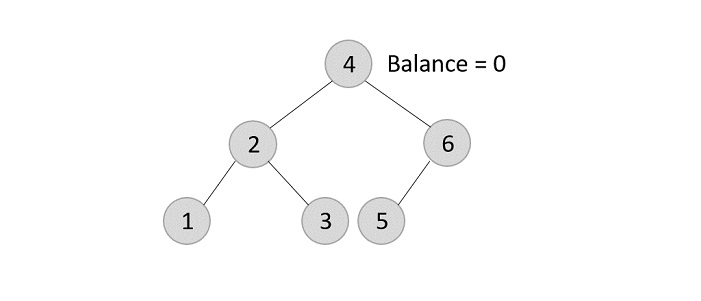
从上面的树中删除元素 7 −
由于元素 7 是叶子节点,我们通常会在不干扰树中任何其他节点的情况下删除该元素。
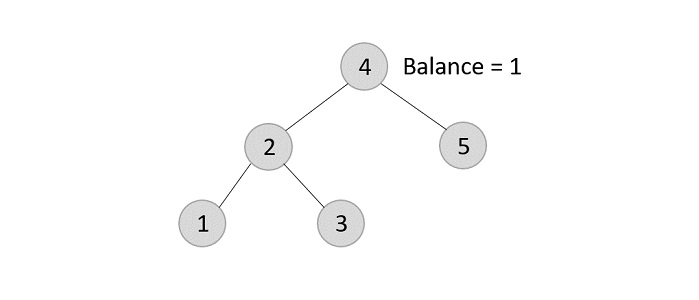
从输出树中删除元素 6 达到 −
但是,元素 6 不是叶节点,并且有一个子节点附加到它的节点。在本例中,我们将节点 6 替换为其子节点:节点 5。
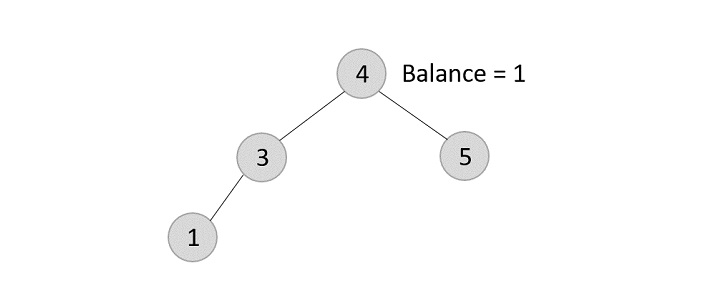
树的平衡度变为 1,由于它不超过 1,因此树保持原样。如果我们进一步删除元素 5,则必须应用左旋转;由于不平衡发生在路径 1-2-4 和 3-2-4 上,因此要么是 LL 旋转,要么是 LR 旋转。
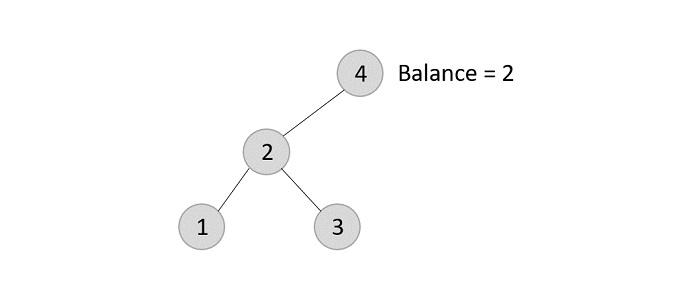
删除元素 5 后,平衡因子被打乱,因此我们应用 LL 旋转(我们也可以在此处应用 LR 旋转)。
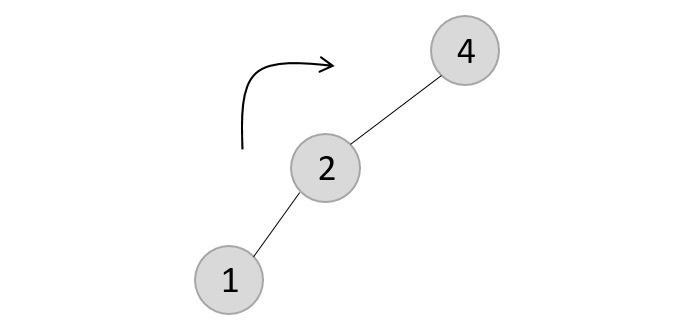
在路径 1-2-4 上应用 LL 旋转后,节点 3 仍然保持其应有的状态,即节点 2 的右子节点(现在由节点 4 占据)。因此,该节点被添加到节点 2 的右子树中,并作为节点 4 的左子节点。
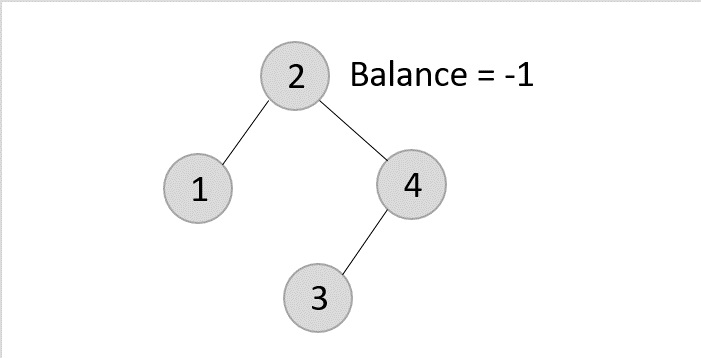
从剩余的树中删除元素 2 −
如场景 3 中所述,该节点有两个子节点。因此,我们找到它的中序后继,即一个叶节点(例如 3),并将其值替换为中序后继。
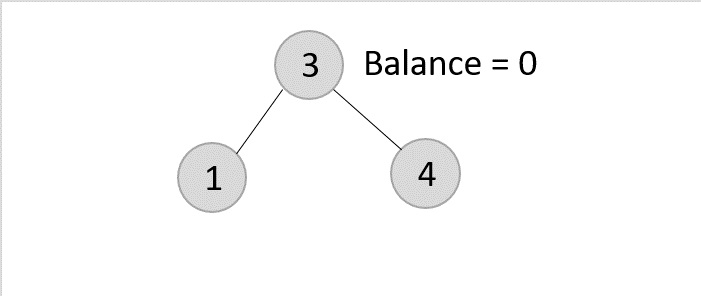
树的平衡值仍然为 1,因此我们保持树的原样,不进行任何旋转。
示例以下是此操作在各种编程语言中的实现 −
#include <stdio.h>
#include <stdlib.h>
struct Node {
   int data;
   struct Node *leftChild;
   struct Node *rightChild;
   int height;
};
int max(int a, int b);
int height(struct Node *N){
   if (N == NULL)
      return 0;
   return N->height;
}
int max(int a, int b){
   return (a > b) ? a : b;
}
struct Node *newNode(int data){
   struct Node *node = (struct Node *) malloc(sizeof(struct Node));
   node->data = data;
   node->leftChild = NULL;
   node->rightChild = NULL;
   node->height = 1;
   return (node);
}
struct Node *rightRotate(struct Node *y){
   struct Node *x = y->leftChild;
   struct Node *T2 = x->rightChild;
   x->rightChild = y;
   y->leftChild = T2;
   y->height = max(height(y->leftChild), height(y->rightChild)) + 1;
   x->height = max(height(x->leftChild), height(x->rightChild)) + 1;
   return x;
}
struct Node *leftRotate(struct Node *x){
   struct Node *y = x->rightChild;
   struct Node *T2 = y->leftChild;
   y->leftChild = x;
   x->rightChild = T2;
   x->height = max(height(x->leftChild), height(x->rightChild)) + 1;
   y->height = max(height(y->leftChild), height(y->rightChild)) + 1;
   return y;
}
int getBalance(struct Node *N){
   if (N == NULL)
      return 0;
   return height(N->leftChild) - height(N->rightChild);
}
struct Node *insertNode(struct Node *node, int data){
   if (node == NULL)
      return (newNode(data));
   if (data < node->data)
      node->leftChild = insertNode(node->leftChild, data);
   else if (data > node->data)
      node->rightChild = insertNode(node->rightChild, data);
   else
      return node;
   node->height = 1 + max(height(node->leftChild),
                     height(node->rightChild));
   int balance = getBalance(node);
   if (balance > 1 && data < node->leftChild->data)
      return rightRotate(node);
   if (balance < -1 && data > node->rightChild->data)
      return leftRotate(node);
   if (balance > 1 && data > node->leftChild->data) {
      node->leftChild = leftRotate(node->leftChild);
      return rightRotate(node);
   }
   if (balance < -1 && data < node->rightChild->data) {
      node->rightChild = rightRotate(node->rightChild);
      return leftRotate(node);
   }
   return node;
}
struct Node *minValueNode(struct Node *node){
   struct Node *current = node;
   while (current->leftChild != NULL)
      current = current->leftChild;
   return current;
}
struct Node *deleteNode(struct Node *root, int data){
   if (root == NULL)
      return root;
   if (data < root->data)
      root->leftChild = deleteNode(root->leftChild, data);
   else if (data > root->data)
      root->rightChild = deleteNode(root->rightChild, data);
   else {
      if ((root->leftChild == NULL) || (root->rightChild == NULL)) {
         struct Node *temp = root->leftChild ? root->leftChild : root->rightChild;
         if (temp == NULL) {
            temp = root;
            root = NULL;
         } else
            *root = *temp;
         free(temp);
      } else {
         struct Node *temp = minValueNode(root->rightChild);
         root->data = temp->data;
         root->rightChild = deleteNode(root->rightChild, temp->data);
      }
   }
   if (root == NULL)
      return root;
   root->height = 1 + max(height(root->leftChild),
                     height(root->rightChild));
   int balance = getBalance(root);
   if (balance > 1 && getBalance(root->leftChild) >= 0)
      return rightRotate(root);
   if (balance > 1 && getBalance(root->leftChild) < 0) {
      root->leftChild = leftRotate(root->leftChild);
      return rightRotate(root);
   }
   if (balance < -1 && getBalance(root->rightChild) <= 0)
      return leftRotate(root);
   if (balance < -1 && getBalance(root->rightChild) > 0) {
      root->rightChild = rightRotate(root->rightChild);
      return leftRotate(root);
   }
   return root;
}

// Print the tree
void printTree(struct Node *root){
   if (root != NULL) {
      printTree(root->leftChild);
      printf("%d ", root->data);
      printTree(root->rightChild);
   }
}
int main(){
   struct Node *root = NULL;
   root = insertNode(root, 22);
   root = insertNode(root, 14);
   root = insertNode(root, 72);
   root = insertNode(root, 44);
   root = insertNode(root, 25);
   root = insertNode(root, 63);
   root = insertNode(root, 98);
   printf("AVL Tree: ");
   printTree(root);
   root = deleteNode(root, 25);
   printf("
After deletion: ");
   printTree(root);
   return 0;
}
输出
AVL Tree: 14 22 25 44 63 72 98
After deletion: 14 22 44 63 72 98
#include <iostream>
struct Node {
   int data;
   struct Node *leftChild;
   struct Node *rightChild;
   int height;
};
int max(int a, int b);
int height(struct Node *N){
   if (N == NULL)
      return 0;
   return N->height;
}
int max(int a, int b){
   return (a > b) ? a : b;
}
struct Node *newNode(int data){
   struct Node *node = (struct Node *) malloc(sizeof(struct Node));
   node->data = data;
   node->leftChild = NULL;
   node->rightChild = NULL;
   node->height = 1;
   return (node);
}
struct Node *rightRotate(struct Node *y){
   struct Node *x = y->leftChild;
   struct Node *T2 = x->rightChild;
   x->rightChild = y;
   y->leftChild = T2;
   y->height = max(height(y->leftChild), height(y->rightChild)) + 1;
   x->height = max(height(x->leftChild), height(x->rightChild)) + 1;
   return x;
}
struct Node *leftRotate(struct Node *x){
   struct Node *y = x->rightChild;
   struct Node *T2 = y->leftChild;
   y->leftChild = x;
   x->rightChild = T2;
   x->height = max(height(x->leftChild), height(x->rightChild)) + 1;
   y->height = max(height(y->leftChild), height(y->rightChild)) + 1;
   return y;
}
int getBalance(struct Node *N){
   if (N == NULL)
      return 0;
   return height(N->leftChild) - height(N->rightChild);
}
struct Node *insertNode(struct Node *node, int data){
   if (node == NULL)
      return (newNode(data));
   if (data < node->data)
      node->leftChild = insertNode(node->leftChild, data);
   else if (data > node->data)
      node->rightChild = insertNode(node->rightChild, data);
   else
      return node;
   node->height = 1 + max(height(node->leftChild),
                     height(node->rightChild));
   int balance = getBalance(node);
   if (balance > 1 && data < node->leftChild->data)
      return rightRotate(node);
   if (balance < -1 && data > node->rightChild->data)
      return leftRotate(node);
   if (balance > 1 && data > node->leftChild->data) {
      node->leftChild = leftRotate(node->leftChild);
      return rightRotate(node);
   }
   if (balance < -1 && data < node->rightChild->data) {
      node->rightChild = rightRotate(node->rightChild);
      return leftRotate(node);
   }
   return node;
}
struct Node *minValueNode(struct Node *node){
   struct Node *current = node;
   while (current->leftChild != NULL)
      current = current->leftChild;
   return current;
}
struct Node *deleteNode(struct Node *root, int data){
   if (root == NULL)
      return root;
   if (data < root->data)
      root->leftChild = deleteNode(root->leftChild, data);
   else if (data > root->data)
      root->rightChild = deleteNode(root->rightChild, data);
   else {
      if ((root->leftChild == NULL) || (root->rightChild == NULL)) {
         struct Node *temp = root->leftChild ? root->leftChild : root->rightChild;
         if (temp == NULL) {
            temp = root;
            root = NULL;
         } else
            *root = *temp;
         free(temp);
      } else {
         struct Node *temp = minValueNode(root->rightChild);
         root->data = temp->data;
         root->rightChild = deleteNode(root->rightChild, temp->data);
      }
   }
   if (root == NULL)
      return root;
   root->height = 1 + max(height(root->leftChild),
                     height(root->rightChild));
   int balance = getBalance(root);
   if (balance > 1 && getBalance(root->leftChild) >= 0)
      return rightRotate(root);
   if (balance > 1 && getBalance(root->leftChild) < 0) {
      root->leftChild = leftRotate(root->leftChild);
      return rightRotate(root);
   }
   if (balance < -1 && getBalance(root->rightChild) <= 0)
      return leftRotate(root);
   if (balance < -1 && getBalance(root->rightChild) > 0) {
      root->rightChild = rightRotate(root->rightChild);
      return leftRotate(root);
   }
   return root;
}

// 打印树
void printTree(struct Node *root){
   if (root != NULL) {
      printTree(root->leftChild);
      printf("%d ", root->data);
      printTree(root->rightChild);
   }
}
int main(){
   struct Node *root = NULL;
   root = insertNode(root, 22);
   root = insertNode(root, 14);
   root = insertNode(root, 72);
   root = insertNode(root, 44);
   root = insertNode(root, 25);
   root = insertNode(root, 63);
   root = insertNode(root, 98);
   printf("AVL Tree: ");
   printTree(root);
   root = deleteNode(root, 25);
   printf("
After deletion: ");
   printTree(root);
   return 0;
}
输出
AVL Tree: 14 22 25 44 63 72 98
After deletion: 14 22 44 63 72 98
import java.util.*;
import java.io.*;
class Node {
   int key, height;
   Node left, right;
   Node (int d) {
      key = d;
      height = 1;
   }
}
public class AVLTree {
   Node root;
   int height (Node N) {
      if (N == null)
         return 0;
      return N.height;
   }
   int max (int a, int b) {
      return (a > b) ? a : b;
   }
   Node rightRotate (Node y) {
      Node x = y.left;
      Node T2 = x.right;
      x.right = y;
      y.left = T2;
      y.height = max (height (y.left), height (y.right)) + 1;
      x.height = max (height (x.left), height (x.right)) + 1;
      return x;
   }
   Node leftRotate (Node x) {
      Node y = x.right;
      Node T2 = y.left;
      y.left = x;
      x.right = T2;
      x.height = max (height (x.left), height (x.right)) + 1;
      y.height = max (height (y.left), height (y.right)) + 1;
      return y;
   }
   int getBalance (Node N) {
      if (N == null)
         return 0;
      return height (N.left) - height (N.right);
   }
   Node minValueNode (Node node) {
      Node current = node;
      while (current.left != null)
         current = current.left;
      return current;
   }
   Node deleteNode (Node root, int key) {
      if (root == null)
         return root;
      if (key < root.key)
         root.left = deleteNode (root.left, key);
      else if (key > root.key)
         root.right = deleteNode (root.right, key);
      else {
         if ((root.left == null) || (root.right == null)) {
            Node temp = null;
            if (temp == root.left)
               temp = root.right;
            else
               temp = root.left;
            if (temp == null) {
               temp = root;
               root = null;
            } else
               root = temp;
         } else {
            Node temp = minValueNode (root.right);
            root.key = temp.key;
            root.right = deleteNode (root.right, temp.key);
         }
      }
      if (root == null)
         return root;
      root.height = max (height (root.left), height (root.right)) + 1;
      int balance = getBalance (root);
      if (balance > 1 && getBalance (root.left) >= 0)
         return rightRotate (root);
      if (balance > 1 && getBalance (root.left) < 0) {
         root.left = leftRotate (root.left);
         return rightRotate (root);
      }
      if (balance < -1 && getBalance (root.right) <= 0)
         return leftRotate (root);
      if (balance < -1 && getBalance (root.right) > 0) {
         root.right = rightRotate (root.right);
         return leftRotate (root);
      }
      return root;
   }
   public void printTree(Node root) {
      if (root == null) return;
      printTree(root.left);
      System.out.print(root.key + " ");
      printTree(root.right);
   }
   public static void main (String[]args) {
      AVLTree tree = new AVLTree();
      tree.root = new Node(13);
      tree.root.left = new Node(12);
      tree.root.left.left = new Node(11);
      tree.root.left.left.left = new Node(10);
      tree.root.right = new Node(14);
      tree.root.right.right = new Node(15);
      System.out.print("AVL Tree: ");
      tree.printTree(tree.root);
      tree.root = tree.deleteNode (tree.root, 10);
      System.out.print("
After deletion: ");
      tree.printTree(tree.root);
      System.out.println ("");
   }
}
输出
AVL Tree: 10 11 12 13 14 15
After deletion: 11 12 13 14 15
class Node(object):
   def __init__(self, data):
      self.data = data
      self.left = None
      self.right = None
      self.height = 1
class AVLTree(object):
   def insert(self, root, key):
      if not root:
         return Node(key)
      elif key < root.data:
         root.left = self.insert(root.left, key)
      else:
         root.right = self.insert(root.right, key)
      root.h = 1 + max(self.getHeight(root.left),
         self.getHeight(root.right))
      b = self.getBalance(root)
      if b > 1 and key < root.left.data:
         return self.rightRotate(root)
      if b < -1 and key > root.right.data:
         return self.leftRotate(root)
      if b > 1 and key > root.left.data:
         root.left = self.lefttRotate(root.left)
         return self.rightRotate(root)
      if b < -1 and key < root.right.data:
          root.right = self.rightRotate(root.right)
          return self.leftRotate(root)
      return root
   def delete(self, root, key):
      if not root:
         return root
      elif key < root.data:
         root.left = self.delete(root.left, key)
      elif key > root.data:
         root.right = self.delete(root.right, key)
      else:
         if root.left is None:
            temp = root.right
            root = None
            return temp
         elif root.right is None:
            temp = root.left
            root = None
            return temp
         temp = self.getMindataueNode(root.right)
         root.data = temp.data
         root.right = self.delete(root.right, temp.data)
      if root is None:
         return root
      root.height = 1 + max(self.getHeight(root.left), self.getHeight(root.right))
      balance = self.getBalance(root)
      if balance > 1 and self.getBalance(root.left) >= 0:
         return self.rightRotate(root)
      if balance < -1 and self.getBalance(root.right) <= 0:
         return self.leftRotate(root)
      if balance > 1 and self.getBalance(root.left) < 0:
         root.left = self.leftRotate(root.left)
         return self.rightRotate(root)
      if balance < -1 and self.getBalance(root.right) > 0:
         root.right = self.rightRotate(root.right)
         return self.leftRotate(root)
      return root
   def leftRotate(self, z):
      y = z.right
      T2 = y.left
      y.left = z
      z.right = T2
      z.height = 1 + max(self.getHeight(z.left),
         self.getHeight(z.right))
      y.height = 1 + max(self.getHeight(y.left),
         self.getHeight(y.right))
      return y
   def rightRotate(self, z):
      y = z.left
      T3 = y.right
      y.right = z
      z.left = T3
      z.height = 1 + max(self.getHeight(z.left),
         self.getHeight(z.right))
      y.height = 1 + max(self.getHeight(y.left),
         self.getHeight(y.right))
      return y
   def getHeight(self, root):
      if not root:
         return 0
      return root.height
   def getBalance(self, root):
      if not root:
         return 0
      return self.getHeight(root.left) - self.getHeight(root.right)
   def Inorder(self, root):
      if root.left:
         self.Inorder(root.left)
      print(root.data, end = " ")
      if root.right:
         self.Inorder(root.right)

Tree = AVLTree()
root = None
root = Tree.insert(root, 10)
root = Tree.insert(root, 13)
root = Tree.insert(root, 11)
root = Tree.insert(root, 14)
root = Tree.insert(root, 12)
root = Tree.insert(root, 15)

# 中序遍历
print("AVL Tree: ")
Tree.Inorder(root)
root = Tree.delete(root, 14)
print("
After deletion: ")
Tree.Inorder(root)
输出
AVL Tree:
10 11 12 13 14 15
After deletion:
10 11 12 13 15