
链表数据结构
什么是链表?
链表是一种线性数据结构,可以存储通过链接(即指针)连接在一起的"节点"集合。链表节点并非存储在连续的位置,而是使用指向不同内存位置的指针链接起来。节点由数据值和指向链表中下一个节点地址的指针组成。
链表是一种动态线性数据结构,其内存大小可以在运行时根据插入或删除操作进行分配或释放,这有助于高效利用系统内存。链表可用于实现各种数据结构,例如堆栈、队列、图、哈希映射等。

链表以指向第一个节点的头节点开始。每个节点都包含一个 data 指针,该指针保存与该节点相关的实际数据(值),以及一个 next 指针,该指针保存链表中下一个节点的内存地址。链表中的最后一个节点称为尾节点,它指向 null,表示链表结束。
链表与数组
数组的大小在创建时就已确定,因此数组的长度是固定的,而链表的长度是动态的,可以动态地在链表中添加任意数量的节点。数组可以容纳类似类型的数据类型,而链表可以存储不同数据类型的各种节点。
链表的类型
以下是各种类型的链表。
单链表
单链表的一个节点包含两个"桶";一个桶保存数据,另一个桶保存列表下一个节点的地址。由于同一列表中的两个节点之间只有一条链接,因此只能单向遍历。
双向链表
双向链表的一个节点包含三个"桶";一个存储桶保存数据,另一个存储桶保存列表中前一个节点和下一个节点的地址。由于列表中的节点从两侧相互连接,因此列表会被遍历两次。

循环链表
循环链表既可以存在于单链表,也可以存在于双向链表中。
由于循环链表的最后一个节点和第一个节点是相连的,因此该链表的遍历将一直持续下去,直到链表断开。
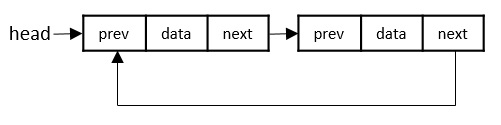
链表的基本操作
链表的基本操作包括插入、删除、查找、显示和删除元素以给定键为基数。这些操作在单链表上执行,如下所示 −
插入 − 在列表开头添加一个元素。
删除 − 删除列表开头的一个元素。
显示 − 显示完整列表。
搜索 − 使用给定键搜索元素。
删除 − 使用给定键删除元素。
链表 - 插入操作
在链表中添加新节点需要多个步骤。我们将通过图表来学习。首先,使用相同的结构创建一个节点,并找到需要插入的位置。
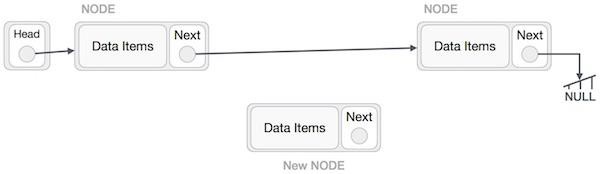
假设我们在 A(左节点)和 C(右节点)之间插入一个节点 B(新节点)。然后将 B 指向 C 的下一个节点 −
新节点.next -> 右节点;
它应该看起来像这样 −
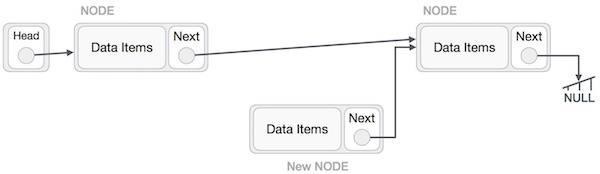
现在,左边的下一个节点应该指向新节点。
LeftNode.next -> NewNode;
这会将新节点置于两者中间。新的列表应该看起来像这样 −
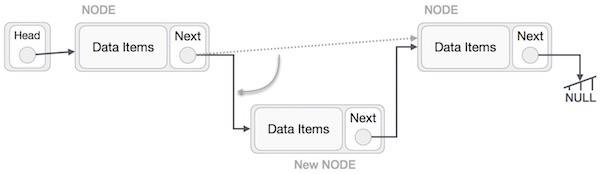
链表中的插入操作可以通过三种不同的方式完成。它们的解释如下 −
在开头插入
在此操作中,我们在列表的开头添加一个元素。
算法1. 开始 2. 创建一个节点来存储数据 3. 检查列表是否为空 4. 如果列表为空,则将数据添加到该节点,并将头指针赋给该节点。 5. 如果列表不为空,则将数据添加到一个节点并链接到 当前头节点。将头指针赋给新添加的节点。 6. 结束示例
以下是此操作在各种编程语言中的实现 −
#include <stdio.h>
#include <string.h>
#include <stdlib.h>
struct node {
   int data;
   struct node *next;
};
struct node *head = NULL;
struct node *current = NULL;

// 显示列表
void printList(){
   struct node *p = head;
   printf("
[");

   //从头开始
   while(p != NULL) {
      printf(" %d ",p->data);
      p = p->next;
   }
   printf("]");
}

//在开头插入
void insertatbegin(int data){

   //创建链接
   struct node *lk = (struct node*) malloc(sizeof(struct node));
   lk->data = data;

   // 将其指向旧的第一个节点
   lk->next = head;

   //将first指向新的第一个节点
   head = lk;
}
void main(){
   int k=0;
   insertatbegin(12);
   insertatbegin(22);
   insertatbegin(30);
   insertatbegin(44);
   insertatbegin(50);
   printf("链接列表: ");

   // 打印列表
   printList();
}
输出
链接列表:
[ 50  44  30  22  12 ]
#include <bits/stdc++.h>
#include <string>
using namespace std;
struct node {
   int data;
   struct node *next;
};
struct node *head = NULL;
struct node *current = NULL;

// 显示列表
void printList(){
   struct node *p = head;
   cout << "
[";

   //从头开始
   while(p != NULL) {
      cout << " " << p->data << " ";
      p = p->next;
   }
   cout << "]";
}

//在开头插入
void insertatbegin(int data){

   //创建链接
   struct node *lk = (struct node*) malloc(sizeof(struct node));
   lk->data = data;

   // 将其指向旧的第一个节点
   lk->next = head;

   //将first指向新的第一个节点
   head = lk;
}
int main(){
   insertatbegin(12);
   insertatbegin(22);
   insertatbegin(30);
   insertatbegin(44);
   insertatbegin(50);
   cout << "链接列表: ";

   // 打印列表
   printList();
}
输出
链接列表:
[ 50  44  30  22  12 ]
public class Linked_List {
   static class node {
      int data;
      node next;
      node (int value) {
         data = value;
         next = null;
      }
   }
   static node head;

   // 显示列表
   static void printList() {
      node p = head;
      System.out.print("
[");

      //从头开始
      while(p != null) {
         System.out.print(" " + p.data + " ");
         p = p.next;
      }
      System.out.print("]");
   }

   //在开头插入
   static void insertatbegin(int data) {

      //创建链接
      node lk = new node(data);;

      // 将其指向旧的第一个节点
      lk.next = head;

      //将first指向新的第一个节点
      head = lk;
   }
   public static void main(String args[]) {
      int k=0;
      insertatbegin(12);
      insertatbegin(22);
      insertatbegin(30);
      insertatbegin(44);
      insertatbegin(50);
      System.out.print("链接列表: ");
      // 打印列表
      printList();
   }
}
输出
链接列表:
[50  44  30  22  12 ]
class Node:
   def __init__(self, data=None):
      self.data = data
      self.next = None
class SLL:
   def __init__(self):
      self.head = None

# 打印链接列表
   def listprint(self):
      printval = self.head
      print("链接列表: ")
      while printval is not None:
         print (printval.data)
         printval = printval.next
   def AddAtBeginning(self,newdata):
      NewNode = Node(newdata)

      # 将新节点的下一个值更新为现有节点
      NewNode.next = self.head
      self.head = NewNode

l1 = SLL()
l1.head = Node("731")
e2 = Node("672")
e3 = Node("63")

l1.head.next = e2
e2.next = e3

l1.AddAtBeginning("122")
l1.listprint()
输出
链接列表:
122
731
672
63
在末尾插入
在此操作中,我们在列表末尾添加一个元素。
算法1. 开始 2. 创建新节点并分配数据 3. 找到最后一个节点 4. 将最后一个节点指向新节点 5. 结束示例
以下是此操作在各种编程语言中的实现 −
#include <stdio.h>
#include <string.h>
#include <stdlib.h>
struct node {
   int data;
   struct node *next;
};
struct node *head = NULL;
struct node *current = NULL;

// 显示列表
void printList(){
   struct node *p = head;
   printf("
[");

   //从头开始
   while(p != NULL) {
      printf(" %d ",p->data);
      p = p->next;
   }
   printf("]");
}

//在开头插入
void insertatbegin(int data){

   //创建链接
   struct node *lk = (struct node*) malloc(sizeof(struct node));
   lk->data = data;

   // 将其指向旧的第一个节点
   lk->next = head;

   //将first指向新的第一个节点
   head = lk;
}
void insertatend(int data){

   //创建链接
   struct node *lk = (struct node*) malloc(sizeof(struct node));
   lk->data = data;
   struct node *linkedlist = head;

   // 将其指向旧的第一个节点
   while(linkedlist->next != NULL)
      linkedlist = linkedlist->next;

   //将first指向新的第一个节点
   linkedlist->next = lk;
}
void main(){
   int k=0;
   insertatbegin(12);
   insertatend(22);
   insertatend(30);
   insertatend(44);
   insertatend(50);
   printf("链接列表: ");

   // 打印列表
   printList();
}
Output
链接列表:
[ 12 22 30 44 50 ]
#include <bits/stdc++.h>
#include <string>
using namespace std;
struct node {
   int data;
   struct node *next;
};
struct node *head = NULL;
struct node *current = NULL;

// 显示列表
void printList(){
   struct node *p = head;
   cout << "
[";

   //从头开始
   while(p != NULL) {
      cout << " " << p->data << " ";
      p = p->next;
   }
   cout << "]";
}

//在开头插入
void insertatbegin(int data){

   //创建链接
   struct node *lk = (struct node*) malloc(sizeof(struct node));
   lk->data = data;

   // 将其指向旧的第一个节点
   lk->next = head;

   //将first指向新的第一个节点
   head = lk;
}
void insertatend(int data){

   //创建链接
   struct node *lk = (struct node*) malloc(sizeof(struct node));
   lk->data = data;
   struct node *linkedlist = head;

   // 将其指向旧的第一个节点
   while(linkedlist->next != NULL)
      linkedlist = linkedlist->next;

   //将first指向新的第一个节点
   linkedlist->next = lk;
}
int main(){
   insertatbegin(12);
   insertatend(22);
   insertatend(30);
   insertatend(44);
   insertatend(50);
   cout << "链接列表: ";

   // 打印列表
   printList();
}
Output
链接列表:
[ 12  22  30  44  50 ]
public class Linked_List {
   static class node {
      int data;
      node next;
      node (int value) {
         data = value;
         next = null;
      }
   }
   static node head;

   // 显示列表
   static void printList() {
      node p = head;
      System.out.print("
[");

      //从头开始
      while(p != null) {
         System.out.print(" " + p.data + " ");
         p = p.next;
      }
      System.out.print("]");
   }

   //在开头插入
   static void insertatbegin(int data) {

      //创建链接
      node lk = new node(data);;

      // 将其指向旧的第一个节点
      lk.next = head;

      //将first指向新的第一个节点
      head = lk;
   }
   static void insertatend(int data) {

      //创建链接
      node lk = new node(data);
      node linkedlist = head;

      // 将其指向旧的第一个节点
      while(linkedlist.next != null)
         linkedlist = linkedlist.next;

      //将first指向新的第一个节点
      linkedlist.next = lk;
   }
   public static void main(String args[]) {
      int k=0;
      insertatbegin(12);
      insertatend(22);
      insertatend(30);
      insertatend(44);
      insertatend(50);
      System.out.print("链接列表: ");

      // 打印列表
      printList();
   }
}
Output
链接列表:
[ 12  22  30  44  50 ]
class Node:
   def __init__(self, data=None):
      self.data = data
      self.next = None
class LL:
   def __init__(self):
      self.head = None
   def listprint(self):
      val = self.head
      print("链接列表:")
      while val is not None:
         print(val.data)
         val = val.next

l1 = LL()
l1.head = Node("23")
l2 = Node("12")
l3 = Node("7")
l4 = Node("14")
l5 = Node("61")

# 将第一个节点链接到第二个节点
l1.head.next = l2

# 将第二个节点链接到第三个节点
l2.next = l3
l3.next = l4
l4.next = l5
l1.listprint()
输出
链接列表:
23
12
7
14
61
在给定位置插入
在此操作中,我们将在列表的任意位置添加一个元素。
算法1. 开始 2. 创建新节点并为其分配数据 3. 迭代直到找到位置处的节点 4. 指向新的第一个节点 5. 结束示例
以下是此操作在各种编程语言中的实现 −
#include <stdio.h>
#include <string.h>
#include <stdlib.h>
struct node {
   int data;
   struct node *next;
};
struct node *head = NULL;
struct node *current = NULL;

// 显示列表
void printList(){
   struct node *p = head;
   printf("
[");

   //从头开始
   while(p != NULL) {
      printf(" %d ",p->data);
      p = p->next;
   }
   printf("]");
}

//在开头插入
void insertatbegin(int data){

   //创建链接
   struct node *lk = (struct node*) malloc(sizeof(struct node));
   lk->data = data;

   // 将其指向旧的第一个节点
   lk->next = head;

   //将first指向新的第一个节点
   head = lk;
}
void insertafternode(struct node *list, int data){
   struct node *lk = (struct node*) malloc(sizeof(struct node));
   lk->data = data;
   lk->next = list->next;
   list->next = lk;
}
void main(){
   int k=0;
   insertatbegin(12);
   insertatbegin(22);
   insertafternode(head->next, 30);
   printf("链接列表: ");

   // 打印列表
   printList();
}
Output
链接列表:
[ 22 12 30 ]
#include <bits/stdc++.h>
#include <string>
using namespace std;
struct node {
   int data;
   struct node *next;
};
struct node *head = NULL;
struct node *current = NULL;

// 显示列表
void printList(){
   struct node *p = head;
   cout << "
[";

   //从头开始
   while(p != NULL) {
      cout << " " << p->data << " ";
      p = p->next;
   }
   cout << "]";
}

//在开头插入
void insertatbegin(int data){

   //创建链接
   struct node *lk = (struct node*) malloc(sizeof(struct node));
   lk->data = data;

   // 将其指向旧的第一个节点
   lk->next = head;

   //将first指向新的第一个节点
   head = lk;
}
void insertafternode(struct node *list, int data){
   struct node *lk = (struct node*) malloc(sizeof(struct node));
   lk->data = data;
   lk->next = list->next;
   list->next = lk;
}
int main(){
   insertatbegin(12);
   insertatbegin(22);
   insertatbegin(30);
   insertafternode(head->next,44);
   insertafternode(head->next->next, 50);
   cout << "链接列表: ";

   // 打印列表
   printList();
}
Output
链接列表:
[ 30  22  44  50  12 ]
public class Linked_List {
   static class node {
      int data;
      node next;
      node (int value) {
         data = value;
         next = null;
      }
   }
   static node head;

   // 显示列表
   static void printList() {
      node p = head;
      System.out.print("
[");

      //从头开始
      while(p != null) {
         System.out.print(" " + p.data + " ");
         p = p.next;
      }
      System.out.print("]");
   }

   //在开头插入
   static void insertatbegin(int data) {

      //创建链接
      node lk = new node(data);;

      // 将其指向旧的第一个节点
      lk.next = head;

      //将first指向新的第一个节点
      head = lk;
   }
   static void insertafternode(node list, int data) {
      node lk = new node(data);
      lk.next = list.next;
      list.next = lk;
   }
   public static void main(String args[]) {
      int k=0;
      insertatbegin(12);
      insertatbegin(22);
      insertatbegin(30);
      insertatbegin(44);
      insertafternode(head.next, 50);
      insertafternode(head.next.next, 33);
      System.out.println("链接列表: ");

      // 打印列表
      printList();
   }
}
输出
链接列表:

[44  30  50  33  22  12 ]
class Node:
   def __init__(self, data=None):
      self.data = data
      self.next = None

class SLL:
   def __init__(self):
      self.head = None

# 打印链接列表
   def listprint(self):
      printval = self.head
      print("链接列表: ")
      while printval is not None:
         print (printval.data)
         printval = printval.next

   # 添加节点的函数
   def InsertAtPos(self,nodeatpos,newdata):
      if nodeatpos is None:
         print("The mentioned node is absent")
         return
      NewNode = Node(newdata)
      NewNode.next = nodeatpos.next
      nodeatpos.next = NewNode

l1 = SLL()
l1.head = Node("731")
e2 = Node("672")
e3 = Node("63")

l1.head.next = e2
e2.next = e3

l1.InsertAtPos(l1.head.next, "122")
l1.listprint()
输出
链接列表:
731
672
122
63
链表 - 删除操作
删除操作也是一个多步骤的过程。我们将通过图示来学习。首先,使用搜索算法找到要删除的目标节点。

目标节点的左(上一个)节点现在应该指向目标节点的下一个节点 −
LeftNode.next -> TargetNode.next;

这将删除指向目标节点的链接。现在,使用以下代码,我们将删除目标节点指向的内容。
TargetNode.next -> NULL;

我们需要使用已删除的节点。我们可以将其保留在内存中,否则,我们只需释放内存并完全擦除目标节点即可。
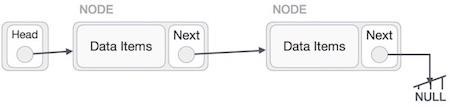

如果将节点插入到列表的开头,也应采取类似的步骤。在链表末尾插入时,链表的倒数第二个节点应指向新节点,而新节点将指向 NULL。
链表的删除操作也有三种不同的方式。具体如下:−
从头删除
在这个链表的删除操作中,我们从链表的开头删除一个元素。为此,我们将头指针指向第二个节点。
算法1. 开始 2. 将头指针赋值给链表中的下一个节点 3. 结束示例
以下是此操作在各种编程语言中的实现 −
#include <stdio.h>
#include <string.h>
#include <stdlib.h>
struct node {
   int data;
   struct node *next;
};
struct node *head = NULL;
struct node *current = NULL;

// 显示列表
void printList(){
   struct node *p = head;
   printf("
[");

   //从头开始
   while(p != NULL) {
      printf(" %d ",p->data);
      p = p->next;
   }
   printf("]");
}

//在开头插入
void insertatbegin(int data){

   //创建链接
   struct node *lk = (struct node*) malloc(sizeof(struct node));
   lk->data = data;

   // 将其指向旧的第一个节点
   lk->next = head;

   //将first指向新的第一个节点
   head = lk;
}
void deleteatbegin(){
   head = head->next;
}
int main(){
   int k=0;
   insertatbegin(12);
   insertatbegin(22);
   insertatbegin(30);
   insertatbegin(40);
   insertatbegin(55);
   printf("链接列表: ");

   // 打印列表
   printList();
   deleteatbegin();
   printf("
删除后的链表: ");

   // 打印列表
   printList();
}
输出
链接列表:
[ 55  40  30  22  12 ]
删除后的链表:
[ 40  30  22  12 ]
#include <bits/stdc++.h>
#include <string>
using namespace std;
struct node {
   int data;
   struct node *next;
};
struct node *head = NULL;
struct node *current = NULL;

// 显示列表
void printList(){
   struct node *p = head;
   cout << "
[";

   //从头开始
   while(p != NULL) {
      cout << " " << p->data << " ";
      p = p->next;
   }
   cout << "]";
}

//在开头插入
void insertatbegin(int data){

   //创建链接
   struct node *lk = (struct node*) malloc(sizeof(struct node));
   lk->data = data;

   // 将其指向旧的第一个节点
   lk->next = head;

   //将first指向新的第一个节点
   head = lk;
}
void deleteatbegin(){
   head = head->next;
}
int main(){
   insertatbegin(12);
   insertatbegin(22);
   insertatbegin(30);
   insertatbegin(44);
   insertatbegin(50);
   cout << "链接列表: ";

   // 打印列表
   printList();
   deleteatbegin();
   cout << "
删除后的链表: ";
   printList();
}
输出
链接列表:
[ 50  44  30  22  12 ]
删除后的链表:
[ 44  30  22  12 ]
public class Linked_List {
   static class node {
      int data;
      node next;
      node (int value) {
         data = value;
         next = null;
      }
   }
   static node head;

   // 显示列表
   static void printList() {
      node p = head;
      System.out.print("
[");

      //从头开始
      while(p != null) {
         System.out.print(" " + p.data + " ");
         p = p.next;
      }
      System.out.print("]");
   }

   //在开头插入
   static void insertatbegin(int data) {

      //创建链接
      node lk = new node(data);;

      // 将其指向旧的第一个节点
      lk.next = head;

      //将first指向新的第一个节点
      head = lk;
   }
   static void deleteatbegin() {
      head = head.next;
   }
   public static void main(String args[]) {
      int k=0;
      insertatbegin(12);
      insertatbegin(22);
      insertatbegin(30);
      insertatbegin(44);
      insertatbegin(50);
      insertatbegin(33);
      System.out.print("链接列表: ");

      // 打印列表
      printList();
      deleteatbegin();
      System.out.print("
删除后的链表: ");

      // 打印列表
      printList();
   }
}
输出
链接列表:
[ 33  50  44  30  22  12 ]
删除后的链表:
[ 50  44  30  22  12 ]
#python 代码使用链接列表从开头进行删除。
from typing import Optional
class Node:
    def __init__(self, data: int, next: Optional['Node'] = None):
        self.data = data
        self.next = next
class LinkedList:
    def __init__(self):
        self.head = None
     #显示列表
    def print_list(self):
        p = self.head
        print("
[", end="")
        while p:
            print(f" {p.data} ", end="")
            p = p.next
        print("]")
     #在开头插入
    def insert_at_begin(self, data: int):
        lk = Node(data)
         #将其指向旧的第一个节点
        lk.next = self.head
        #point firt to new first node
        self.head = lk
    def delete_at_begin(self):
        self.head = self.head.next
if __name__ == "__main__":
    linked_list = LinkedList()
    linked_list.insert_at_begin(12)
    linked_list.insert_at_begin(22)
    linked_list.insert_at_begin(30)
    linked_list.insert_at_begin(44)
    linked_list.insert_at_begin(50)
    #print list
    print("链接列表: ", end="")
    linked_list.print_list()
    linked_list.delete_at_begin()
    print("删除后的链表: ", end="")
    linked_list.print_list()
输出
链接列表:
[ 50  44  30  22  12 ]
删除后的链表:
[ 44  30  22  12 ]
末尾删除
在这个链表的删除操作中,我们从列表末尾删除一个元素。
算法1. 开始 2. 迭代直到找到列表中的倒数第二个元素。 3. 将 NULL 赋给列表中的倒数第二个元素。 4. 结束示例
以下是此操作在各种编程语言中的实现 −
#include <stdio.h>
#include <string.h>
#include <stdlib.h>
struct node {
   int data;
   struct node *next;
};
struct node *head = NULL;
struct node *current = NULL;

// 显示列表
void printList(){
   struct node *p = head;
   printf("
[");

   //从头开始
   while(p != NULL) {
      printf(" %d ",p->data);
      p = p->next;
   }
   printf("]");
}

//在开头插入
void insertatbegin(int data){

   //创建链接
   struct node *lk = (struct node*) malloc(sizeof(struct node));
   lk->data = data;

   // 将其指向旧的第一个节点
   lk->next = head;

   //将first指向新的第一个节点
   head = lk;
}
void deleteatend(){
   struct node *linkedlist = head;
   while (linkedlist->next->next != NULL)
      linkedlist = linkedlist->next;
   linkedlist->next = NULL;
}
void main(){
   int k=0;
   insertatbegin(12);
   insertatbegin(22);
   insertatbegin(30);
   insertatbegin(40);
   insertatbegin(55);
   printf("链接列表: ");

   // 打印列表
   printList();
   deleteatend();
   printf("
删除后的链表: ");

   // 打印列表
   printList();
}
Output
链接列表:
[ 55  40  30  22  12 ]
删除后的链表:
[ 55  40  30  22 ]
#include <bits/stdc++.h>
#include <string>
using namespace std;
struct node {
   int data;
   struct node *next;
};
struct node *head = NULL;
struct node *current = NULL;

// 显示列表
void printList(){
   struct node *p = head;
   while(p != NULL) {
      cout << " " << p->data << " ";
      p = p->next;
   }
}

// 在开头插入
void insertatbegin(int data){

   //创建链接
   struct node *lk = (struct node*) malloc(sizeof(struct node));
   lk->data = data;

   // 将其指向旧的第一个节点
   lk->next = head;

   //将first指向新的第一个节点
   head = lk;
}
void deleteatend(){
   struct node *linkedlist = head;
   while (linkedlist->next->next != NULL)
      linkedlist = linkedlist->next;
   linkedlist->next = NULL;
}
int main(){
   insertatbegin(12);
   insertatbegin(22);
   insertatbegin(30);
   insertatbegin(44);
   insertatbegin(50);
   cout << "链接列表: ";

   // 打印列表
   printList();
   deleteatend();
   cout << "
删除后的链表: ";
   printList();
}
Output
链接列表:  50  44  30  22  12
删除后的链表:  50  44  30  22
public class Linked_List {
   static class node {
      int data;
      node next;
      node (int value) {
         data = value;
         next = null;
      }
   }
   static node head;

   // 显示列表
   static void printList() {
      node p = head;
      System.out.print("
[");

      //从头开始
      while(p != null) {
         System.out.print(" " + p.data + " ");
         p = p.next;
      }
      System.out.print("]");
   }

   //在开头插入
   static void insertatbegin(int data) {

      //创建链接
      node lk = new node(data);;

      // 将其指向旧的第一个节点
      lk.next = head;

      //将first指向新的第一个节点
      head = lk;
   }
   static void deleteatend() {
      node linkedlist = head;
      while (linkedlist.next.next != null)
         linkedlist = linkedlist.next;
      linkedlist.next = null;
   }
   public static void main(String args[]) {
      int k=0;
      insertatbegin(12);
      insertatbegin(22);
      insertatbegin(30);
      insertatbegin(44);
      insertatbegin(50);
      insertatbegin(33);
      System.out.print("链接列表: ");

      // 打印列表
      printList();

      //deleteatbegin();
      deleteatend();
      System.out.print("
删除后的链表: ");

      // 打印列表
      printList();
   }
}
Output
链接列表:
[ 33  50  44  30  22  12 ]
删除后的链表:
[ 33  50  44  30  22 ]
#python 代码使用链接列表从开头进行删除。
class Node:
    def __init__(self, data=None):
        self.data = data
        self.next = None
class LinkedList:
    def __init__(self):
        self.head = None
 #显示列表
    def printList(self):
        p = self.head
        print("
[", end="")
        while p != None:
            print(" " + str(p.data) + " ", end="")
            p = p.next
        print("]")
 #在开头插入
    def insertatbegin(self, data):
        #创建链接
        lk = Node(data)
        #将其指向旧的第一个节点
        lk.next = self.head
        #指向新的第一个节点
        self.head = lk

    def deleteatend(self):
        linkedlist = self.head
        while linkedlist.next.next != None:
            linkedlist = linkedlist.next
        linkedlist.next = None
if __name__ == "__main__":
    linked_list = LinkedList()
    linked_list.insertatbegin(12)
    linked_list.insertatbegin(22)
    linked_list.insertatbegin(30)
    linked_list.insertatbegin(40)
    linked_list.insertatbegin(55)
    #print list
    print("链接列表: ", end="")
    linked_list.printList()
    linked_list.deleteatend()
    print("删除后的链表: ", end="")
    linked_list.printList()
输出
链接列表:
[ 55  40  30  22  12 ]
删除后的链表:
[ 55  40  30  22 ]
在给定位置删除
在这个链表的删除操作中,我们删除链表中任意位置的元素。
算法1. 开始 2. 迭代直到找到链表中当前位置的节点。 3. 将链表中当前节点的相邻节点赋值给其前一个节点。 4. 结束示例
以下是此操作在各种编程语言中的实现 −
#include <stdio.h>
#include <string.h>
#include <stdlib.h>
struct node {
   int data;
   struct node *next;
};
struct node *head = NULL;
struct node *current = NULL;

// 显示列表
void printList(){
   struct node *p = head;
   printf("
[");

   //从头开始
   while(p != NULL) {
      printf(" %d ",p->data);
      p = p->next;
   }
   printf("]");
}

//在开头插入
void insertatbegin(int data){

   //创建链接
   struct node *lk = (struct node*) malloc(sizeof(struct node));
   lk->data = data;

   // 将其指向旧的第一个节点
   lk->next = head;

   //将first指向新的第一个节点
   head = lk;
}
void deletenode(int key){
   struct node *temp = head, *prev;
   if (temp != NULL && temp->data == key) {
      head = temp->next;
      return;
   }

   // 找到要删除的键
   while (temp != NULL && temp->data != key) {
      prev = temp;
      temp = temp->next;
   }

   // 如果键不存在
   if (temp == NULL) return;

   // 删除节点
   prev->next = temp->next;
}
void main(){
   int k=0;
   insertatbegin(12);
   insertatbegin(22);
   insertatbegin(30);
   insertatbegin(40);
   insertatbegin(55);
   printf("链接列表: ");

   // 打印列表
   printList();
   deletenode(30);
   printf("
删除后的链表: ");

   // 打印列表
   printList();
}
输出
链接列表:
[ 55  40  30  22  12 ]
删除后的链表:
[ 55  40  22  12 ]
#include <bits/stdc++.h>
#include <string>
using namespace std;
struct node {
   int data;
   struct node *next;
};
struct node *head = NULL;
struct node *current = NULL;

// 显示列表
void printList(){
   struct node *p = head;
   cout << "
[";

   //从头开始
   while(p != NULL) {
      cout << " " << p->data << " ";
      p = p->next;
   }
   cout << "]";
}

//在开头插入
void insertatbegin(int data){

   //创建链接
   struct node *lk = (struct node*) malloc(sizeof(struct node));
   lk->data = data;

   // 将其指向旧的第一个节点
   lk->next = head;

   //将first指向新的第一个节点
   head = lk;
}
void deletenode(int key){
   struct node *temp = head, *prev;
   if (temp != NULL && temp->data == key) {
      head = temp->next;
      return;
   }

   // 找到要删除的键
   while (temp != NULL && temp->data != key) {
      prev = temp;
      temp = temp->next;
   }

   // 如果键不存在
   if (temp == NULL) return;

   // 删除节点
   prev->next = temp->next;
}
int main(){
   insertatbegin(12);
   insertatbegin(22);
   insertatbegin(30);
   insertatbegin(44);
   insertatbegin(50);
   cout << "链接列表: ";

   // 打印列表
   printList();
   deletenode(30);
   cout << "
删除后的链表: ";
   printList();
}
输出
链接列表:
[ 50  44  30  22  12 ]
删除后的链表:
[ 50  44  22  12 ]
public class Linked_List {
   static class node {
      int data;
      node next;
      node (int value) {
         data = value;
         next = null;
      }
   }
   static node head;

   // 显示列表
   static void printList() {
      node p = head;
      System.out.print("
[");

      //从头开始
      while(p != null) {
         System.out.print(" " + p.data + " ");
         p = p.next;
      }
      System.out.print("]");
   }

   //在开头插入
   static void insertatbegin(int data) {


      //创建链接
      node lk = new node(data);;

      // 将其指向旧的第一个节点
      lk.next = head;

      //将first指向新的第一个节点
      head = lk;
   }
   static void deletenode(int key) {
      node temp = head;
      node prev = null;
      if (temp != null && temp.data == key) {
         head = temp.next;
         return;
      }

      // 找到要删除的键
      while (temp != null && temp.data != key) {
         prev = temp;
         temp = temp.next;
      }

      // 如果键不存在
      if (temp == null) return;

      // 删除节点
      prev.next = temp.next;
   }
   public static void main(String args[]) {
      int k=0;
      insertatbegin(12);
      insertatbegin(22);
      insertatbegin(30);
      insertatbegin(44);
      insertatbegin(50);
      insertatbegin(33);
      System.out.print("链接列表: ");

      // 打印列表
      printList();

      //deleteatbegin();
      //deleteatend();
      deletenode(12);
      System.out.print("
删除后的链表: ");

      // 打印列表
      printList();
   }
}
输出
链接列表:
[ 33  50  44  30  22  12 ]
删除后的链表:
[ 33  50  44  30  22 ]
#使用链接列表在给定位置进行删除的 Python 代码。
class Node:
    def __init__(self, data=None):
        self.data = data
        self.next = None
class LinkedList:
    def __init__(self):
        self.head = None
    # 显示列表
    def printList(self):
        p = self.head
        print("
[", end="")
        #从头开始
        while(p != None):
            print(" ", p.data, " ", end="")
            p = p.next
        print("]")
    #在开头插入
    def insertatbegin(self, data):
        #创建链接
        lk = Node(data)
        # 将其指向旧的第一个节点
        lk.next = self.head
        #指向新的第一个节点
        self.head = lk
    def deletenode(self, key):
        temp = self.head
        if (temp != None and temp.data == key):
            self.head = temp.next
            return
        # 找到要删除的键
        while (temp != None and temp.data != key):
            prev = temp
            temp = temp.next
        # If the key is not present
        if (temp == None):
            return
        # 删除节点
        prev.next = temp.next
llist = LinkedList()
llist.insertatbegin(12)
llist.insertatbegin(22)
llist.insertatbegin(30)
llist.insertatbegin(40)
llist.insertatbegin(55)
print("原始链表:", end="")
# print list
llist.printList()
llist.deletenode(30)
print("删除后的链表: ", end="")
# print list
llist.printList()
输出
原始链表:
[  55    40    30    22    12  ]
删除后的链表:
[  55    40    22    12  ]
链表 - 反转操作
此操作非常复杂。我们需要让头节点指向链表的尾节点,并反转整个链表。
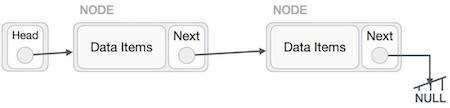
首先,我们遍历到链表的末尾。它应该指向 NULL。现在,我们让它指向它的前一个节点 -
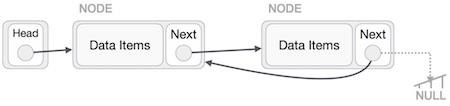
我们必须确保尾节点不是真正的尾节点。因此,我们会设置一个临时节点,看起来像是头节点指向尾节点。现在,我们将使所有左侧节点逐一指向其前一个节点。
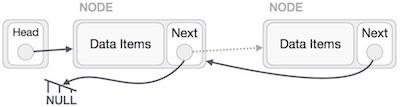
除头节点指向的节点(第一个节点)外,所有节点都应指向其前一个节点,使其成为新的后继节点。第一个节点将指向 NULL。
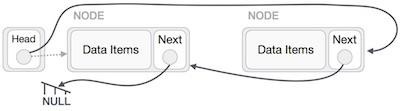
我们将使用临时节点将头节点指向新的首节点。
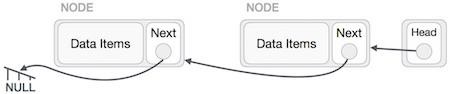
算法
反转链表的步骤如下 −
1. START
2. 我们使用三个指针执行反转:
prev、next、head。
3. 将当前节点指向 head,并将其下一个值赋给
prev 节点。
4. 对列表中的所有节点重复步骤 3。
5. 将 head 赋值给 prev 节点。
示例
以下是此操作在各种编程语言中的实现 −
#include <stdio.h>
#include <string.h>
#include <stdlib.h>
struct node {
   int data;
   struct node *next;
};
struct node *head = NULL;
struct node *current = NULL;

// 显示列表
void printList(){
   struct node *p = head;
   printf("
[");

   //从头开始
   while(p != NULL) {
      printf(" %d ",p->data);
      p = p->next;
   }
   printf("]");
}

//在开头插入
void insertatbegin(int data){

   //创建链接
   struct node *lk = (struct node*) malloc(sizeof(struct node));
   lk->data = data;

   // 将其指向旧的第一个节点
   lk->next = head;

   //将first指向新的第一个节点
   head = lk;
}
void reverseList(struct node** head){
   struct node *prev = NULL, *cur=*head, *tmp;
   while(cur!= NULL) {
      tmp = cur->next;
      cur->next = prev;
      prev = cur;
      cur = tmp;
   }
   *head = prev;
}
void main(){
   int k=0;
   insertatbegin(12);
   insertatbegin(22);
   insertatbegin(30);
   insertatbegin(40);
   insertatbegin(55);
   printf("链接列表: ");

   // 打印列表
   printList();
   reverseList(&head);
   printf("
反向链表: ");
   printList();
}
输出
链接列表:
[ 55  40  30  22  12 ]
反向链表:
[ 12  22  30  40  55 ]
#include <bits/stdc++.h>
struct node {
   int data;
   struct node *next;
};
struct node *head = NULL;
struct node *current = NULL;

// 显示列表
void printList(){
   struct node *p = head;
   printf("
[");

   //从头开始
   while(p != NULL) {
      printf(" %d ",p->data);
      p = p->next;
   }
   printf("]");
}

//在开头插入
void insertatbegin(int data){

   //创建链接
   struct node *lk = (struct node*) malloc(sizeof(struct node));
   lk->data = data;

   // 将其指向旧的第一个节点
   lk->next = head;

   //将first指向新的第一个节点
   head = lk;
}
void reverseList(struct node** head){
   struct node *prev = NULL, *cur=*head, *tmp;
   while(cur!= NULL) {
      tmp = cur->next;
      cur->next = prev;
      prev = cur;
      cur = tmp;
   }
   *head = prev;
}
int main(){
   int k=0;
   insertatbegin(12);
   insertatbegin(22);
   insertatbegin(30);
   insertatbegin(40);
   insertatbegin(55);
   printf("链接列表: ");

   // 打印列表
   printList();
   reverseList(&head);
   printf("
反向链表: ");
   printList();
   return 0;
}
输出
链接列表:
[ 55  40  30  22  12 ]
反向链表:
[ 12  22  30  40  55 ]
public class Linked_List {
   static Node head;
   static class Node {
      int data;
      Node next;
      Node (int value) {
         data = value;
         next = null;
      }
   }

   // 显示列表
   static void printList(Node node) {
      System.out.print("
[");

      //从头开始
      while(node != null) {
         System.out.print(" " + node.data + " ");
         node = node.next;
      }
      System.out.print("]");
   }
   static Node reverseList(Node head) {
      Node prev = null;
      Node cur = head;
      Node temp = null;
      while (cur != null) {
         temp = cur.next;
         cur.next = prev;
         prev = cur;
         cur = temp;
      }
      head = prev;
      return head;
   }
   public static void main(String args[]) {
      Linked_List list = new Linked_List();
      list.head = new Node(33);
      list.head.next = new Node(50);
      list.head.next.next = new Node(44);
      list.head.next.next.next = new Node(22);
      list.head.next.next.next.next = new Node(12);
      System.out.print("链接列表: ");

      // 打印列表
      list.printList(head);
      head = list.reverseList(head);
      System.out.print("
Reversed linked list ");
      list.printList(head);
   }
}
Output
链接列表:
[ 33  50  44  22  12 ]
Reversed linked list
[ 12  22  44  50  33 ]
class Node:
   def __init__(self, data=None):
      self.data = data
      self.next = None

class SLL:
   def __init__(self):
      self.head = None

# 打印链接列表
   def listprint(self):
      printval = self.head
      print("链接列表: ")
      while printval is not None:
         print (printval.data)
         printval = printval.next
   def reverse(self):
      prev = None
      curr = self.head
      while(curr is not None):
         next = curr.next
         curr.next = prev
         prev = curr
         curr = next
      self.head = prev

l1 = SLL()
l1.head = Node("731")
e2 = Node("672")
e3 = Node("63")

l1.head.next = e2
e2.next = e3

l1.listprint()
l1.reverse()
print("反转后:")
l1.listprint()
输出
链接列表:
731
672
63
反转后:
链接列表:
63
672
731
链表 - 搜索操作
使用键值元素在列表中搜索元素。此操作与数组搜索相同;将列表中的每个元素与给定的键值元素进行比较。
算法
1 开始
2 如果列表不为空,则迭代检查列表
是否包含键值
3 如果键值元素不在列表中,则搜索失败

4 结束
示例
以下是此操作在各种编程语言中的实现 −
#include <stdio.h>
#include <string.h>
#include <stdlib.h>
struct node {
   int data;
   struct node *next;
};
struct node *head = NULL;
struct node *current = NULL;

// 显示列表
void printList(){
   struct node *p = head;
   printf("
[");

   //从头开始
   while(p != NULL) {
      printf(" %d ",p->data);
      p = p->next;
   }
   printf("]");
}

//在开头插入
void insertatbegin(int data){

   //创建链接
   struct node *lk = (struct node*) malloc(sizeof(struct node));
   lk->data = data;

   // 将其指向旧的第一个节点
   lk->next = head;

   //将first指向新的第一个节点
   head = lk;
}
int searchlist(int key){
   struct node *temp = head;
   while(temp != NULL) {
      if (temp->data == key) {
         return 1;
      }
      temp=temp->next;
   }
   return 0;
}
void main(){
   int k=0;
   insertatbegin(12);
   insertatbegin(22);
   insertatbegin(30);
   insertatbegin(40);
   insertatbegin(55);
   printf("链接列表: ");

   // 打印列表
   printList();
   int ele = 30;
   printf("
要搜索的元素是: %d", ele);
   k = searchlist(30);
   if (k == 1)
      printf("
Element is found");
   else
      printf("
Element is not found in the list");
}
输出
链接列表:
[ 55  40  30  22  12 ]
要搜索的元素是: 30
Element is found
#include <bits/stdc++.h>
#include <string>
using namespace std;
struct node {
   int data;
   struct node *next;
};
struct node *head = NULL;
struct node *current = NULL;

// 显示列表
void printList(){
   struct node *p = head;
   cout << "
[";

   //从头开始
   while(p != NULL) {
      cout << " " << p->data << " ";
      p = p->next;
   }
   cout << "]";
}

//在开头插入
void insertatbegin(int data){

   //创建链接
   struct node *lk = (struct node*) malloc(sizeof(struct node));
   lk->data = data;

   // 将其指向旧的第一个节点
   lk->next = head;

   //将first指向新的第一个节点
   head = lk;
}
int searchlist(int key){
   struct node *temp = head;
   while(temp != NULL) {
      if (temp->data == key) {
         return 1;
      }
      temp=temp->next;
   }
   return 0;
}
int main(){
   int k = 0;
   insertatbegin(12);
   insertatbegin(22);
   insertatbegin(30);
   insertatbegin(44);
   insertatbegin(50);
   cout << "链接列表: ";

   // 打印列表
   printList();
   int ele = 16;
   cout<<"
要搜索的元素是: "<<ele;
   k = searchlist(ele);
   if (k == 1)
      cout << "
Element is found";
   else
      cout << "
Element is not found in the list";
}
输出
链接列表:
[ 50  44  30  22  12 ]
要搜索的元素是: 16
Element is not found in the list
public class Linked_List {
   static class node {
      int data;
      node next;
      node (int value) {
         data = value;
         next = null;
      }
   }
   static node head;

   // 显示列表
   static void printList() {
      node p = head;
      System.out.print("
[");

      //从头开始
      while(p != null) {
         System.out.print(" " + p.data + " ");
         p = p.next;
      }
      System.out.print("]");
   }

   //在开头插入
   static void insertatbegin(int data) {

      //创建链接
      node lk = new node(data);;

      // 将其指向旧的第一个节点
      lk.next = head;

      //将first指向新的第一个节点
      head = lk;
   }
   static int searchlist(int key) {
      node temp = head;
      while(temp != null) {
         if (temp.data == key) {
            return 1;
         }
         temp=temp.next;
      }
      return 0;
   }
   public static void main(String args[]) {
      int k=0;
      insertatbegin(12);
      insertatbegin(22);
      insertatbegin(30);
      insertatbegin(44);
      insertatbegin(50);
      insertatbegin(33);
      System.out.print("链接列表: ");

      // 打印列表
      printList();
	  int ele = 44;
	  System.out.print("
要搜索的元素是: " + ele);
      k = searchlist(ele);
      if (k == 1)
         System.out.println("
Element is found");
      else
         System.out.println("
Element is not found in the list");
   }
}
输出
链接列表:
[ 33  50  44  30  22  12 ]
要搜索的元素是: 44
Element is found
class Node:
   def __init__(self, data=None):
      self.data = data
      self.next = None

class SLL:
   def listprint(self):
      printval = self.head
      print("链接列表: ")
      while printval is not None:
         print (printval.data)
         printval = printval.next
   def __init__(self):
      self.head = None
   def search(self, x):
      count = 0

      # Initialize current to head
      current = self.head

      # 循环直到当前不等于 None
      while current != None:
         if current.data == x:
            print("Element is found")
            count = count + 1
         current = current.next
      if count == 0:
         print("Element is not found in the list")

l1 = SLL()
l1.head = Node("731")
e2 = Node("672")
e3 = Node("63")

l1.head.next = e2
e2.next = e3
l1.listprint()
ele = "63"
print("要搜索的元素是: ", ele);
l1.search(ele)
输出
链接列表:
731
672
63
要搜索的元素是:  63
Element is found
链表 - 遍历操作
遍历操作按顺序遍历列表中的所有元素,并按该顺序显示这些元素。
算法
1. 开始
2. 当列表不为空且未到达列表末尾时,
打印每个节点中的数据
3. 结束
示例
以下是此操作在各种编程语言中的实现 −
#include <stdio.h>
#include <string.h>
#include <stdlib.h>
struct node {
   int data;
   struct node *next;
};
struct node *head = NULL;
struct node *current = NULL;

   // 显示列表
   void printList(){
   struct node *p = head;
   printf("
[");

   //从头开始
   while(p != NULL) {
      printf(" %d ",p->data);
      p = p->next;
   }
   printf("]");
}

   //在开头插入
   void insertatbegin(int data){

   //创建链接
   struct node *lk = (struct node*) malloc(sizeof(struct node));
   lk->data = data;

   // 将其指向旧的第一个节点
   lk->next = head;

   //将first指向新的第一个节点
   head = lk;
}
void main(){
   int k=0;
   insertatbegin(12);
   insertatbegin(22);
   insertatbegin(30);
   printf("链接列表: ");

   // 打印列表
   printList();
}
输出
链接列表:
[ 30  22  12 ]
#include <bits/stdc++.h>
#include <string>
using namespace std;
struct node {
   int data;
   struct node *next;
};
struct node *head = NULL;
struct node *current = NULL;

// 显示列表
void printList(){
   struct node *p = head;
   while(p != NULL) {
      cout << " " << p->data << " ";
      p = p->next;
   }
}

// 在开头插入
void insertatbegin(int data){

   //创建链接
   struct node *lk = (struct node*) malloc(sizeof(struct node));
   lk->data = data;

   // 将其指向旧的第一个节点
   lk->next = head;

   //将first指向新的第一个节点
   head = lk;
}
int main(){
   insertatbegin(12);
   insertatbegin(22);
   insertatbegin(30);
   insertatbegin(44);
   insertatbegin(50);
   cout << "链接列表: ";

   // 打印列表
   printList();
}
输出
链接列表: 50 44 30 22 12
public class Linked_List {
   static class node {
      int data;
      node next;
      node (int value) {
         data = value;
         next = null;
      }
   }
   static node head;

   // 显示列表
   static void printList() {
      node p = head;
      System.out.print("
[");

      //从头开始
      while(p != null) {
         System.out.print(" " + p.data + " ");
         p = p.next;
      }
      System.out.print("]");
   }

   //在开头插入
   static void insertatbegin(int data) {

      //创建链接
      node lk = new node(data);;

      // 将其指向旧的第一个节点
      lk.next = head;

      //将first指向新的第一个节点
      head = lk;
   }
   public static void main(String args[]) {
      int k=0;
      insertatbegin(12);
      insertatbegin(22);
      insertatbegin(30);
      insertatbegin(44);
      insertatbegin(50);
      insertatbegin(33);
      System.out.print("链接列表: ");

      // 打印列表
      printList();
   }
}
输出
链接列表:
[ 33  50  44  30  22  12 ]
class Node:
   def __init__(self, data=None):
      self.data = data
      self.next = None
class SLL:
   def __init__(self):
      self.head = None

# 打印链接列表
   def listprint(self):
      printval = self.head
      print("链接列表: ")
      while printval is not None:
         print (printval.data)
         printval = printval.next

l1 = SLL()
l1.head = Node("731")
e2 = Node("672")
e3 = Node("63")

l1.head.next = e2
e2.next = e3

l1.listprint()
输出
链接列表:
731
672
63
链表 - 完整实现
以下是各种编程语言中链表的完整实现 −
#include <stdio.h>
#include <string.h>
#include <stdlib.h>
struct node {
   int data;
   struct node *next;
};
struct node *head = NULL;
struct node *current = NULL;

// 显示列表
void printList(){
   struct node *p = head;
   printf("
[");
   //从头开始
   while(p != NULL) {
      printf(" %d ",p->data);
      p = p->next;
   }
   printf("]");
}
//在开头插入
void insertatbegin(int data){
   //创建链接
   struct node *lk = (struct node*) malloc(sizeof(struct node));
   lk->data = data;
   // 将其指向旧的第一个节点
   lk->next = head;
   //将first指向新的第一个节点
   head = lk;
}
void insertatend(int data){

   //创建链接
   struct node *lk = (struct node*) malloc(sizeof(struct node));
   lk->data = data;
   struct node *linkedlist = head;

   // 将其指向旧的第一个节点
   while(linkedlist->next != NULL)
      linkedlist = linkedlist->next;

   //将first指向新的第一个节点
   linkedlist->next = lk;
}
void insertafternode(struct node *list, int data){
   struct node *lk = (struct node*) malloc(sizeof(struct node));
   lk->data = data;
   lk->next = list->next;
   list->next = lk;
}
void deleteatbegin(){
   head = head->next;
}
void deleteatend(){
   struct node *linkedlist = head;
   while (linkedlist->next->next != NULL)
      linkedlist = linkedlist->next;
   linkedlist->next = NULL;
}
void deletenode(int key){
   struct node *temp = head, *prev;
   if (temp != NULL && temp->data == key) {
      head = temp->next;
      return;
   }

   // 找到要删除的键
   while (temp != NULL && temp->data != key) {
      prev = temp;
      temp = temp->next;
   }

   // 如果键不存在
   if (temp == NULL) return;

   // 删除节点
   prev->next = temp->next;
}
int searchlist(int key){
   struct node *temp = head;
   while(temp != NULL) {
      if (temp->data == key) {
         return 1;
      }
      temp=temp->next;
   }
   return 0;
}
void main(){
   int k=0;
   insertatbegin(12);
   insertatbegin(22);
   insertatend(30);
   insertatend(44);
   insertatbegin(50);
   insertafternode(head->next->next, 33);
   printf("链接列表: ");

   // 打印列表
   printList();
   deleteatbegin();
   deleteatend();
   deletenode(12);
   printf("
删除后的链表: ");

   // 打印列表
   printList();
   insertatbegin(4);
   insertatbegin(16);
   printf("
更新后的链接列表: ");
   printList();
   k = searchlist(16);
   if (k == 1)
      printf("
Element is found");
   else
      printf("
Element is not present in the list");
}
输出
链接列表:
[ 50  22  12  33  30  44 ]
删除后的链表:
[ 22  33  30 ]
更新后的链接列表:
[ 16  4  22  33  30 ]
Element is found
#include <bits/stdc++.h>
#include <string>
using namespace std;
struct node {
   int data;
   struct node *next;
};
struct node *head = NULL;
struct node *current = NULL;

// 显示列表
void printList(){
   struct node *p = head;
   cout << "
[";

   //从头开始
   while(p != NULL) {
      cout << " " << p->data << " ";
      p = p->next;
   }
   cout << "]";
}

//在开头插入
void insertatbegin(int data){

   //创建链接
   struct node *lk = (struct node*) malloc(sizeof(struct node));
   lk->data = data;

   // 将其指向旧的第一个节点
   lk->next = head;

   //将first指向新的第一个节点
   head = lk;
}
void insertatend(int data){

   //创建链接
   struct node *lk = (struct node*) malloc(sizeof(struct node));
   lk->data = data;
   struct node *linkedlist = head;

   // 将其指向旧的第一个节点
   while(linkedlist->next != NULL)
      linkedlist = linkedlist->next;

   //将first指向新的第一个节点
   linkedlist->next = lk;
}
void insertafternode(struct node *list, int data){
   struct node *lk = (struct node*) malloc(sizeof(struct node));
   lk->data = data;
   lk->next = list->next;
   list->next = lk;
}
void deleteatbegin(){
   head = head->next;
}
void deleteatend(){
   struct node *linkedlist = head;
   while (linkedlist->next->next != NULL)
      linkedlist = linkedlist->next;
   linkedlist->next = NULL;
}
void deletenode(int key){
   struct node *temp = head, *prev;
   if (temp != NULL && temp->data == key) {
      head = temp->next;
      return;
   }

   // 找到要删除的键
   while (temp != NULL && temp->data != key) {
      prev = temp;
      temp = temp->next;
   }

   // 如果键不存在
   if (temp == NULL) return;

   // 删除节点
   prev->next = temp->next;
}
int searchlist(int key){
   struct node *temp = head;
   while(temp != NULL) {
      if (temp->data == key) {
         temp=temp->next;
         return 1;
      } else
         return 0;
   }
   return key;
}
int main(){
   int k=0;
   insertatbegin(12);
   insertatbegin(22);
   insertatend(30);
   insertatend(44);
   insertatbegin(50);
   insertafternode(head->next->next, 33);
   cout << "链接列表: ";

   // 打印列表
   printList();
   deleteatbegin();
   deleteatend();
   deletenode(12);
   cout << "
删除后的链表: ";

   // 打印列表
   printList();
   insertatbegin(4);
   insertatbegin(16);
   cout << "
更新后的链接列表: ";
   printList();
   k = searchlist(16);
   if (k == 1)
      cout << "
Element is found";
   else
      cout << "
Element is not present in the list";
   return 0;
}
输出
链接列表:
[ 50  22  12  33  30  44 ]
删除后的链表:
[ 22  33  30 ]
更新后的链接列表:
[ 16  4  22  33  30 ]
Element is found
public class Linked_List {
   static class node {
      int data;
      node next;
      node (int value) {
         data = value;
         next = null;
      }
   }
   static node head;

   // 显示列表
   static void printList() {
      node p = head;
      System.out.print("
[");

      //从头开始
      while(p != null) {
         System.out.print(" " + p.data + " ");
         p = p.next;
      }
      System.out.print("]");
   }

   //在开头插入
   static void insertatbegin(int data) {

      //创建链接
      node lk = new node(data);;

      // 将其指向旧的第一个节点
      lk.next = head;

      //将first指向新的第一个节点
      head = lk;
   }
   static void insertatend(int data) {

      //创建链接
      node lk = new node(data);
      node linkedlist = head;

      // 将其指向旧的第一个节点
      while(linkedlist.next != null)
         linkedlist = linkedlist.next;

      //将first指向新的第一个节点
      linkedlist.next = lk;
   }
   static void insertafternode(node list, int data) {
      node lk = new node(data);
      lk.next = list.next;
      list.next = lk;
   }
   static void deleteatbegin() {
      head = head.next;
   }
   static void deleteatend() {
      node linkedlist = head;
      while (linkedlist.next.next != null)
         linkedlist = linkedlist.next;
      linkedlist.next = null;
   }
   static void deletenode(int key) {
      node temp = head;
      node prev = null;
      if (temp != null && temp.data == key) {
         head = temp.next;
         return;
      }

      // 找到要删除的键
      while (temp != null && temp.data != key) {
         prev = temp;
         temp = temp.next;
      }

      // 如果键不存在
      if (temp == null) return;

      // 删除节点
      prev.next = temp.next;
   }
   static int searchlist(int key) {
      node temp = head;
      while(temp != null) {
         if (temp.data == key) {
            temp=temp.next;
            return 1;
         }
      }
      return 0;
   }
   public static void main(String args[]) {
      int k=0;
      insertatbegin(12);
      insertatbegin(22);
      insertatend(30);
      insertatend(44);
      insertatbegin(50);
      insertafternode(head.next.next, 33);
      System.out.print("链接列表: ");

      // 打印列表
      printList();
      deleteatbegin();
      deleteatend();
      deletenode(12);
      System.out.print("
删除后的链表: ");

      // 打印列表
      printList();
      insertatbegin(4);
      insertatbegin(16);
      System.out.print("
更新后的链接列表: ");
      printList();
      k = searchlist(16);
      if (k == 1)
         System.out.print("
Element is found");
      else
         System.out.print("
Element is not present in the list");
   }
}
输出
链接列表:
[ 50 22 12 33 30 44 ]
删除后的链表:
[ 22 33 30 ]
更新后的链接列表:
[ 16 4 22 33 30 ]
Element is found
class LLNode:
   def __init__(self, data=None):
      self.data = data
      self.next = None
class LL:
   def __init__(self):
      self.head = None
   def listprint(self):
      printval = self.head
      while printval is not None:
         print(printval.data)
         printval = printval.next
   def AddAtBeginning(self,newdata):
      NewNode = LLNode(newdata)

      # 将新节点的下一个值更新为现有节点
      NewNode.next = self.head
      self.head = NewNode

   # 在某个位置添加节点的函数
   def InsertAtPos(self,nodeatpos,newdata):
      if nodeatpos is None:
         print("The mentioned node is absent")
         return
      NewNode = LLNode(newdata)
      NewNode.next = nodeatpos.next
      nodeatpos.next = NewNode
   def reverse(self):
      prev = None
      curr = self.head
      while(curr is not None):
         next = curr.next
         curr.next = prev
         prev = curr
         curr = next
      self.head = prev
   def search(self, x):
      count = 0

      # Initialize current to head
      current = self.head

      # 循环直到当前不等于 None
      while current != None:
         if current.data == x:
            print("Element is found")
            count = count + 1
         current = current.next
      if count == 0:
         print("Element is not found in the list")

l1 = LL()
l1.head = LLNode("23")
l2 = LLNode("12")
l3 = LLNode("7")
l4 = LLNode("14")
l5 = LLNode("61")

# 将第一个节点链接到第二个节点
l1.head.next = l2

# 将第二个节点链接到第三个节点
l2.next = l3
l3.next = l4
l4.next = l5
print("原始链表:")
l1.listprint()

l1.AddAtBeginning("45")
l1.InsertAtPos(l1.head.next.next, "4")
print("更新后的链接列表:")
l1.listprint()
l1.reverse()

print("反向链表:")
l1.listprint()
l1.search("7")
输出
原始链表:
23
12
7
14
61
更新后的链接列表:
45
23
12
4
7
14
61
反向链表:
61
14
7
4
12
23
45
Element is found

