
哈希表数据结构
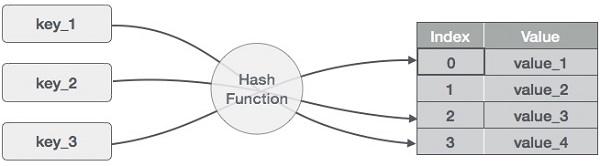
哈希表是一种以关联方式存储数据的数据结构。在哈希表中,数据以数组格式存储,其中每个数据值都有其独特的索引值。如果我们知道所需数据的索引,数据访问速度就会非常快。
因此,它成为一种数据结构,无论数据大小如何,插入和搜索操作都非常快。哈希表使用数组作为存储介质,并使用哈希技术生成要插入或定位元素的索引。
哈希
哈希是一种将键值范围转换为数组索引范围的技术。我们将使用模运算符来获取键值范围。考虑一个大小为 20 的哈希表示例,需要存储以下项。项采用 (key,value) 格式。
- (1,20)
- (2,70)
- (42,80)
- (4,25)
- (12,44)
- (14,32)
- (17,11)
- (13,78)
- (37,98)
| Sr.No. | Key | Hash | Array Index |
|---|---|---|---|
| 1 | 1 | 1 % 20 = 1 | 1 |
| 2 | 2 | 2 % 20 = 2 | 2 |
| 3 | 42 | 42 % 20 = 2 | 2 |
| 4 | 4 | 4 % 20 = 4 | 4 |
| 5 | 12 | 12 % 20 = 12 | 12 |
| 6 | 14 | 14 % 20 = 14 | 14 |
| 7 | 17 | 17 % 20 = 17 | 17 |
| 8 | 13 | 13 % 20 = 13 | 13 |
| 9 | 37 | 37 % 20 = 17 | 17 |
线性探测
正如我们所见,哈希技术可能会被用来创建数组中已使用的索引。在这种情况下,我们可以通过查找下一个单元格来搜索数组中的下一个空位置,直到找到一个空单元格。这种技术称为线性探测。
| 序号 | 键 | 哈希值 | 数组索引 | 线性探测后数组索引 |
|---|---|---|---|---|
| 1 | 1 | 1 % 20 = 1 | 1 | 1 |
| 2 | 2 | 2 % 20 = 2 | 2 | 2 |
| 3 | 42 | 42 % 20 = 2 | 2 | 3 |
| 4 | 4 | 4 % 20 = 4 | 4 | 4 |
| 5 | 12 | 12 % 20 = 12 | 12 | 12 |
| 6 | 14 | 14 % 20 = 14 | 14 | 14 |
| 7 | 17 | 17 % 20 = 17 | 17 | 17 |
| 8 | 13 | 13 % 20 = 13 | 13 | 13 |
| 9 | 37 | 37 % 20 = 17 | 17 | 18 |
基本操作
以下是哈希表的基本操作。
搜索 − 在哈希表中搜索元素。
插入 − 在哈希表中插入元素。
删除 − 从哈希表中删除元素。
数据项
定义一个包含数据和键的数据项,哈希表中将基于该数据项进行搜索。
struct DataItem {
   int data;
   int key;
};
哈希方法
定义一个哈希方法来计算数据项键的哈希码。
int hashCode(int key){
    return key % SIZE;
}
搜索操作
每当要搜索元素时,计算传入键的哈希码,并使用该哈希码作为数组中的索引来定位元素。如果在计算出的哈希码处未找到该元素,则使用线性探测向前查找该元素。
struct DataItem *search(int key) {
   //获取哈希值
   int hashIndex = hashCode(key);

   //移动数组直到空
   while(hashArray[hashIndex] != NULL) {

      if(hashArray[hashIndex]->key == key)
         return hashArray[hashIndex];

      //转到下一个单元格
      ++hashIndex;

      //环绕表格
      hashIndex %= SIZE;
   }

   return NULL;
}
示例
以下是此操作在各种编程语言中的实现 −
#include <stdio.h>
#define SIZE 10 // 定义哈希表的大小
struct DataItem {
    int key;
};
struct DataItem *hashArray[SIZE]; // 将哈希表定义为 DataItem 指针数组
int hashCode(int key) {
    // 根据键返回哈希值
    return key % SIZE;
}
struct DataItem *search(int key) {
    // 获取哈希值
    int hashIndex = hashCode(key);

    // 在数组中移动,直到找到空槽或找到键
    while (hashArray[hashIndex] != NULL) {
        // 如果找到键,则返回相应的 DataItem 指针
        if (hashArray[hashIndex]->key == key)
            return hashArray[hashIndex];

        // 转到下一个单元格
        ++hashIndex;

        // 环绕表格
        hashIndex %= SIZE;
    }
    // 如果未找到键,则返回 NULL
    return NULL;
}

int main() {

    // 使用一些示例 DataItem 初始化哈希表
    struct DataItem item2 = {25}; // 假设键为 25
    struct DataItem item3 = {64}; // 假设键为 64
    struct DataItem item4 = {22}; // 假设键为 22

    // 计算每个项的哈希索引并将其放入哈希表中

    int hashIndex2 = hashCode(item2.key);
    hashArray[hashIndex2] = &item2;

    int hashIndex3 = hashCode(item3.key);
    hashArray[hashIndex3] = &item3;

    int hashIndex4 = hashCode(item4.key);
    hashArray[hashIndex4] = &item4;

    // 调用搜索函数进行测试
    int keyToSearch = 64; // 要在哈希表中搜索的键
    struct DataItem *result = search(keyToSearch);
    printf("需要搜索的元素: %d", keyToSearch);
    if (result != NULL) {
        printf("
Element found");
    } else {
        printf("
Element not found");
    }

    return 0;
}
输出
需要搜索的元素: 64
Element found
#include <iostream>
#include <unordered_map>
using namespace std;
#define SIZE 10 // 定义哈希表的大小
struct DataItem {
   int key;
};
unordered_map<int, DataItem*> hashMap; // 将哈希表定义为 unordered_map

int hashCode(int key) {
   // 根据键返回哈希值
   return key % SIZE;
}

DataItem* search(int key) {
   // 获取哈希值
   int hashIndex = hashCode(key);

   // 在地图中移动,直到找到空槽或找到键
   while (hashMap[hashIndex] != nullptr) {
      // 如果找到键,则返回相应的 DataItem 指针
      if (hashMap[hashIndex]->key == key)
         return hashMap[hashIndex];

      // 转到下一个单元格
      ++hashIndex;

      // 环绕表格
      hashIndex %= SIZE;
   }

   // 如果未找到键,则返回 NULLptr
   return nullptr;
}

int main() {

    // 使用一些示例 DataItem 初始化哈希表
    DataItem item2 = {25}; // 假设键为 25
    DataItem item3 = {64}; // 假设键为 64
    DataItem item4 = {22}; // 假设键为 22

    // 计算每个项目的哈希索引并将其放入哈希表中

    int hashIndex2 = hashCode(item2.key);
    hashMap[hashIndex2] = &item2;

    int hashIndex3 = hashCode(item3.key);
    hashMap[hashIndex3] = &item3;

    int hashIndex4 = hashCode(item4.key);
    hashMap[hashIndex4] = &item4;

    // 调用搜索函数进行测试
    int keyToSearch = 64; // 要在哈希表中搜索的键
   DataItem* result = search(keyToSearch);
   cout<<"需要搜索的元素: "<<keyToSearch;
   if (result != nullptr) {
      cout << "
Element found";
   } else {
      cout << "
Element not found";
   }

   return 0;
}
输出
需要搜索的元素: 64
Element found
import java.util.HashMap;
public class Main {
   static final int SIZE = 10; // 定义哈希表的大小
   static class DataItem {
      int key;
   }
   static HashMap<Integer, DataItem> hashMap = new HashMap<>(); // 将哈希表定义为 HashMap

   static int hashCode(int key) {
      // 根据键返回哈希值
      return key % SIZE;
   }
   static DataItem search(int key) {
      // 获取哈希值
      int hashIndex = hashCode(key);

      // 在地图中移动,直到找到空槽或找到键
      while (hashMap.get(hashIndex) != null) {
         // 如果找到键,则返回相应的 DataItem
         if (hashMap.get(hashIndex).key == key)
            return hashMap.get(hashIndex);

         // 转到下一个单元格
         ++hashIndex;

         // 环绕表格
         hashIndex %= SIZE;
      }

      // 如果未找到键,则返回 NULL
      return null;
   }
public static void main(String[] args) {
    // 使用一些示例 DataItem 初始化哈希表

    DataItem item2 = new DataItem();
    item2.key = 25; // 假设键为 25

    DataItem item3 = new DataItem();
    item3.key = 64; // 假设键为 64
    DataItem item4 = new DataItem();
    item4.key = 22; // 假设键为 22
    // 计算每个项目的哈希索引并将其放入哈希表中

    int hashIndex2 = hashCode(item2.key);
    hashMap.put(hashIndex2, item2);

    int hashIndex3 = hashCode(item3.key);
    hashMap.put(hashIndex3, item3);

    int hashIndex4 = hashCode(item4.key);
    hashMap.put(hashIndex4, item4);

    // 调用搜索函数进行测试
    int keyToSearch = 64; // 哈希表中要搜索的键
   DataItem result = search(keyToSearch);
   System.out.print("需要搜索的元素: " + keyToSearch);
      if (result != null) {
         System.out.println("
Element found");
      } else {
         System.out.println("
Element not found");
      }
   }
}
输出
需要搜索的元素: 64
Element found
SIZE = 10 # 定义哈希表的大小
class DataItem:
    def __init__(self, key):
        self.key = key
hashMap = {} # 将哈希表定义为字典
def hashCode(key):
    # 根据键返回哈希值
    return key % SIZE

def search(key):
    # 获取哈希值
    hashIndex = hashCode(key)

    # 在地图中移动,直到找到空槽或找到键
    while hashIndex in hashMap:
        # 如果找到键,则返回相应的 DataItem
        if hashMap[hashIndex].key == key:
            return hashMap[hashIndex]

        # 转到下一个单元格
        hashIndex = (hashIndex + 1) % SIZE

    # 如果未找到键,则返回 None
    return None
# 使用一些示例 DataItem 初始化哈希表
item2 = DataItem(25) # 假设键为 25
item3 = DataItem(64) # 假设键为 64
item4 = DataItem(22) # 假设键为 22
# 计算每个项的哈希索引并将其放入哈希表中
hashIndex2 = hashCode(item2.key)
hashMap[hashIndex2] = item2

hashIndex3 = hashCode(item3.key)
hashMap[hashIndex3] = item3

hashIndex4 = hashCode(item4.key)
hashMap[hashIndex4] = item4

# 调用搜索函数进行测试
keyToSearch = 64 # 要在哈希表中搜索的键
result = search(keyToSearch)
print("需要搜索的元素: ", keyToSearch)
if result:
    print("Element found")
else:
    print("Element not found")
输出
需要搜索的元素:  64
Element found
插入操作
每当要插入元素时,计算传入键的哈希码,并使用该哈希码作为数组中的索引来定位索引。如果在计算出的哈希码处找到元素,则使用线性探测查找空位置。
void insert(int key,int data) {
   struct DataItem *item = (struct DataItem*) malloc(sizeof(struct DataItem));
   item->data = data;
   item->key = key;

   //获取哈希值
   int hashIndex = hashCode(key);

   //在数组中移动,直到出现空单元格或被删除的单元格
   while(hashArray[hashIndex] != NULL && hashArray[hashIndex]->key != -1) {
      //转到下一个单元格
      ++hashIndex;

      //环绕表格
      hashIndex %= SIZE;
   }

   hashArray[hashIndex] = item;
}
示例
以下是此操作在各种编程语言中的实现 −
#include <stdio.h>
#include <stdlib.h>
#define SIZE 4 // 定义哈希表的大小
struct DataItem {
    int key;
};
struct DataItem *hashArray[SIZE]; // 将哈希表定义为 DataItem 指针数组
int hashCode(int key) {
    // 根据键返回哈希值
    return key % SIZE;
}
void insert(int key) {
   // 使用 malloc 创建新的 DataItem
   struct DataItem *newItem = (struct DataItem*)malloc(sizeof(struct DataItem));

   if (newItem == NULL) {
      // 检查 malloc 是否分配内存失败
      fprintf(stderr, "Memory allocation error
");
      return;
   }

    newItem->key = key;
    // 如有需要,初始化其他数据成员

    // 计算键的哈希索引
    int hashIndex = hashCode(key);

    // 处理冲突(线性探测)
   while (hashArray[hashIndex] != NULL) {
      //移至下一个单元格
      ++hashIndex;
      // 如果需要的话环绕表格
      hashIndex %= SIZE;
   }

   // 将新的 DataItem 插入到计算出的索引处
   hashArray[hashIndex] = newItem;
}
int main() {
    // 使用不同的键调用 insert 函数来填充哈希表
    insert(42); // 插入一个键为 42 的项
    insert(25); // 插入一个键为 25 的项
    insert(64); // 插入一个键为 64 的项
    insert(22); // 插入一个键为 22 的项

    // 输出填充后的哈希表
   for (int i = 0; i < SIZE; i++) {
      if (hashArray[i] != NULL) {
         printf("Index %d: Key %d
", i, hashArray[i]->key);
      } else {
         printf("Index %d: Empty
", i);
      }
   }

   return 0;
}
输出
Index 0: Key 64
Index 1: Key 25
Index 2: Key 42
Index 3: Key 22
#include <iostream>
#include <vector>
#define SIZE 4 // 定义哈希表的大小

struct DataItem {
   int key;
};
std::vector<DataItem*> hashArray(SIZE, nullptr); // 将哈希表定义为 DataItem 指针的向量
int hashCode(int key)
{
   // 根据键返回哈希值
   return key % SIZE;
}
void insert(int key)
{
    // 使用 new 创建一个新的 DataItem(动态内存分配)
    DataItem *newItem = new DataItem;

    newItem->key = key;
    // 如有需要,初始化其他数据成员

    // 计算键的哈希索引
    int hashIndex = hashCode(key);

    // 处理冲突(线性探测)
   while (hashArray[hashIndex] != nullptr) {
      //移至下一个单元格
      ++hashIndex;
      // 如果需要的话环绕表格
      hashIndex %= SIZE;
   }

   // 将新的 DataItem 插入到计算出的索引处
   hashArray[hashIndex] = newItem;
}

int main()
{
    // 使用不同的键调用 insert 函数来填充哈希表

    insert(42); // 插入一个键为 42 的项
    insert(25); // 插入一个键为 25 的项
    insert(64); // 插入一个键为 64 的项
    insert(22); // 插入一个键为 22 的项

    // 输出填充后的哈希表
   for (int i = 0; i < SIZE; i++) {
      if (hashArray[i] != nullptr) {
         std::cout << "Index " << i << ": Key " << hashArray[i]->key << std::endl;
      } else {
         std::cout << "Index " << i << ": Empty" << std::endl;
      }
   }
   return 0;
}
输出
Index 0: Key 64
Index 1: Key 25
Index 2: Key 42
Index 3: Key 22
import java.util.Arrays;
public class Main {
   static final int SIZE = 4; // 定义哈希表的大小
   static class DataItem {
      int key;
   }
   static DataItem[] hashArray = new DataItem[SIZE]; // 将哈希表定义为 DataItem 指针数组
   static int hashCode(int key) {
      // 根据键返回哈希值
      return key % SIZE;
   }
   static void insert(int key) {
      // 创建新的数据项
      DataItem newItem = new DataItem();
      newItem.key = key;
    // 如有需要,初始化其他数据成员

    // 计算键的哈希索引
    int hashIndex = hashCode(key);

    // 处理冲突(线性探测)
      while (hashArray[hashIndex] != null) {
         //移至下一个单元格
         hashIndex++;
         // 如果需要的话环绕表格
         hashIndex %= SIZE;
      }
      // 将新的 DataItem 插入到计算出的索引处
      hashArray[hashIndex] = newItem;
   }
public static void main(String[] args) {
    // 使用不同的键调用 insert 函数来填充哈希表
    insert(42); // 插入一个键为 42 的元素
    insert(25); // 插入一个键为 25 的元素
    insert(64); // 插入一个键为 64 的元素
    insert(22); // 插入一个键为 22 的元素
    // 输出填充后的哈希表
   for (int i = 0; i < SIZE; i++) {
      if (hashArray[i] != null) {
         System.out.println("Index " + i + ": Key " + hashArray[i].key);
      } else {
         System.out.println("Index " + i + ": Empty");
      }
   }
   }
}
输出
Index 0: Key 64
Index 1: Key 25
Index 2: Key 42
Index 3: Key 22
SIZE = 4  # 定义哈希表的大小
class DataItem:
    def __init__(self, key):
        self.key = key
hashArray = [None] * SIZE  # 将哈希表定义为 DataItem 指针列表
def hashCode(key):
    # 根据键返回哈希值
    return key % SIZE

def insert(key):
    # 创建新的数据项
    newItem = DataItem(key)
    # 如有需要,初始化其他数据成员
    # 计算键的哈希索引
    hashIndex = hashCode(key)
    # 处理冲突(线性探测)
    while hashArray[hashIndex] is not None:
        # 移至下一个单元格
        hashIndex += 1
        # 如有需要,循环遍历表
        hashIndex %= SIZE

    # 将新的 DataItem 插入到计算出的索引处
    hashArray[hashIndex] = newItem
# 使用不同的键调用插入函数来填充哈希表
insert(42) # 插入键为 42 的项
insert(25) # 插入键为 25 的项
insert(64) # 插入键为 64 的项
insert(22) # 插入键为 22 的项
# 输出填充后的哈希表
for i in range(SIZE):
    if hashArray[i] is not None:
        print(f"Index {i}: Key {hashArray[i].key}")
    else:
        print(f"Index {i}: Empty")
输出
Index 0: Key 64
Index 1: Key 25
Index 2: Key 42
Index 3: Key 22
删除操作
每当要删除一个元素时,计算传入键的哈希码,并使用该哈希码作为数组中的索引来定位索引。如果在计算出的哈希码处未找到元素,则使用线性探测将元素向前移动。如果找到元素,则在该位置存储一个虚拟项,以保持哈希表的性能。
struct DataItem* delete(struct DataItem* item) {
   int key = item->key;

   //获取哈希值
   int hashIndex = hashCode(key);

   //移动数组直到空
   while(hashArray[hashIndex] !=NULL) {

      if(hashArray[hashIndex]->key == key) {
         struct DataItem* temp = hashArray[hashIndex];

         //在已删除的位置分配一个虚拟项
         hashArray[hashIndex] = dummyItem;
         return temp;
      }
      //转到下一个单元格
      ++hashIndex;

      //环绕表格
      hashIndex %= SIZE;
   }
   return NULL;
}
示例
以下是各种编程语言中哈希表删除操作的实现 −
#include <stdio.h>
#include <stdlib.h>
#define SIZE 5 // 定义哈希表的大小
struct DataItem {
   int key;
};
struct DataItem *hashArray[SIZE]; // 将哈希表定义为 DataItem 指针数组

int hashCode(int key) {
   // 在这里实现你的哈希函数
   // 根据键返回哈希值
}
void insert(int key) {
   // 使用 malloc 创建新的 DataItem
   struct DataItem *newItem = (struct DataItem*)malloc(sizeof(struct DataItem));
   if (newItem == NULL) {
      // 检查 malloc 是否分配内存失败
      fprintf(stderr, "Memory allocation error
");
      return;
   }

   newItem->key = key;
    // 如有需要,初始化其他数据成员

    // 计算键的哈希索引
    int hashIndex = hashCode(key);

    // 处理冲突(线性探测)
   while (hashArray[hashIndex] != NULL) {
      //移至下一个单元格
      ++hashIndex;
      // 如果需要的话环绕表格
      hashIndex %= SIZE;
   }

   // 将新的 DataItem 插入到计算出的索引处
   hashArray[hashIndex] = newItem;

   // 打印插入项的键和哈希索引
   printf("Inserted key %d at index %d
", newItem->key, hashIndex);
}
void delete(int key) {
   // 在哈希表中查找项目
   int hashIndex = hashCode(key);
   while (hashArray[hashIndex] != NULL) {
      if (hashArray[hashIndex]->key == key) {
         // 将该项目标记为已删除(可选:释放内存)
         free(hashArray[hashIndex]);
         hashArray[hashIndex] = NULL;
         return;
      }
      //移至下一个单元格
      ++hashIndex;
      // 如果需要的话环绕表格
      hashIndex %= SIZE;
   }
   // 如果找不到密钥,则打印一条消息
   printf("Item with key %d not found.
", key);
}
int main() {
    // 使用不同的键调用 insert 函数来填充哈希表
    printf("删除前的哈希表内容:
");
    insert(1); // 插入一个键为 42 的项
    insert(2); // 插入一个键为 25 的项
    insert(3); // 插入一个键为 64 的项
    insert(4); // 插入一个键为 22 的项
    int ele1 = 2;
    int ele2 = 4;
    printf("要删除的键:%d 和 %d", ele1, ele2);
    delete(ele1); // 删除一个键为 42 的项
    delete(ele2); // 删除一个键为 25 的项
    // 打印删除操作后的哈希表内容
   printf("
删除后的哈希表内容:
");
   for (int i = 1; i < SIZE; i++) {
      if (hashArray[i] != NULL) {
         printf("Index %d: Key %d
", i, hashArray[i]->key);
      } else {
         printf("Index %d: Empty
", i);
      }
   }
   return 0;
}
输出
删除前的哈希表内容:
Inserted key 1 at index 1
Inserted key 2 at index 2
Inserted key 3 at index 3
Inserted key 4 at index 4
The key to be deleted: 2 and 4
删除后的哈希表内容:
Index 1: Key 1
Index 2: Empty
Index 3: Key 3
Index 4: Empty
#include <iostream>
using namespace std;
const int SIZE = 5; // 定义哈希表的大小
struct DataItem {
   int key;
};
struct DataItem* hashArray[SIZE]; // 将哈希表定义为 DataItem 指针数组

int hashCode(int key) {
   // 在这里实现你的哈希函数
   // 根据键返回哈希值

   // 一个简单的哈希函数(模除)
   return key % SIZE;
}

void insert(int key) {
    // 使用 new 创建新的 DataItem
    struct DataItem* newItem = new DataItem;
    newItem->key = key;
    // 如有需要,初始化其他数据成员
    // 计算键的哈希索引
    int hashIndex = hashCode(key);
    // 处理冲突(线性探测)
    while (hashArray[hashIndex] != nullptr) {
      //移至下一个单元格
      ++hashIndex;
      // 如果需要的话环绕表格
      hashIndex %= SIZE;
   }
   // 将新的 DataItem 插入到计算出的索引处
   hashArray[hashIndex] = newItem;
   // 打印插入项的键和哈希索引
   cout << "Inserted key " << newItem->key << " at index " << hashIndex << endl;
}
void deleteItem(int key) {
   // 在哈希表中查找项目
   int hashIndex = hashCode(key);
   while (hashArray[hashIndex] != nullptr) {
      if (hashArray[hashIndex]->key == key) {
         // 将该项目标记为已删除(可选:释放内存)
         delete hashArray[hashIndex];
         hashArray[hashIndex] = nullptr;
         return;
      }
      //移至下一个单元格
      ++hashIndex;
      // 如果需要的话环绕表格
      hashIndex %= SIZE;
   }
   // 如果找不到密钥,则打印一条消息
   cout << "Item with key " << key << " not found." << endl;
}
int main() {
    // 使用不同的键调用 insert 函数来填充哈希表
    cout<<"删除后的哈希表内容:
";
    insert(1); // 插入一个键为 42 的项目
    insert(2); // 插入一个键为 25 的项目
    insert(3); // 插入一个键为 64 的项目
    insert(4); // 插入一个键为 22 的项目
    int ele1 = 2;
    int ele2 = 4;
    cout<<"要删除的键:"<<ele1<<" 和 "<<ele2<<"
";
    deleteItem(2); // 删除一个键为 42 的项目
    deleteItem(4); // 删除一个键为 25 的项目
    cout<<"删除后的哈希表内容:
";
    // 打印删除操作后哈希表的内容
   for (int i = 1; i < SIZE; i++) {
      if (hashArray[i] != nullptr) {
         cout << "Index " << i << ": Key " << hashArray[i]->key << endl;
      } else {
         cout << "Index " << i << ": Empty" << endl;
      }
   }
   return 0;
}
输出
删除前的哈希表内容:
Inserted key 1 at index 1
Inserted key 2 at index 2
Inserted key 3 at index 3
Inserted key 4 at index 4
The key to be deleted: 2 and 4
删除后的哈希表内容:
Index 1: Key 1
Index 2: Empty
Index 3: Key 3
Index 4: Empty
public class Main {
   static final int SIZE = 5; // 定义哈希表的大小
   static class DataItem {
      int key;
      DataItem(int key) {
         this.key = key;
      }
   }
   static DataItem[] hashArray = new DataItem[SIZE]; // 将哈希表定义为 DataItem 对象的数组
   static int hashCode(int key) {
      // 在这里实现你的哈希函数
      // 根据键返回哈希值
      return key % SIZE; // 使用模运算符的简单哈希函数
   }
   static void insert(int key) {
      // 计算键的哈希索引
      int hashIndex = hashCode(key);
      // 处理碰撞(线性探测)
      while (hashArray[hashIndex] != null) {
         //移至下一个单元格
         hashIndex = (hashIndex + 1) % SIZE;
      }

      // 将新的 DataItem 插入到计算出的索引处
      hashArray[hashIndex] = new DataItem(key);

      // 打印插入项的键和哈希索引
      System.out.println("Inserted key " + key + " at index " + hashIndex);
   }
   static void delete(int key) {
      // 在哈希表中查找项目
      int hashIndex = hashCode(key);
      while (hashArray[hashIndex] != null) {
         if (hashArray[hashIndex].key == key) {
            // 将该项目标记为已删除(可选:释放内存)
            hashArray[hashIndex] = null;

            // 打印已删除项目的键和哈希索引
            return;
         }
         //移至下一个单元格
         hashIndex = (hashIndex + 1) % SIZE;
      }
      // 如果找不到密钥,则打印一条消息
      System.out.println("Item with key " + key + " not found.");
   }
public static void main(String[] args) {
    // 使用不同的键调用 insert 函数来填充哈希表
    System.out.println("删除前的哈希表内容: ");
    insert(1); // 插入一个键为 1 的项目
    insert(2); // 插入一个键为 2 的项目
    insert(3); // 插入一个键为 3 的项目
    insert(4); // 插入一个键为 4 的项目
    int ele1 = 2;
    int ele2 = 4;
    System.out.print("要删除的键: " + ele1 + " 和 " + ele2);
    delete(ele1); // 删除一个键为 2 的项目
    delete(ele2); // 删除一个键为 4 的项目
    // 删除操作后打印哈希表的内容
    System.out.println("
删除后的哈希表内容:");
   for (int i = 1; i < SIZE; i++) {
      if (hashArray[i] != null) {
         System.out.println("Index " + i + ": Key " + hashArray[i].key);
      } else {
        System.out.println("Index " + i + ": Empty");
      }
     }
   }
}
输出
删除前的哈希表内容:
Inserted key 1 at index 1
Inserted key 2 at index 2
Inserted key 3 at index 3
Inserted key 4 at index 4
The keys to be deleted: 2 and 4
删除后的哈希表内容:
Index 1: Key 1
Index 2: Empty
Index 3: Key 3
Index 4: Empty
SIZE = 5  # 定义哈希表的大小

class DataItem:
    def __init__(self, key):
        self.key = key

def hashCode(key):
    # 在这里实现你的哈希函数
    # 根据键返回哈希值
    return key % SIZE

def insert(key):
    global hashArray  # 访问全局 hashArray 变量
    # 计算键的哈希索引
    hashIndex = hashCode(key)

    # 处理碰撞(线性探测)
    while hashArray[hashIndex] is not None:
        #移至下一个单元格
        hashIndex = (hashIndex + 1) % SIZE

    # 将新的 DataItem 插入到计算出的索引处
    hashArray[hashIndex] = DataItem(key)

    # 打印插入项的键和哈希索引
    print(f"Inserted key {key} at index {hashIndex}")

def delete(key):
    global hashArray  # 访问全局 hashArray 变量
    # 在哈希表中查找项目
    hashIndex = hashCode(key)
    while hashArray[hashIndex] is not None:
        if hashArray[hashIndex].key == key:
            # 将该项目标记为已删除(可选:释放内存)
            hashArray[hashIndex] = None
            return
        #移至下一个单元格
        hashIndex = (hashIndex + 1) % SIZE

    # 如果找不到密钥,则打印一条消息
    print(f"Item with key {key} not found.")

# 将哈希表初始化为 None 值列表
hashArray = [None] * SIZE
print("删除前的哈希表内容:")
# 使用不同的键调用 insert 函数来填充哈希表
insert(1) # 插入键为 1 的项目
insert(2) # 插入键为 2 的项目
insert(3) # 插入键为 3 的项目
insert(4) # 插入键为 4 的项目
ele1 = 2
ele2 = 4
print("要删除的键: ", ele1, " 和 ", ele2)
delete(2) # 删除键为 2 的项目
delete(4) # 删除键为 4 的项目

# 删除操作后打印哈希表的内容
print("删除后的哈希表内容:")
for i in range(1, SIZE):
    if hashArray[i] is not None:
        print(f"Index {i}: Key {hashArray[i].key}")
    else:
        print(f"Index {i}: Empty")
输出
删除前的哈希表内容:
Inserted key 1 at index 1
Inserted key 2 at index 2
Inserted key 3 at index 3
Inserted key 4 at index 4
The keys to be deleted:  2  and  4
删除后的哈希表内容:
Index 1: Key 1
Index 2: Empty
Index 3: Key 3
Index 4: Empty
完整实现
以下是上述操作在各种编程语言中的完整实现 −
#include <stdio.h>
#include <string.h>
#include <stdlib.h>
#include <stdbool.h>
#define SIZE 20
struct DataItem {
   int data;
   int key;
};
struct DataItem* hashArray[SIZE];
struct DataItem* dummyItem;
struct DataItem* item;

int hashCode(int key) {
   return key % SIZE;
}
struct DataItem *search(int key) {
   //获取哈希值
   int hashIndex = hashCode(key);

   //移动数组直到空
   while(hashArray[hashIndex] != NULL) {

      if(hashArray[hashIndex]->key == key)
         return hashArray[hashIndex];

      //转到下一个单元格
      ++hashIndex;

      //环绕表格
      hashIndex %= SIZE;
   }
   return NULL;
}
void insert(int key,int data) {
   struct DataItem *item = (struct DataItem*) malloc(sizeof(struct DataItem));
   item->data = data;
   item->key = key;

   //获取哈希值
   int hashIndex = hashCode(key);

   //在数组中移动,直到出现空单元格或被删除的单元格
   while(hashArray[hashIndex] != NULL && hashArray[hashIndex]->key != -1) {
      //转到下一个单元格
      ++hashIndex;
      //环绕表格
      hashIndex %= SIZE;
   }
   hashArray[hashIndex] = item;
}
struct DataItem* delete(struct DataItem* item) {
   int key = item->key;
   //获取哈希值
   int hashIndex = hashCode(key);
   //移动数组直到空
   while(hashArray[hashIndex] != NULL) {

      if(hashArray[hashIndex]->key == key) {
         struct DataItem* temp = hashArray[hashIndex];
         //在已删除的位置分配一个虚拟项
         hashArray[hashIndex] = dummyItem;
         return temp;
      }
      //转到下一个单元格
      ++hashIndex;

      //环绕表格
      hashIndex %= SIZE;
   }
   return NULL;
}
void display() {
   int i = 0;

   for(i = 0; i<SIZE; i++) {
      if(hashArray[i] != NULL)
         printf("(%d,%d) ",hashArray[i]->key,hashArray[i]->data);
   }

   printf("
");
}
int main() {
   dummyItem = (struct DataItem*) malloc(sizeof(struct DataItem));
   dummyItem->data = -1;
   dummyItem->key = -1;
   insert(1, 20);
   insert(2, 70);
   insert(42, 80);
   insert(4, 25);
   insert(12, 44);
   insert(14, 32);
   insert(17, 11);
   insert(13, 78);
   insert(37, 97);
   printf("Insertion done:
");
   printf("Contents of Hash Table: ");
   display();
   int ele = 37;
   printf("需要搜索的元素: %d", ele);
   item = search(ele);
   if(item != NULL) {
      printf("
Element found: %d
", item->key);
   } else {
      printf("
Element not found
");
   }
   delete(item);
   printf("删除后的哈希表内容: ");
   display();
}
输出
Insertion done:
Contents of Hash Table: (1,20) (2,70) (42,80) (4,25) (12,44) (13,78) (14,32) (17,11) (37,97)
需要搜索的元素: 37
Element found: 37
删除后的哈希表内容: (1,20) (2,70) (42,80) (4,25) (12,44) (13,78) (14,32) (17,11) (-1,-1)
#include <iostream>
#include <vector>
using namespace std;
using namespace std;
#define SIZE 20
struct DataItem {
   int data;
   int key;
};
std::vector<DataItem*> hashArray(SIZE, nullptr);
DataItem* dummyItem;
DataItem* item;
int hashCode(int key) {
   return key % SIZE;
}
DataItem* search(int key) {
   //获取哈希值
   int hashIndex = hashCode(key);
   //移动数组直到空
   while (hashArray[hashIndex] != nullptr) {
      if (hashArray[hashIndex]->key == key)
         return hashArray[hashIndex];
         //转到下一个单元格
         //环绕表格
      hashIndex = (hashIndex + 1) % SIZE;
   }
   return nullptr;
}
void insert(int key, int data) {
   DataItem* item = new DataItem;
   item->data = data;
   item->key = key;
    //获取哈希值
   int hashIndex = hashCode(key);
   //在数组中移动,直到出现空单元格或被删除的单元格
   while (hashArray[hashIndex] != nullptr && hashArray[hashIndex]->key != -1) {
      hashIndex = (hashIndex + 1) % SIZE;
   }
   hashArray[hashIndex] = item;
}
DataItem* deleteItem(DataItem* item) {
   int key = item->key;
   int hashIndex = hashCode(key);
   while (hashArray[hashIndex] != nullptr) {
      if (hashArray[hashIndex]->key == key) {
         DataItem* temp = hashArray[hashIndex];
         hashArray[hashIndex] = dummyItem;
         return temp;
      }
      hashIndex = (hashIndex + 1) % SIZE;
   }
   return nullptr;
}
void display() {
   for (int i = 0; i < SIZE; i++) {
      if (hashArray[i] != nullptr)
         cout << " (" << hashArray[i]->key << "," << hashArray[i]->data << ")";
   }
   cout << std::endl;
}
int main() {
   dummyItem = new DataItem;
   dummyItem->data = -1;
   dummyItem->key = -1;
   insert(1, 20);
   insert(2, 70);
   insert(42, 80);
   insert(4, 25);
   insert(12, 44);
   insert(14, 32);
   insert(17, 11);
   insert(13, 78);
   insert(37, 97);
   cout<<"Insertion Done";
   cout<<"
Contents of Hash Table: ";
   display();
   int ele = 37;
   cout<<"需要搜索的元素: "<<ele;
   item = search(ele);
   if (item != nullptr) {
      cout << "
Element found: " << item->key;
   } else {
      cout << "
Element not found" << item->key;
   }
   // Clean up allocated memory
   delete(item);
   cout<<"
删除后的哈希表内容: ";
   display();
}
输出
Insertion Done
Contents of Hash Table:  (1,20) (2,70) (42,80) (4,25) (12,44) (13,78) (14,32) (17,11) (37,97)
需要搜索的元素: 37
Element found: 37
删除后的哈希表内容:  (1,20) (2,70) (42,80) (4,25) (12,44) (13,78) (14,32) (17,11) (5,1666768001)
public class HashTableExample {
   static final int SIZE = 20;
   static class DataItem {
      int data;
      int key;
      DataItem(int data, int key) {
         this.data = data;
         this.key = key;
      }
   }
   static DataItem[] hashArray = new DataItem[SIZE];
   static DataItem dummyItem = new DataItem(-1, -1);
   static DataItem item;
   static int hashCode(int key) {
      return key % SIZE;
   }
   static DataItem search(int key) {
      int hashIndex = hashCode(key);

      while (hashArray[hashIndex] != null) {
         if (hashArray[hashIndex].key == key)
            return hashArray[hashIndex];

         hashIndex = (hashIndex + 1) % SIZE;
      }
      return null;
   }
   static void insert(int key, int data) {
       DataItem item = new DataItem(data, key);
       int hashIndex = hashCode(key);

       while (hashArray[hashIndex] != null && hashArray[hashIndex].key != -1) {
           hashIndex = (hashIndex + 1) % SIZE;
       }
       hashArray[hashIndex] = item;
   }
   static DataItem deleteItem(DataItem item) {
      int key = item.key;
      int hashIndex = hashCode(key);
      while (hashArray[hashIndex] != null) {
          if (hashArray[hashIndex].key == key) {
              DataItem temp = hashArray[hashIndex];
              hashArray[hashIndex] = dummyItem;
              return temp;
          }

          hashIndex = (hashIndex + 1) % SIZE;
      }
      return null;
   }
   static void display() {
      for (int i = 0; i < SIZE; i++) {
         if (hashArray[i] != null)
            System.out.print(" (" + hashArray[i].key + "," + hashArray[i].data + ")");
      }
      System.out.println();
   }
public static void main(String[] args) {
   insert(1, 20);
   insert(2, 70);
   insert(42, 80);
   insert(4, 25);
   insert(12, 44);
   insert(14, 32);
   insert(17, 11);
   insert(13, 78);
   insert(37, 97);
   System.out.print("Insertion done");
   System.out.print("
Contents of Hash Table:");
   display();
   int ele = 37;
   System.out.print("需要搜索的元素: " + ele);
   item = search(37);

   if (item != null) {
      System.out.println("
Element found: " + item.key);
   } else {
      System.out.println("
Element not found");
   }
   deleteItem(item);
   System.out.print("删除后的哈希表内容:");
   display();
   }
}
输出
Insertion done
Contents of Hash Table: (1,20) (2,70) (42,80) (4,25) (12,44) (13,78) (14,32) (17,11) (37,97)
需要搜索的元素: 37
Element found: 37
删除后的哈希表内容: (1,20) (2,70) (42,80) (4,25) (12,44) (13,78) (14,32) (17,11) (-1,-1)
SIZE = 20
class DataItem:
    def __init__(self, data, key):
        self.data = data
        self.key = key
# 使用 None 值初始化哈希数组
hashArray = [None] * SIZE
# 创建一个虚拟项来标记哈希表中已删除的单元格
dummyItem = DataItem(-1, -1)
# 用于保存搜索操作中找到的项的变量
item = None
# 用于计算给定键的哈希索引的哈希函数
def hashCode(key):
    return key % SIZE
# 用于通过键在哈希表中搜索项的函数
def search(key):
    # 使用哈希函数计算哈希索引
    hashIndex = hashCode(key)
    # 遍历数组直到遇到空单元格
    while hashArray[hashIndex] is not None:
        if hashArray[hashIndex].key == key:
            # Item found, return the item
            return hashArray[hashIndex]
        #移动到下一个单元格(线性探测)
        hashIndex = (hashIndex + 1) % SIZE

    # 如果循环终止而未找到该项,则表示该项不存在
    return None
# 将项插入哈希表的函数
def insert(key, data):
    # DataItem 对象的定义
    item = DataItem(data, key)
    # 使用哈希函数计算哈希索引
    hashIndex = hashCode(key)
    # 使用线性探测处理冲突(移动到下一个单元格,直到找到空单元格)
    while hashArray[hashIndex] is not None and hashArray[hashIndex].key != -1:
        hashIndex = (hashIndex + 1) % SIZE
        # 将项插入哈希表中计算出的索引处
    hashArray[hashIndex] = item
    # 从哈希表中删除项的函数
def deleteItem(item):
    key = item.key
    # 使用哈希函数计算哈希索引
    hashIndex = hashCode(key)
    # 遍历数组,直到遇到空单元格或已删除的单元格
    while hashArray[hashIndex] is not None:
        if hashArray[hashIndex].key == key:
            # 找到项目,用 dummyItem 替换该单元格,将其标记为已删除
            temp = hashArray[hashIndex]
            hashArray[hashIndex] = dummyItem
            return temp
        #移动到下一个单元格(线性探测)
        hashIndex = (hashIndex + 1) % SIZE

    # 如果循环终止而未找到该项目,则意味着该项目不存在
    return None
# 显示哈希表的函数
def display():
    for i in range(SIZE):
        if hashArray[i] is not None:
            # 打印当前索引处的项目的键和数据
            print(" ({}, {})".format(hashArray[i].key, hashArray[i].data), end="")
        else:
            # 为空单元格打印 ~~
            print(" ~~ ", end="")
    print()
if __name__ == "__main__":
    # 测试哈希表实现
    # 将一些元素插入哈希表
    insert(1, 20)
    insert(2, 70)
    insert(42, 80)
    insert(4, 25)
    insert(12, 44)
    insert(14, 32)
    insert(17, 11)
    insert(13, 78)
    insert(37, 97)
	print("Insertion done")
	print("Hash Table contents: ");
    # 显示哈希表
    display()
    display()
    # 搜索具有特定键 (37) 的项目
    item = search(37)

    # 检查是否找到该项目并打印结果
    if item is not None:
        print("Element found:", item.data)
    else:
        print("Element not found")

    # 从哈希表中删除键为 37 的项目
    deleteItem(item)

    # 删除后再次搜索键为 37 的项目
    item = search(37)

    # 检查是否找到该项目并打印结果
    if item is not None:
        print("Element found:", item.data)
    else:
        print("Element not found")
输出
~~  (1, 20) (2, 70) (42, 80) (4, 25) ~~  ~~  ~~  ~~  ~~  ~~  ~~  (12, 44) (13, 78) (14, 32) ~~  ~~  (17, 11) (37, 97) ~~
Element found: 97
Element not found