
双向链表数据结构
什么是双向链表?
双向链表是链表的一种变体,与单链表相比,它可以轻松地向前和向后导航。以下是理解双向链表概念的重要术语。
Link − 链表的每个链接都可以存储一个称为元素的数据。
Next − 链表的每个链接都包含一个指向下一个链接的链接,称为"Next"。
Prev − 链表的每个链接都包含一个指向上一个链接的链接,称为"Prev"。
链表 −链表包含指向第一个链接(称为 First)和最后一个链接(称为 Last)的连接链接。
双向链表表示
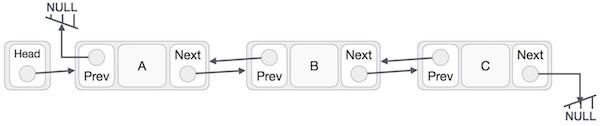
根据上图,以下是需要考虑的要点。
双向链表包含一个名为 first 和 last 的链接元素。
每个链接都包含一个数据字段和一个称为 next 的链接字段。
每个链接都通过其下一个链接与其下一个链接链接。
每个链接都通过其上一个链接与其上一个链接链接。
最后一个链接包含一个链接,如下所示null 标记列表末尾。
双向链表的基本操作
以下是列表支持的基本操作。
插入 − 在列表开头添加一个元素。
插入最后一个 − 在列表末尾添加一个元素。
插入后 − 在列表的某个元素后添加一个元素。
删除 − 删除列表开头的一个元素。
删除最后一个 −从列表末尾删除一个元素。
删除 − 使用键从列表中删除一个元素。
向前显示 − 以正向方式显示完整列表。
向后显示 − 以反向方式显示完整列表。
双向链表 - 在开头插入
在此操作中,我们创建一个包含三个隔间的新节点,一个包含数据,其他两个包含列表中前一个节点和后一个节点的地址。此新节点将插入到列表的开头。
算法
1. 开始
2. 创建一个包含三个变量的新节点:prev、data、next。
3. 将新数据存储到 data 变量中
4. 如果列表为空,则将新节点设为头节点。
5. 否则,将现有首节点的地址链接到
新节点的 next 变量,并将 prev 变量赋值为 null。
6. 将头节点指向新节点。
7. 结束
示例
以下是此操作在各种编程语言中的实现 −
#include <stdio.h>
#include <string.h>
#include <stdlib.h>
#include <stdbool.h>
struct node {
   int data;
   int key;
   struct node *next;
   struct node *prev;
};

//此链接始终指向第一个链接
struct node *head = NULL;

//此链接始终指向最后一个链接
struct node *last = NULL;
struct node *current = NULL;

//列表为空
bool isEmpty(){
   return head == NULL;
}

//显示双向链表
void printList(){
   struct node *ptr = head;
   while(ptr != NULL) {
      printf("(%d,%d) ",ptr->key,ptr->data);
      ptr = ptr->next;
   }
}

//在第一个位置插入链接
void insertFirst(int key, int data){

   //创建链接
   struct node *link = (struct node*) malloc(sizeof(struct node));
   link->key = key;
   link->data = data;
   if(isEmpty()) {

      //使其成为最后一个链接
      last = link;
   } else {

      //更新第一个上一个链接
      head->prev = link;
   }

   //将其指向旧的第一个链接
   link->next = head;

   //首先指向新的第一个链接
   head = link;
}
void main(){
   insertFirst(1,10);
   insertFirst(2,20);
   insertFirst(3,30);
   insertFirst(4,1);
   insertFirst(5,40);
   insertFirst(6,56);
   printf("
双向链表: ");
   printList();
}
输出
双向链表: (6,56) (5,40) (4,1) (3,30) (2,20) (1,10)
#include <iostream>
#include <cstring>
#include <cstdlib>
#include <cstdbool>
struct node {
   int data;
   int key;
   struct node *next;
   struct node *prev;
};

//此链接始终指向第一个链接
struct node *head = NULL;

//此链接始终指向最后一个链接
struct node *last = NULL;
struct node *current = NULL;

//列表为空
bool isEmpty(){
   return head == NULL;
}

//显示双向链表
void printList(){
   struct node *ptr = head;
   while(ptr != NULL) {
      printf("(%d,%d) ",ptr->key,ptr->data);
      ptr = ptr->next;
   }
}

//在第一个位置插入链接
void insertFirst(int key, int data){

   //创建链接
   struct node *link = (struct node*) malloc(sizeof(struct node));
   link->key = key;
   link->data = data;
   if(isEmpty()) {

      //使其成为最后一个链接
      last = link;
   } else {

      //更新第一个上一个链接
      head->prev = link;
   }

   //将其指向旧的第一个链接
   link->next = head;

   //首先指向新的第一个链接
   head = link;
}
int main(){
   insertFirst(1,10);
   insertFirst(2,20);
   insertFirst(3,30);
   insertFirst(4,1);
   insertFirst(5,40);
   insertFirst(6,56);
   printf("双向链表: ");
   printList();
   return 0;
}
输出
双向链表: (6,56) (5,40) (4,1) (3,30) (2,20) (1,10)
//双向链表的Java代码
import java.util.*;
class Node {
    public int data;
    public int key;
    public Node next;
    public Node prev;
    public Node(int data, int key) {
        this.data = data;
        this.key = key;
        this.next = null;
        this.prev = null;
    }
}
public class Main {
    //此链接始终指向第一个链接
    static Node head = null;
    //此链接始终指向最后一个链接
    static Node last = null;
    static Node current = null;
    // 列表为空
    public static boolean is_empty() {
        return head == null;
    }
    //显示双向链表
    public static void print_list() {
        Node ptr = head;
        while (ptr != null) {
            System.out.println("(" + ptr.key + "," + ptr.data + ")");
            ptr = ptr.next;
        }
    }
    //在第一个位置插入链接
    public static void insert_first(int key, int data) {
          //创建链接
        Node link = new Node(data, key);
        if (is_empty()) {
            //使其成为最后一个链接
            last = link;
        } else {
            //更新第一个上一个链接
            head.prev = link;
        }
        //将其指向旧的第一个链接
        link.next = head;
         //首先指向新的第一个链接
        head = link;
    }
    public static void main(String[] args) {
        insert_first(1, 10);
        insert_first(2, 20);
        insert_first(3, 30);
        insert_first(4, 1);
        insert_first(5, 40);
        insert_first(6, 56);
        System.out.println("双向链表: ");
        print_list();
    }
}
输出
双向链表: (6,56)(5,40)(4,1)(3,30)(2,20)(1,10)
#双向链表的Python代码
class Node:
    def __init__(self, data=None, key=None):
        self.data = data
        self.key = key
        self.next = None
        self.prev = None
#此链接始终指向第一个链接
head = None
#此链接始终指向最后一个链接
last = None
current = None
#列表为空
def is_empty():
    return head == None
#显示双向链表
def print_list():
    ptr = head
    while ptr != None:
        print(f"({ptr.key},{ptr.data})")
        ptr = ptr.next
#在第一个位置插入链接
def insert_first(key, data):
    global head, last
    #创建链接
    link = Node(data, key)
    if is_empty():
        #使其成为最后一个链接
        last = link
    else:
        #更新第一个上一个链接
        head.prev = link
    #将其指向旧的第一个链接
    link.next = head
    #首先指向新的第一个链接
    head = link
insert_first(1,10)
insert_first(2,20)
insert_first(3,30)
insert_first(4,1)
insert_first(5,40)
insert_first(6,56)
print("双向链表: ")
print_list()
输出
双向链表:
(6,56) (5,40) (4,1) (3,30) (2,20) (1,10)
双向链表 - 尾部插入
在此插入操作中,如果链表非空,则将新的输入节点添加到双向链表的尾部。如果链表为空,则将头节点指向新节点。
算法
1. 开始
2. 如果链表为空,则将节点添加到链表并将头节点指向该节点。
3. 如果链表非空,则找到链表的最后一个节点。
4. 在链表的最后一个节点和新节点之间创建链接。
5. 新节点将指向 NULL,因为它是新的最后一个节点。
6. 结束
示例
以下是此操作在各种编程语言中的实现 −
#include <stdio.h>
#include <string.h>
#include <stdlib.h>
#include <stdbool.h>
struct node {
   int data;
   int key;
   struct node *next;
   struct node *prev;
};

//此链接始终指向第一个链接
struct node *head = NULL;

//此链接始终指向最后一个链接
struct node *last = NULL;
struct node *current = NULL;

//列表为空
bool isEmpty(){
   return head == NULL;
}

//显示双向链表
void printList(){
   struct node *ptr = head;
   while(ptr != NULL) {
      printf("(%d,%d) ",ptr->key,ptr->data);
      ptr = ptr->next;
   }
}

//在第一个位置插入链接
void insertFirst(int key, int data){

   //创建链接
   struct node *link = (struct node*) malloc(sizeof(struct node));
   link->key = key;
   link->data = data;
   if(isEmpty()) {

      //使其成为最后一个链接
      last = link;
   } else {

      //更新第一个上一个链接
      head->prev = link;
   }

   //将其指向旧的第一个链接
   link->next = head;

   //首先指向新的第一个链接
   head = link;
}

//在最后位置插入链接
void insertLast(int key, int data){

   //创建链接
   struct node *link = (struct node*) malloc(sizeof(struct node));
   link->key = key;
   link->data = data;
   if(isEmpty()) {

      //使其成为最后一个链接
      last = link;
   } else {

      //使链接成为新的最后一个链接
      last->next = link;

      //将旧的最后一个节点标记为新链接的上一个
      link->prev = last;
   }

   //指向最后一个新的最后一个节点
   last = link;
}
void main(){
   insertFirst(1,10);
   insertFirst(2,20);
   insertFirst(3,30);
   insertFirst(4,1);
   insertLast(5,40);
   insertLast(6,56);
   printf("双向链表: ");
   printList();
}
输出
双向链表: (4,1) (3,30) (2,20) (1,10) (5,40) (6,56)
#include <iostream>
#include <cstring>
#include <cstdlib>
#include <cstdbool>
struct node {
   int data;
   int key;
   struct node *next;
   struct node *prev;
};

//此链接始终指向第一个链接
struct node *head = NULL;

//此链接始终指向最后一个链接
struct node *last = NULL;
struct node *current = NULL;

//列表为空
bool isEmpty(){
   return head == NULL;
}

//显示双向链表
void printList(){
   struct node *ptr = head;
   while(ptr != NULL) {
      printf("(%d,%d) ",ptr->key,ptr->data);
      ptr = ptr->next;
   }
}

//在第一个位置插入链接
void insertFirst(int key, int data){

   //创建链接
   struct node *link = (struct node*) malloc(sizeof(struct node));
   link->key = key;
   link->data = data;
   if(isEmpty()) {

      //使其成为最后一个链接
      last = link;
   } else {

      //更新第一个上一个链接
      head->prev = link;
   }

   //将其指向旧的第一个链接
   link->next = head;

   //首先指向新的第一个链接
   head = link;
}

//在最后位置插入链接
void insertLast(int key, int data){

   //创建链接
   struct node *link = (struct node*) malloc(sizeof(struct node));
   link->key = key;
   link->data = data;
   if(isEmpty()) {

      //使其成为最后一个链接
      last = link;
   } else {

      //使链接成为新的最后一个链接
      last->next = link;

      //将旧的最后一个节点标记为新链接的上一个
      link->prev = last;
   }

   //指向最后一个新的最后一个节点
   last = link;
}
int main(){
   insertFirst(1,10);
   insertFirst(2,20);
   insertFirst(3,30);
   insertFirst(4,1);
   insertLast(5,40);
   insertLast(6,56);
   printf("双向链表: ");
   printList();
   return 0;
}
输出
双向链表: (4,1) (3,30) (2,20) (1,10) (5,40) (6,56)
import java.util.*;
class Node {
    public int data;
    public int key;
    public Node next;
    public Node prev;
    public Node(int data, int key) {
        this.data = data;
        this.key = key;
        this.next = null;
        this.prev = null;
    }
}
public class Main {
    static Node head = null;
    static Node last = null;
    static Node current = null;
    public static boolean isEmpty() {
        return head == null;
    }
    public static void printList() {
        Node ptr = head;
        while (ptr != null) {
            System.out.print("(" + ptr.key + "," + ptr.data + ") ");
            ptr = ptr.next;
        }
    }
    public static void insertFirst(int key, int data) {
        Node link = new Node(data, key);
        if (isEmpty()) {
            last = link;
        } else {
            head.prev = link;
        }
        link.next = head;
        head = link;
    }
    public static void insertLast(int key, int data) {
        Node link = new Node(data, key);
        if (isEmpty()) {
            last = link;
        } else {
            last.next = link;
            link.prev = last;
        }
        last = link;
    }

    public static void main(String[] args) {
        insertFirst(1,10);
        insertFirst(2,20);
        insertFirst(3,30);
        insertFirst(4,1);
        insertLast(5,40);
        insertLast(6,56);
        System.out.print("双向链表: ");
        printList();
    }
}
输出
双向链表: (4,1) (3,30) (2,20) (1,10) (5,40) (6,56)
class Node:
    def __init__(self, data=None, key=None):
        self.data = data
        self.key = key
        self.next = None
        self.prev = None
head = None
last = None
current = None
def isEmpty():
    return head == None
def printList():
    ptr = head
    while ptr != None:
        print(f"({ptr.key},{ptr.data})", end=" ")
        ptr = ptr.next
def insertFirst(key, data):
    global head, last
    link = Node(data, key)
    if isEmpty():
        last = link
    else:
        head.prev = link
    link.next = head
    head = link
def insertLast(key, data):
    global head, last
    link = Node(data, key)
    if isEmpty():
        last = link
    else:
        last.next = link
        link.prev = last
    last = link
insertFirst(1,10)
insertFirst(2,20)
insertFirst(3,30)
insertFirst(4,1)
insertLast(5,40)
insertLast(6,56)
print("双向链表: ", end="")
printList()
输出
双向链表: (4,1) (3,30) (2,20) (1,10) (5,40) (6,56)
双向链表 - 从头删除
此删除操作会删除双向链表中现有的第一个节点。链表头会移至下一个节点,并且链接会被移除。
算法
1. 开始
2. 检查双向链表的状态
3. 如果链表为空,则无法删除
4. 如果链表不为空,则链表头指针会
移至下一个节点。
5. 结束
示例
以下是此操作在各种编程语言中的实现 −
#include <stdio.h>
#include <string.h>
#include <stdlib.h>
#include <stdbool.h>
struct node {
   int data;
   int key;
   struct node *next;
   struct node *prev;
};

//此链接始终指向第一个链接
struct node *head = NULL;

//此链接始终指向最后一个链接
struct node *last = NULL;
struct node *current = NULL;

//列表为空
bool isEmpty(){
   return head == NULL;
}

//显示双向链表
void printList(){
   struct node *ptr = head;
   while(ptr != NULL) {
      printf("(%d,%d) ",ptr->key,ptr->data);
      ptr = ptr->next;
   }
}

//在第一个位置插入链接
void insertFirst(int key, int data){

   //创建链接
   struct node *link = (struct node*) malloc(sizeof(struct node));
   link->key = key;
   link->data = data;
   if(isEmpty()) {

      //使其成为最后一个链接
      last = link;
   } else {

      //更新第一个上一个链接
      head->prev = link;
   }

   //将其指向旧的第一个链接
   link->next = head;

   //首先指向新的第一个链接
   head = link;
}

//删除第一项
struct node* deleteFirst(){

   //保存对第一个链接的引用
   struct node *tempLink = head;

   //如果只有一个链接
   if(head->next == NULL) {
      last = NULL;
   } else {
      head->next->prev = NULL;
   }
   head = head->next;

   //返回已删除的链接
   return tempLink;
}
void main(){
   insertFirst(1,10);
   insertFirst(2,20);
   insertFirst(3,30);
   insertFirst(4,1);
   insertFirst(5,40);
   insertFirst(6,56);
   printf("双向链表:
");
   printList();
   printf("
删除第一条记录后的列表:
");
   deleteFirst();
   printList();
}
输出
双向链表: (6,56) (5,40) (4,1) (3,30) (2,20) (1,10)
删除第一条记录后的列表:(5,40) (4,1) (3,30) (2,20) (1,10)
#include <iostream>
#include <cstring>
#include <cstdlib>
#include <cstdbool>
struct node {
   int data;
   int key;
   struct node *next;
   struct node *prev;
};

//此链接始终指向第一个链接
struct node *head = NULL;

//此链接始终指向最后一个链接
struct node *last = NULL;
struct node *current = NULL;

//列表为空
bool isEmpty(){
   return head == NULL;
}

//显示双向链表
void printList(){
   struct node *ptr = head;
   while(ptr != NULL) {
      printf("(%d,%d) ",ptr->key,ptr->data);
      ptr = ptr->next;
   }
}

//在第一个位置插入链接
void insertFirst(int key, int data){

   //创建链接
   struct node *link = (struct node*) malloc(sizeof(struct node));
   link->key = key;
   link->data = data;
   if(isEmpty()) {

      //使其成为最后一个链接
      last = link;
   } else {

      //更新第一个上一个链接
      head->prev = link;
   }

   //将其指向旧的第一个链接
   link->next = head;

   //首先指向新的第一个链接
   head = link;
}

//删除第一项
struct node* deleteFirst(){

   //保存对第一个链接的引用
   struct node *tempLink = head;

   //如果只有一个链接
   if(head->next == NULL) {
      last = NULL;
   } else {
      head->next->prev = NULL;
   }
   head = head->next;

   //返回已删除的链接
   return tempLink;
}
int main(){
   insertFirst(1,10);
   insertFirst(2,20);
   insertFirst(3,30);
   insertFirst(4,1);
   insertFirst(5,40);
   insertFirst(6,56);
   printf("双向链表:
");
   printList();
   printf("
删除第一条记录后的列表:
");
   deleteFirst();
   printList();
   return 0;
}
输出
双向链表:
(6,56) (5,40) (4,1) (3,30) (2,20) (1,10)
删除第一条记录后的列表:
(5,40) (4,1) (3,30) (2,20) (1,10)
//双向链表的Java代码
import java.util.*;
class Node {
    public int data;
    public int key;
    public Node next;
    public Node prev;
    public Node(int data, int key) {
        this.data = data;
        this.key = key;
        this.next = null;
        this.prev = null;
    }
}
public class Main {
    //此链接始终指向第一个链接
    public static Node head = null;
    //此链接始终指向最后一个链接
    public static Node last = null;
    //this link always point to current Link
    public static Node current = null;
    //列表为空
    public static boolean isEmpty() {
        return head == null;
    }
    //显示双向链表
    public static void printList() {
        Node ptr = head;
        while (ptr != null) {
            System.out.print("(" + ptr.key + "," + ptr.data + ") ");
            ptr = ptr.next;
        }
    }
    //在第一个位置插入链接
    public static void insertFirst(int key, int data) {
        //创建链接
        Node link = new Node(data, key);
        if (isEmpty()) {
            //使其成为最后一个链接
            last = link;
        } else {
            //更新第一个上一个链接
            head.prev = link;
        }
        //将其指向旧的第一个链接
        link.next = head;
        head = link;
    }
    //delete the first item
    public static Node deleteFirst() {
        //保存对第一个链接的引用
        Node tempLink = head;
        //如果只有一个链接
        if (head.next == null) {
            last = null;
        } else {
            head.next.prev = null;
        }
        head = head.next;
        //返回已删除的链接
        return tempLink;
    }
    public static void main(String[] args) {
        insertFirst(1, 10);
        insertFirst(2, 20);
        insertFirst(3, 30);
        insertFirst(4, 1);
        insertFirst(5, 40);
        insertFirst(6, 56);
        System.out.print("双向链表:
");
        printList();
        System.out.print("
删除第一条记录后的列表:
");
        deleteFirst();
        printList();
    }
}
输出
双向链表:
(6,56) (5,40) (4,1) (3,30) (2,20) (1,10)
删除第一条记录后的列表:
(5,40) (4,1) (3,30) (2,20) (1,10)
#Python code for doubly linked list
class Node:
    def __init__(self, data=None, key=None):
        self.data = data
        self.key = key
        self.next = None
        self.prev = None
#此链接始终指向第一个链接
head = None
#此链接始终指向最后一个链接
last = None
current = None
#列表为空
def isEmpty():
    return head == None
#显示双向链表
def printList():
    ptr = head
    while ptr != None:
        print(f"({ptr.key},{ptr.data}) ", end="")
        ptr = ptr.next
#在第一个位置插入链接
def insertFirst(key, data):
    #创建链接
    global head, last
    link = Node(data, key)
    if isEmpty():
        #使其成为最后一个链接
        last = link
    else:
        #更新第一个上一个链接
        head.prev = link
    #将其指向旧的第一个链接
    link.next = head
    head = link
#delete first item
def deleteFirst():
     #保存对第一个链接的引用
    global head, last
    tempLink = head
    #if only one link
    if head.next == None:
        last = None
    else:
        head.next.prev = None
    head = head.next
    #返回已删除的链接
    return tempLink
insertFirst(1,10)
insertFirst(2,20)
insertFirst(3,30)
insertFirst(4,1)
insertFirst(5,40)
insertFirst(6,56)
print("双向链表:")
printList()
print("
List after deleting first record:")
deleteFirst()
printList()
输出
双向链表:
(6,56) (5,40) (4,1) (3,30) (2,20) (1,10)
删除第一条记录后的列表:
(5,40) (4,1) (3,30) (2,20) (1,10)
双向链表 - 完整实现
以下是各种编程语言中双向链表的完整实现 −
#include <stdio.h>
#include <string.h>
#include <stdlib.h>
#include <stdbool.h>
struct node {
   int data;
   int key;
   struct node *next;
   struct node *prev;
};

//此链接始终指向第一个链接
struct node *head = NULL;

//此链接始终指向最后一个链接
struct node *last = NULL;
struct node *current = NULL;

//列表为空
bool isEmpty(){
   return head == NULL;
}

//按从头到尾的顺序显示列表
void displayForward(){

   //从头开始
   struct node *ptr = head;

   //导航至列表末尾
   printf("
[ ");
   while(ptr != NULL) {
      printf("(%d,%d) ",ptr->key,ptr->data);
      ptr = ptr->next;
   }
   printf(" ]");
}

//从最后一个元素到第一个元素显示列表
void displayBackward(){

    //从最后一个元素开始
    struct node *ptr = last;

    //导航到列表开头
   printf("
[ ");
   while(ptr != NULL) {

      //打印数据
      printf("(%d,%d) ",ptr->key,ptr->data);

      //移动到下一个项目
      ptr = ptr ->prev;
      printf(" ");
   }
   printf(" ]");
}

//在第一个位置插入链接
void insertFirst(int key, int data){

   //创建链接
   struct node *link = (struct node*) malloc(sizeof(struct node));
   link->key = key;
   link->data = data;
   if(isEmpty()) {

      //使其成为最后一个链接
      last = link;
   } else {

      //更新第一个上一个链接
      head->prev = link;
   }

   //将其指向旧的第一个链接
   link->next = head;

   //首先指向新的第一个链接
   head = link;
}

//在最后位置插入链接
void insertLast(int key, int data){

   //创建链接
   struct node *link = (struct node*) malloc(sizeof(struct node));
   link->key = key;
   link->data = data;
   if(isEmpty()) {

      //使其成为最后一个链接
      last = link;
   } else {

      //使链接成为新的最后一个链接
      last->next = link;

      //将旧的最后一个节点标记为新链接的上一个
      link->prev = last;
   }

   //指向最后一个新的最后一个节点
   last = link;
}

//删除第一项
struct node* deleteFirst(){

   //保存对第一个链接的引用
   struct node *tempLink = head;

   //如果只有一个链接
   if(head->next == NULL) {
      last = NULL;
   } else {
      head->next->prev = NULL;
   }
   head = head->next;

   //返回已删除的链接
   return tempLink;
}

//删除最后一个位置的链接
struct node* deleteLast(){

   //保存对最后一个链接的引用
   struct node *tempLink = last;

   //如果只有一个链接
   if(head->next == NULL) {
      head = NULL;
   } else {
      last->prev->next = NULL;
   }
   last = last->prev;

   //返回已删除的链接
   return tempLink;
}

//删除具有给定键的链接
struct node* delete(int key){

   //从第一个链接开始
   struct node* current = head;
   struct node* previous = NULL;

   //如果列表为空
   if(head == NULL) {
      return NULL;
   }

   //浏览列表
   while(current->key != key) {

      //如果它是最后一个节点
      if(current->next == NULL) {
         return NULL;
      } else {

         //存储对当前链接的引用
         previous = current;

         //移至下一个链接
         current = current->next;
      }
   }

   //找到匹配项,更新链接
   if(current == head) {

      //更改第一个链接以指向下一个链接
      head = head->next;
   } else {

      //绕过当前链接
      current->prev->next = current->next;
   }
   if(current == last) {

      //将最后一个链接更改为指向上一个链接
      last = current->prev;
   } else {
      current->next->prev = current->prev;
   }
   return current;
}
bool insertAfter(int key, int newKey, int data){

   //从第一个链接开始
   struct node *current = head;

   //如果列表为空
   if(head == NULL) {
      return false;
   }

   //浏览列表
   while(current->key != key) {

      //如果它是最后一个节点
      if(current->next == NULL) {
         return false;
      } else {

         //移至下一个链接
         current = current->next;
      }
   }

   //创建链接
   struct node *newLink = (struct node*) malloc(sizeof(struct node));
   newLink->key = key;
   newLink->data = data;
   if(current == last) {
      newLink->next = NULL;
      last = newLink;
   } else {
      newLink->next = current->next;
      current->next->prev = newLink;
   }
   newLink->prev = current;
   current->next = newLink;
   return true;
}
int main(){
   insertFirst(1,10);
   insertFirst(2,20);
   insertFirst(3,30);
   insertFirst(4,1);
   insertFirst(5,40);
   insertFirst(6,56);
   printf("
List (First to Last): ");
   displayForward();
   printf("
");
   printf("
List (Last to first): ");
   displayBackward();
   printf("
List , after deleting first record: ");
   deleteFirst();
   displayForward();
   printf("
List , after deleting last record: ");
   deleteLast();
   displayForward();
   printf("
List , insert after key(4) : ");
   insertAfter(4,7, 13);
   displayForward();
   printf("
List , after delete key(4) : ");
   delete(4);
   displayForward();
}
输出
List (First to Last):
[ (6,56) (5,40) (4,1) (3,30) (2,20) (1,10)  ]

List (Last to first):
[ (1,10)  (2,20)  (3,30)  (4,1)  (5,40)  (6,56)   ]
List , after deleting first record:
[ (5,40) (4,1) (3,30) (2,20) (1,10)  ]
List , after deleting last record:
[ (5,40) (4,1) (3,30) (2,20)  ]
List , insert after key(4) :
[ (5,40) (4,1) (4,13) (3,30) (2,20)  ]
List , after delete key(4) :
[ (5,40) (4,13) (3,30) (2,20)  ]
#include <iostream>
#include <cstring>
#include <cstdlib>
#include <cstdbool>
using namespace std;
struct node {
   int data;
   int key;
   struct node *next;
   struct node *prev;
};

//此链接始终指向第一个链接
struct node *head = NULL;

//此链接始终指向最后一个链接
struct node *last = NULL;
struct node *current = NULL;

//列表为空
bool isEmpty(){
   return head == NULL;
}
//按从头到尾的顺序显示列表
void displayForward(){

   //从头开始
   struct node *ptr = head;

   //导航至列表末尾
   cout << "
[ ";
   while(ptr != NULL) {
      cout << "(" << ptr->key << "," << ptr->data << ")";
      ptr = ptr->next;
   }
   cout << " ]" << endl;
}

//从最后到第一显示列表
void displayBackward(){

   //从最后一个开始
   struct node *ptr = last;

   //导航至列表开头
   cout << "
[ ";
   while(ptr != NULL) {

      //打印数据
      cout << "(" << ptr->key << "," << ptr->data << ")";

      //移动到下一个项目
      ptr = ptr ->prev;
      cout << " ";
   }
   cout << " ]" << endl;
}

//在第一个位置插入链接
void insertFirst(int key, int data){

   //创建链接
   struct node *link = (struct node*) malloc(sizeof(struct node));
   link->key = key;
   link->data = data;
   if(isEmpty()) {

      //使其成为最后一个链接
      last = link;
   } else {

      //更新第一个上一个链接
      head->prev = link;
   }

   //将其指向旧的第一个链接
   link->next = head;

   //首先指向新的第一个链接
   head = link;
}

//在最后位置插入链接
void insertLast(int key, int data){

   //创建链接
   struct node *link = (struct node*) malloc(sizeof(struct node));
   link->key = key;
   link->data = data;
   if(isEmpty()) {

      //使其成为最后一个链接
      last = link;
   } else {

      //使链接成为新的最后一个链接
      last->next = link;

      //将旧的最后一个节点标记为新链接的上一个
      link->prev = last;
   }

   //指向最后一个新的最后一个节点
   last = link;
}

//删除第一项
struct node* deleteFirst(){

   //保存对第一个链接的引用
   struct node *tempLink = head;

   //如果只有一个链接
   if(head->next == NULL) {
      last = NULL;
   } else {
      head->next->prev = NULL;
   }
   head = head->next;

   //返回已删除的链接
   return tempLink;
}

//删除最后一个位置的链接
struct node* deleteLast(){

   //保存对最后一个链接的引用
   struct node *tempLink = last;

   //如果只有一个链接
   if(head->next == NULL) {
      head = NULL;
   } else {
      last->prev->next = NULL;
   }
   last = last->prev;

   //返回已删除的链接
   return tempLink;
}

//删除具有给定键的链接
struct node* deletenode(int key){

   //从第一个链接开始
   struct node* current = head;
   struct node* previous = NULL;

   //如果列表为空
   if(head == NULL) {
      return NULL;
   }

   //浏览列表
   while(current->key != key) {

      //如果它是最后一个节点
      if(current->next == NULL) {
         return NULL;
      } else {

         //存储对当前链接的引用
         previous = current;

         //移至下一个链接
         current = current->next;
      }
   }

   //找到匹配项,更新链接
   if(current == head) {

      //更改第一个链接以指向下一个链接
      head = head->next;
   } else {

      //绕过当前链接
      current->prev->next = current->next;
   }
   if(current == last) {

      //将最后一个链接更改为指向上一个链接
      last = current->prev;
   } else {
      current->next->prev = current->prev;
   }
   return current;
}
bool insertAfter(int key, int newKey, int data){

   //从第一个链接开始
   struct node *current = head;

   //如果列表为空
   if(head == NULL) {
      return false;
   }

   //浏览列表
   while(current->key != key) {

      //如果它是最后一个节点
      if(current->next == NULL) {
         return false;
      } else {

         //移至下一个链接
         current = current->next;
      }
   }

   //创建链接
   struct node *newLink = (struct node*) malloc(sizeof(struct node));
   newLink->key = key;
   newLink->data = data;
   if(current == last) {
      newLink->next = NULL;
      last = newLink;
   } else {
      newLink->next = current->next;
      current->next->prev = newLink;
   }
   newLink->prev = current;
   current->next = newLink;
   return true;
}
int main(){
   insertFirst(1,10);
   insertFirst(2,20);
   insertFirst(3,30);
   insertFirst(4,1);
   insertFirst(5,40);
   insertFirst(6,56);
   printf("
List (First to Last): ");
   displayForward();
   printf("
");
   printf("
List (Last to first): ");
   displayBackward();
   printf("
List , after deleting first record: ");
   deleteFirst();
   displayForward();
   printf("
List , after deleting last record: ");
   deleteLast();
   displayForward();
   printf("
List , insert after key(4) : ");
   insertAfter(4, 7, 13);
   displayForward();
   printf("
List , after delete key(4) : ");
   deletenode(4);
   displayForward();
   return 0;
}
输出
List (First to Last):
[ (6, 56) (5, 40) (4, 1) (3, 30) (2, 20) (1, 10) ]

List (Last to First):
[ (1, 10) (2, 20) (3, 30) (4, 1) (5, 40) (6, 56) ]
List, after deleting first record:
[ (5, 40) (4, 1) (3, 30) (2, 20) (1, 10) ]
List, after deleting last record:
[ (5, 40) (4, 1) (3, 30) (2, 20) ]
List, insert after key(4):
[ (5, 40) (4, 1) (7, 13) (3, 30) (2, 20) ]
List, after delete key(4):
[ (5, 40) (7, 13) (3, 30) (2, 20) ]
class Node {
    int data;
    int key;
    Node next;
    Node prev;

    public Node(int key, int data) {
        this.key = key;
        this.data = data;
        this.next = null;
        this.prev = null;
    }
}

class DoublyLinkedList {
    Node head;
    Node last;

    boolean isEmpty() {
        return head == null;
    }

    void displayForward() {
        Node ptr = head;
        System.out.print("[ ");
        while (ptr != null) {
            System.out.print("(" + ptr.key + "," + ptr.data + ") ");
            ptr = ptr.next;
        }
        System.out.println("]");
    }

    void displayBackward() {
        Node ptr = last;
        System.out.print("[ ");
        while (ptr != null) {
            System.out.print("(" + ptr.key + "," + ptr.data + ") ");
            ptr = ptr.prev;
        }
        System.out.println("]");
    }

    void insertFirst(int key, int data) {
        Node link = new Node(key, data);
        if (isEmpty()) {
            last = link;
        } else {
            head.prev = link;
        }
        link.next = head;
        head = link;
    }

    void insertLast(int key, int data) {
        Node link = new Node(key, data);
        if (isEmpty()) {
            last = link;
        } else {
            last.next = link;
            link.prev = last;
        }
        last = link;
    }

    Node deleteFirst() {
        if (isEmpty()) {
            return null;
        }
        Node tempLink = head;
        if (head.next == null) {
            last = null;
        } else {
            head.next.prev = null;
        }
        head = head.next;
        return tempLink;
    }

    Node deleteLast() {
        if (isEmpty()) {
            return null;
        }
        Node tempLink = last;
        if (head.next == null) {
            head = null;
        } else {
            last.prev.next = null;
        }
        last = last.prev;
        return tempLink;
    }

    Node delete(int key) {
        Node current = head;
        Node previous = null;
        if (head == null) {
            return null;
        }
        while (current.key != key) {
            if (current.next == null) {
                return null;
            } else {
                previous = current;
                current = current.next;
            }
        }
        if (current == head) {
            head = head.next;
        } else {
            current.prev.next = current.next;
        }
        if (current == last) {
            last = current.prev;
        } else {
            current.next.prev = current.prev;
        }
        return current;
    }

    boolean insertAfter(int key, int newKey, int data) {
        Node current = head;
        if (head == null) {
            return false;
        }
        while (current.key != key) {
            if (current.next == null) {
                return false;
            } else {
                current = current.next;
            }
        }
        Node newLink = new Node(newKey, data);
        if (current == last) {
            newLink.next = null;
            last = newLink;
        } else {
            newLink.next = current.next;
            current.next.prev = newLink;
        }
        newLink.prev = current;
        current.next = newLink;
        return true;
    }
}

public class Main {
    public static void main(String[] args) {
        DoublyLinkedList dll = new DoublyLinkedList();
        dll.insertFirst(1, 10);
        dll.insertFirst(2, 20);
        dll.insertFirst(3, 30);
        dll.insertFirst(4, 1);
        dll.insertFirst(5, 40);
        dll.insertFirst(6, 56);
        System.out.println("List (First to Last):");
        dll.displayForward();
        System.out.println();
        System.out.println("List (Last to First):");
        dll.displayBackward();
        System.out.println("List, after deleting first record:");
        dll.deleteFirst();
        dll.displayForward();
        System.out.println("List, after deleting last record:");
        dll.deleteLast();
        dll.displayForward();
        System.out.println("List, insert after key(4):");
        dll.insertAfter(4, 7, 13);
        dll.displayForward();
        System.out.println("List, after delete key(4):");
        dll.delete(4);
        dll.displayForward();
    }
}
输出
List (First to Last):
[ (6, 56) (5, 40) (4, 1) (3, 30) (2, 20) (1, 10) ]

List (Last to First):
[ (1, 10) (2, 20) (3, 30) (4, 1) (5, 40) (6, 56) ]
List, after deleting first record:
[ (5, 40) (4, 1) (3, 30) (2, 20) (1, 10) ]
List, after deleting last record:
[ (5, 40) (4, 1) (3, 30) (2, 20) ]
List, insert after key(4):
[ (5, 40) (4, 1) (7, 13) (3, 30) (2, 20) ]
List, after delete key(4):
[ (5, 40) (7, 13) (3, 30) (2, 20) ]
class Node:
    def __init__(self, key, data):
        self.key = key
        self.data = data
        self.next = None
        self.prev = None

class DoublyLinkedList:
    def __init__(self):
        self.head = None
        self.last = None

    def is_empty(self):
        return self.head is None

    def display_forward(self):
        ptr = self.head
        print("[", end=" ")
        while ptr:
            print("({}, {})".format(ptr.key, ptr.data), end=" ")
            ptr = ptr.next
        print("]")

    def display_backward(self):
        ptr = self.last
        print("[", end=" ")
        while ptr:
            print("({}, {})".format(ptr.key, ptr.data), end=" ")
            ptr = ptr.prev
        print("]")

    def insert_first(self, key, data):
        link = Node(key, data)
        if self.is_empty():
            self.last = link
        else:
            self.head.prev = link
        link.next = self.head
        self.head = link

    def insert_last(self, key, data):
        link = Node(key, data)
        if self.is_empty():
            self.last = link
        else:
            self.last.next = link
            link.prev = self.last
        self.last = link

    def delete_first(self):
        if self.is_empty():
            return None
        temp_link = self.head
        if self.head.next is None:
            self.last = None
        else:
            self.head.next.prev = None
        self.head = self.head.next
        return temp_link

    def delete_last(self):
        if self.is_empty():
            return None
        temp_link = self.last
        if self.head.next is None:
            self.head = None
        else:
            self.last.prev.next = None
        self.last = self.last.prev
        return temp_link

    def delete(self, key):
        current = self.head
        while current and current.key != key:
            current = current.next
        if current is None:
            return None
        if current == self.head:
            self.head = self.head.next
        else:
            current.prev.next = current.next
        if current == self.last:
            self.last = current.prev
        else:
            current.next.prev = current.prev
        return current

    def insert_after(self, key, new_key, data):
        current = self.head
        while current and current.key != key:
            current = current.next
        if current is None:
            return False
        new_link = Node(new_key, data)
        if current == self.last:
            new_link.next = None
            self.last = new_link
        else:
            new_link.next = current.next
            current.next.prev = new_link
        new_link.prev = current
        current.next = new_link
        return True

# Example usage
dll = DoublyLinkedList()
dll.insert_first(1, 10)
dll.insert_first(2, 20)
dll.insert_first(3, 30)
dll.insert_first(4, 1)
dll.insert_first(5, 40)
dll.insert_first(6, 56)
print("List (First to Last):")
dll.display_forward()
print()
print("List (Last to First):")
dll.display_backward()
print("List, after deleting first record:")
dll.delete_first()
dll.display_forward()
print("List, after deleting last record:")
dll.delete_last()
dll.display_forward()
print("List, insert after key(4):")
dll.insert_after(4, 7, 13)
dll.display_forward()
print("List, after delete key(4):")
dll.delete(4)
dll.display_forward()
输出
List (First to Last):
[ (6, 56) (5, 40) (4, 1) (3, 30) (2, 20) (1, 10) ]

List (Last to First):
[ (1, 10) (2, 20) (3, 30) (4, 1) (5, 40) (6, 56) ]
List, after deleting first record:
[ (5, 40) (4, 1) (3, 30) (2, 20) (1, 10) ]
List, after deleting last record:
[ (5, 40) (4, 1) (3, 30) (2, 20) ]
List, insert after key(4):
[ (5, 40) (4, 1) (7, 13) (3, 30) (2, 20) ]
List, after delete key(4):
[ (5, 40) (7, 13) (3, 30) (2, 20) ]

