
树遍历
遍历是访问树中所有节点的过程,也可能打印它们的值。由于所有节点都通过边(链接)连接,因此我们始终从根(头)节点开始。也就是说,我们无法随机访问树中的节点。我们有三种方法可以遍历一棵树 −
中序遍历
前序遍历
后序遍历
通常,我们遍历一棵树是为了在树中搜索或定位给定的元素或键,或者打印它包含的所有值。
中序遍历
在这种遍历方法中,首先访问左子树,然后访问根,最后访问右子树。我们应该始终记住,每个节点本身都可能代表一棵子树。
如果二叉树按顺序遍历,输出将按升序排列键值。
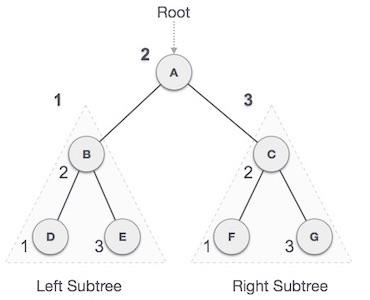
我们从A开始,按顺序遍历后,移动到它的左子树B。B也按顺序遍历。该过程持续进行,直到所有节点都被访问。这棵树按顺序遍历的输出结果为 −
D → B → E → A → F → C → G
算法
直到所有节点都遍历完毕 −
步骤 1 − 递归遍历左子树。
步骤 2 − 访问根节点。
步骤 3 − 递归遍历右子树。
示例
以下是此操作在各种编程语言中的实现 −
#include <stdio.h>
#include <stdlib.h>
struct node {
   int data;
   struct node *leftChild;
   struct node *rightChild;
};
struct node *root = NULL;
void insert(int data){
   struct node *tempNode = (struct node*) malloc(sizeof(struct node));
   struct node *current;
   struct node *parent;
   tempNode->data = data;
   tempNode->leftChild = NULL;
   tempNode->rightChild = NULL;

   //如果树为空
   if(root == NULL) {
      root = tempNode;
   } else {
      current = root;
      parent = NULL;
      while(1) {
         parent = current;

         //去树的左边
         if(data < parent->data) {
            current = current->leftChild;

            //插入到左侧
            if(current == NULL) {
               parent->leftChild = tempNode;
               return;
            }
         }//去树的右边
         else {
            current = current->rightChild;

            //插入到右侧
            if(current == NULL) {
               parent->rightChild = tempNode;
               return;
            }
         }
      }
   }
}
void inorder_traversal(struct node* root){
   if(root != NULL) {
      inorder_traversal(root->leftChild);
      printf("%d ",root->data);
      inorder_traversal(root->rightChild);
   }
}
int main(){
   int i;
   int array[7] = { 27, 14, 35, 10, 19, 31, 42 };
   for(i = 0; i < 7; i++)
      insert(array[i]);
   printf("中序遍历:");
   inorder_traversal(root);
   return 0;
}
输出
中序遍历:10 14 19 27 31 35 42
#include <iostream>
struct node {
   int data;
   struct node *leftChild;
   struct node *rightChild;
};
struct node *root = NULL;
void insert(int data){
   struct node *tempNode = (struct node*) malloc(sizeof(struct node));
   struct node *current;
   struct node *parent;
   tempNode->data = data;
   tempNode->leftChild = NULL;
   tempNode->rightChild = NULL;

   //如果树为空
   if(root == NULL) {
      root = tempNode;
   } else {
      current = root;
      parent = NULL;
      while(1) {
         parent = current;

         //去树的左边
         if(data < parent->data) {
            current = current->leftChild;

            //插入到左侧
            if(current == NULL) {
               parent->leftChild = tempNode;
               return;
            }
         }//去树的右边
         else {
            current = current->rightChild;

            //插入到右侧
            if(current == NULL) {
               parent->rightChild = tempNode;
               return;
            }
         }
      }
   }
}
void inorder_traversal(struct node* root){
   if(root != NULL) {
      inorder_traversal(root->leftChild);
      printf("%d ",root->data);
      inorder_traversal(root->rightChild);
   }
}
int main(){
   int i;
   int array[7] = { 27, 14, 35, 10, 19, 31, 42 };
   for(i = 0; i < 7; i++)
      insert(array[i]);
   printf("中序遍历:");
   inorder_traversal(root);
   return 0;
}
输出
中序遍历:10 14 19 27 31 35 42
class Node {
   int data;
   Node leftChild;
   Node rightChild;
   public Node(int key) {
      data = key;
      leftChild = rightChild = null;
   }
}
public class TreeDataStructure {
   Node root = null;
   void inorder_traversal(Node node) {
      if(node != null) {
         inorder_traversal(node.leftChild);
         System.out.print(node.data + " ");
         inorder_traversal(node.rightChild);
      }
   }
   public static void main(String args[]) {
      TreeDataStructure tree = new TreeDataStructure();
      tree.root = new Node(27);
      tree.root.leftChild = new Node(12);
      tree.root.rightChild = new Node(3);
      tree.root.leftChild.leftChild = new Node(44);
      tree.root.leftChild.rightChild = new Node(17);
      tree.root.rightChild.leftChild = new Node(56);
      System.out.println("中序遍历:");
      tree.inorder_traversal(tree.root);
   }
}
输出
中序遍历:
44 12 17 27 56 3
class Node:
   def __init__(self, key):
      self.leftChild = None
      self.rightChild = None
      self.data = key

# 创建一个函数来执行中序树遍历
def InorderTraversal(root):
   if root:
      InorderTraversal(root.leftChild)
      print(root.data)
      InorderTraversal(root.rightChild)

# Main class
if __name__ == "__main__":
   root = Node(3)
   root.leftChild = Node(26)
   root.rightChild = Node(42)
   root.leftChild.leftChild = Node(54)
   root.leftChild.rightChild = Node(65)
   root.rightChild.leftChild = Node(12)

   # Function call
   print("二叉树的中序遍历是")
   InorderTraversal(root)
输出
二叉树的中序遍历是
54
26
65
3
12
42
前序遍历
在此遍历方法中,首先访问根节点,然后访问左子树,最后访问右子树。
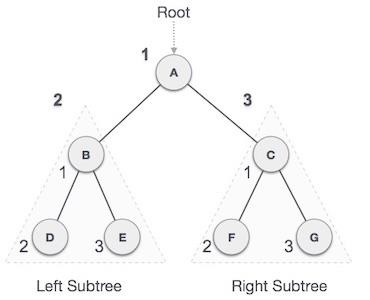
我们从A开始,按照前序遍历,首先访问A本身,然后移动到其左子树B。B也按前序遍历。该过程一直持续到所有节点都被访问。这棵树的前序遍历的输出为 −
A → B → D → E → C → F → G
算法
直到所有节点都遍历完毕 −
步骤 1 − 访问根节点。
步骤 2 − 递归遍历左子树。
步骤 3 − 递归遍历右子树。
示例
以下是此操作在各种编程语言中的实现 −
#include <stdio.h>
#include <stdlib.h>
struct node {
   int data;
   struct node *leftChild;
   struct node *rightChild;
};
struct node *root = NULL;
void insert(int data){
   struct node *tempNode = (struct node*) malloc(sizeof(struct node));
   struct node *current;
   struct node *parent;
   tempNode->data = data;
   tempNode->leftChild = NULL;
   tempNode->rightChild = NULL;

   //如果树为空
   if(root == NULL) {
      root = tempNode;
   } else {
      current = root;
      parent = NULL;
      while(1) {
         parent = current;

         //去树的左边
         if(data < parent->data) {
            current = current->leftChild;

            //插入到左侧
            if(current == NULL) {
               parent->leftChild = tempNode;
               return;
            }
         }//去树的右边
         else {
            current = current->rightChild;

            //插入到右侧
            if(current == NULL) {
               parent->rightChild = tempNode;
               return;
            }
         }
      }
   }
}
void pre_order_traversal(struct node* root){
   if(root != NULL) {
      printf("%d ",root->data);
      pre_order_traversal(root->leftChild);
      pre_order_traversal(root->rightChild);
   }
}
int main(){
   int i;
   int array[7] = { 27, 14, 35, 10, 19, 31, 42 };
   for(i = 0; i < 7; i++)
      insert(array[i]);
   printf("前序遍历:");
   pre_order_traversal(root);
   return 0;
}
输出
前序遍历:27 14 10 19 35 31 42
#include <iostream>
struct node {
   int data;
   struct node *leftChild;
   struct node *rightChild;
};
struct node *root = NULL;
void insert(int data){
   struct node *tempNode = (struct node*) malloc(sizeof(struct node));
   struct node *current;
   struct node *parent;
   tempNode->data = data;
   tempNode->leftChild = NULL;
   tempNode->rightChild = NULL;

   //如果树为空
   if(root == NULL) {
      root = tempNode;
   } else {
      current = root;
      parent = NULL;
      while(1) {
         parent = current;

         //去树的左边
         if(data < parent->data) {
            current = current->leftChild;

            //插入到左侧
            if(current == NULL) {
               parent->leftChild = tempNode;
               return;
            }
         }//去树的右边
         else {
            current = current->rightChild;

            //插入到右侧
            if(current == NULL) {
               parent->rightChild = tempNode;
               return;
            }
         }
      }
   }
}
void pre_order_traversal(struct node* root){
   if(root != NULL) {
      printf("%d ",root->data);
      pre_order_traversal(root->leftChild);
      pre_order_traversal(root->rightChild);
   }
}
int main(){
   int i;
   int array[7] = { 27, 14, 35, 10, 19, 31, 42 };
   for(i = 0; i < 7; i++)
      insert(array[i]);
   printf("前序遍历:");
   pre_order_traversal(root);
   return 0;
}
输出
前序遍历:27 14 10 19 35 31 42
class Node {
   int data;
   Node leftChild;
   Node rightChild;
   public Node(int key) {
      data = key;
      leftChild = rightChild = null;
   }
}
public class TreeDataStructure {
   Node root = null;
   void pre_order_traversal(Node node) {
      if(node != null) {
         System.out.print(node.data + " ");
         pre_order_traversal(node.leftChild);
         pre_order_traversal(node.rightChild);
      }
   }
   public static void main(String args[]) {
      TreeDataStructure tree = new TreeDataStructure();
      tree.root = new Node(27);
      tree.root.leftChild = new Node(12);
      tree.root.rightChild = new Node(3);
      tree.root.leftChild.leftChild = new Node(44);
      tree.root.leftChild.rightChild = new Node(17);
      tree.root.rightChild.leftChild = new Node(56);
      System.out.println("前序遍历:");
      tree.pre_order_traversal(tree.root);
   }
}
输出
前序遍历:
27 12 44 17 3 56
class Node:
   def __init__(self, key):
      self.leftChild = None
      self.rightChild = None
      self.data = key

# 创建一个函数来执行后序树遍历
def PreorderTraversal(root):
   if root:
      print(root.data)
      PreorderTraversal(root.leftChild)
      PreorderTraversal(root.rightChild)

# Main class
if __name__ == "__main__":
   root = Node(3)
   root.leftChild = Node(26)
   root.rightChild = Node(42)
   root.leftChild.leftChild = Node(54)
   root.leftChild.rightChild = Node(65)
   root.rightChild.leftChild = Node(12)
   print("二叉树的前序遍历是")
   PreorderTraversal(root)
输出
二叉树的前序遍历是
3
26
54
65
42
12
后序遍历
在这种遍历方法中,根节点最后被访问,因此得名。我们首先遍历左子树,然后是右子树,最后是根节点。
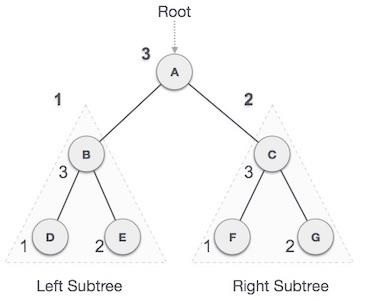
我们从A开始,按照前序遍历,首先访问左子树B。B也按后序遍历。该过程一直持续到所有节点都被访问。这棵树的后序遍历输出为 −
D → E → B → F → G → C → A
算法
直到所有节点都遍历完毕 −
步骤 1 − 递归遍历左子树。
步骤 2 − 递归遍历右子树。
步骤 3 − 访问根节点。
示例
以下是此操作在各种编程语言中的实现 −
#include <stdio.h>
#include <stdlib.h>
struct node {
   int data;
   struct node *leftChild;
   struct node *rightChild;
};
struct node *root = NULL;
void insert(int data){
   struct node *tempNode = (struct node*) malloc(sizeof(struct node));
   struct node *current;
   struct node *parent;
   tempNode->data = data;
   tempNode->leftChild = NULL;
   tempNode->rightChild = NULL;

   //如果树为空
   if(root == NULL) {
      root = tempNode;
   } else {
      current = root;
      parent = NULL;
      while(1) {
         parent = current;

         //去树的左边
         if(data < parent->data) {
            current = current->leftChild;

            //插入到左侧
            if(current == NULL) {
               parent->leftChild = tempNode;
               return;
            }
         }//去树的右边
         else {
            current = current->rightChild;

            //插入到右侧
            if(current == NULL) {
               parent->rightChild = tempNode;
               return;
            }
         }
      }
   }
}
void post_order_traversal(struct node* root){
   if(root != NULL) {
      post_order_traversal(root->leftChild);
      post_order_traversal(root->rightChild);
      printf("%d ", root->data);
   }
}
int main(){
   int i;
   int array[7] = { 27, 14, 35, 10, 19, 31, 42 };
   for(i = 0; i < 7; i++)
      insert(array[i]);
   printf("后序遍历:");
   post_order_traversal(root);
   return 0;
}
输出
后序遍历:10 19 14 31 42 35 27
#include <iostream>
struct node {
   int data;
   struct node *leftChild;
   struct node *rightChild;
};
struct node *root = NULL;
void insert(int data){
   struct node *tempNode = (struct node*) malloc(sizeof(struct node));
   struct node *current;
   struct node *parent;
   tempNode->data = data;
   tempNode->leftChild = NULL;
   tempNode->rightChild = NULL;

   //如果树为空
   if(root == NULL) {
      root = tempNode;
   } else {
      current = root;
      parent = NULL;
      while(1) {
         parent = current;

         //去树的左边
         if(data < parent->data) {
            current = current->leftChild;

            //插入到左侧
            if(current == NULL) {
               parent->leftChild = tempNode;
               return;
            }
         }//去树的右边
         else {
            current = current->rightChild;

            //插入到右侧
            if(current == NULL) {
               parent->rightChild = tempNode;
               return;
            }
         }
      }
   }
}
void post_order_traversal(struct node* root){
   if(root != NULL) {
      post_order_traversal(root->leftChild);
      post_order_traversal(root->rightChild);
      printf("%d ", root->data);
   }
}
int main(){
   int i;
   int array[7] = { 27, 14, 35, 10, 19, 31, 42 };
   for(i = 0; i < 7; i++)
      insert(array[i]);
   printf("后序遍历:");
   post_order_traversal(root);
   return 0;
}
输出
后序遍历:10 19 14 31 42 35 27
class Node {
   int data;
   Node leftChild;
   Node rightChild;
   public Node(int key) {
      data = key;
      leftChild = rightChild = null;
   }
}
public class TreeDataStructure {
   Node root = null;
   void post_order_traversal(Node node) {
      if(node != null) {
         post_order_traversal(node.leftChild);
         post_order_traversal(node.rightChild);
         System.out.print(node.data + " ");
      }
   }
   public static void main(String args[]) {
      TreeDataStructure tree = new TreeDataStructure();
      tree.root = new Node(27);
      tree.root.leftChild = new Node(12);
      tree.root.rightChild = new Node(3);
      tree.root.leftChild.leftChild = new Node(44);
      tree.root.leftChild.rightChild = new Node(17);
      tree.root.rightChild.leftChild = new Node(56);
      System.out.println("后序遍历:");
      tree.post_order_traversal(tree.root);
   }
}
输出
后序遍历:
44 17 12 56 3 27
class Node:
   def __init__(self, key):
      self.leftChild = None
      self.rightChild = None
      self.data = key

# 创建一个函数来执行前序树遍历
def PostorderTraversal(root):
   if root:
      PostorderTraversal(root.leftChild)
      PostorderTraversal(root.rightChild)
      print(root.data)

# Main class
if __name__ == "__main__":
   root = Node(3)
   root.leftChild = Node(26)
   root.rightChild = Node(42)
   root.leftChild.leftChild = Node(54)
   root.leftChild.rightChild = Node(65)
   root.rightChild.leftChild = Node(12)
   print("二叉树的后序遍历是")
   PostorderTraversal(root)
输出
二叉树的后序遍历是
54
65
26
12
42
3
完整实现
现在让我们看看各种编程语言中树遍历的完整实现 −
#include <stdio.h>
#include <stdlib.h>
struct node {
   int data;
   struct node *leftChild;
   struct node *rightChild;
};
struct node *root = NULL;
void insert(int data){
   struct node *tempNode = (struct node*) malloc(sizeof(struct node));
   struct node *current;
   struct node *parent;
   tempNode->data = data;
   tempNode->leftChild = NULL;
   tempNode->rightChild = NULL;

//如果树为空
   if(root == NULL) {
      root = tempNode;
   } else {
      current = root;
      parent = NULL;
      while(1) {
         parent = current;

         //去树的左边
         if(data < parent->data) {
            current = current->leftChild;

            //插入到左侧
            if(current == NULL) {
               parent->leftChild = tempNode;
               return;
            }
         }//去树的右边
         else {
            current = current->rightChild;

            //插入到右侧
            if(current == NULL) {
               parent->rightChild = tempNode;
               return;
            }
         }
      }
   }
}
void pre_order_traversal(struct node* root){
   if(root != NULL) {
      printf("%d ",root->data);
      pre_order_traversal(root->leftChild);
      pre_order_traversal(root->rightChild);
   }
}
void inorder_traversal(struct node* root){
   if(root != NULL) {
      inorder_traversal(root->leftChild);
      printf("%d ",root->data);
      inorder_traversal(root->rightChild);
   }
}
void post_order_traversal(struct node* root){
   if(root != NULL) {
      post_order_traversal(root->leftChild);
      post_order_traversal(root->rightChild);
      printf("%d ", root->data);
   }
}
int main(){
   int i;
   int array[7] = { 27, 14, 35, 10, 19, 31, 42 };
   for(i = 0; i < 7; i++)
      insert(array[i]);
   printf("前序遍历:");
   pre_order_traversal(root);
   printf("
中序遍历:");
   inorder_traversal(root);
   printf("
后序遍历:");
   post_order_traversal(root);
   return 0;
}
输出
前序遍历:27 14 10 19 35 31 42
中序遍历:10 14 19 27 31 35 42
后序遍历:10 19 14 31 42 35 27
#include <iostream>
struct node {
   int data;
   struct node *leftChild;
   struct node *rightChild;
};
struct node *root = NULL;
void insert(int data){
   struct node *tempNode = (struct node*) malloc(sizeof(struct node));
   struct node *current;
   struct node *parent;
   tempNode->data = data;
   tempNode->leftChild = NULL;
   tempNode->rightChild = NULL;

   //如果树为空
   if(root == NULL) {
      root = tempNode;
   } else {
      current = root;
      parent = NULL;
      while(1) {
         parent = current;

         //去树的左边
         if(data < parent->data) {
            current = current->leftChild;

            //插入到左侧
            if(current == NULL) {
               parent->leftChild = tempNode;
               return;
            }
         }//去树的右边
         else {
            current = current->rightChild;

            //插入到右侧
            if(current == NULL) {
               parent->rightChild = tempNode;
               return;
            }
         }
      }
   }
}
void pre_order_traversal(struct node* root){
   if(root != NULL) {
      printf("%d ",root->data);
      pre_order_traversal(root->leftChild);
      pre_order_traversal(root->rightChild);
   }
}
void inorder_traversal(struct node* root){
   if(root != NULL) {
      inorder_traversal(root->leftChild);
      printf("%d ",root->data);
      inorder_traversal(root->rightChild);
   }
}
void post_order_traversal(struct node* root){
   if(root != NULL) {
      post_order_traversal(root->leftChild);
      post_order_traversal(root->rightChild);
      printf("%d ", root->data);
   }
}
int main(){
   int i;
   int array[7] = { 27, 14, 35, 10, 19, 31, 42 };
   for(i = 0; i < 7; i++)
      insert(array[i]);
   printf("前序遍历:");
   pre_order_traversal(root);
   printf("
中序遍历:");
   inorder_traversal(root);
   printf("
后序遍历:");
   post_order_traversal(root);
   return 0;
}
输出
前序遍历:27 14 10 19 35 31 42
中序遍历:10 14 19 27 31 35 42
后序遍历:10 19 14 31 42 35 27
class Node {
   int data;
   Node leftChild;
   Node rightChild;
   public Node(int key) {
      data = key;
      leftChild = rightChild = null;
   }
}
public class TreeDataStructure {
   Node root = null;
   void inorder_traversal(Node node) {
      if(node != null) {
         inorder_traversal(node.leftChild);
         System.out.print(node.data + " ");
         inorder_traversal(node.rightChild);
      }
   }
   void pre_order_traversal(Node node) {
      if(node != null) {
         System.out.print(node.data + " ");
         pre_order_traversal(node.leftChild);
         pre_order_traversal(node.rightChild);
      }
   }
   void post_order_traversal(Node node) {
      if(node != null) {
         post_order_traversal(node.leftChild);
         post_order_traversal(node.rightChild);
         System.out.print(node.data + " ");
      }
   }
   public static void main(String args[]) {
      TreeDataStructure tree = new TreeDataStructure();
      tree.root = new Node(27);
      tree.root.leftChild = new Node(12);
      tree.root.rightChild = new Node(3);
      tree.root.leftChild.leftChild = new Node(44);
      tree.root.leftChild.rightChild = new Node(17);
      tree.root.rightChild.leftChild = new Node(56);
      System.out.println("中序遍历:");
      tree.inorder_traversal(tree.root);
      System.out.println("
前序遍历:");
      tree.pre_order_traversal(tree.root);
      System.out.println("
后序遍历:");
      tree.post_order_traversal(tree.root);
   }
}
输出
中序遍历:
44 12 17 27 56 3
前序遍历:
27 12 44 17 3 56
后序遍历:
44 17 12 56 3 27
class Node:
   def __init__(self, key):
      self.leftChild = None
      self.rightChild = None
      self.data = key

# 创建一个函数来执行中序树遍历
def InorderTraversal(root):
   if root:
      InorderTraversal(root.leftChild)
      print(root.data)
      InorderTraversal(root.rightChild)

# 创建一个函数来执行前序树遍历
def PostorderTraversal(root):
   if root:
      PostorderTraversal(root.leftChild)
      PostorderTraversal(root.rightChild)
      print(root.data)

# 创建一个函数来执行后序树遍历
def PreorderTraversal(root):
   if root:
      print(root.data)
      PreorderTraversal(root.leftChild)
      PreorderTraversal(root.rightChild)

# Main class
if __name__ == "__main__":
   root = Node(3)
   root.leftChild = Node(26)
   root.rightChild = Node(42)
   root.leftChild.leftChild = Node(54)
   root.leftChild.rightChild = Node(65)
   root.rightChild.leftChild = Node(12)

   # Function call
   print("二叉树的中序遍历是")
   InorderTraversal(root)
   print("
二叉树的前序遍历是")
   PreorderTraversal(root)
   print("
二叉树的后序遍历是")
   PostorderTraversal(root)
输出
二叉树的中序遍历是
54
26
65
3
12
42

二叉树的前序遍历是
3
26
54
65
42
12

二叉树的后序遍历是
54
65
26
12
42
3