
堆排序算法
堆排序是一种基于堆数据结构的高效排序技术。
堆是一个近乎完全的二叉树,其父节点可以是最小的,也可以是最大的。根节点最小的堆称为最小堆,根节点最大的堆称为最大堆。堆排序算法的输入数据元素使用这两种方法进行处理。
堆排序算法在此过程中遵循两个主要操作 −
根据排序方式(升序或降序),使用heapify方法(本章将进一步解释)从输入数据构建堆 H。
删除根元素的根元素,并重复此操作,直到处理完所有输入元素。
堆排序算法很大程度上依赖于二叉树的 heapify 方法。那么,这个 heapify 方法是什么呢?
Heapify 方法
二叉树的heapify方法用于将树转换为堆数据结构。此方法使用递归方法对二叉树的所有节点进行堆化。
注意 − 二叉树必须始终是完全二叉树,因为它必须始终具有两个子节点。
通过应用 heapify 方法,完全二叉树将转换为最大堆或最小堆。
要了解有关堆化算法的更多信息,请点击此处
堆排序算法
如下面算法所述,排序算法首先通过调用 Build-Max-Heap 算法构建堆 ADT,然后移除根元素并将其与叶子节点上的最小值节点交换。然后应用 heapify 方法对元素进行相应的重新排列。
Algorithm: Heapsort(A)
BUILD-MAX-HEAP(A)
for i = A.length downto 2
exchange A[1] with A[i]
A.heap-size = A.heap-size - 1
MAX-HEAPIFY(A, 1)
分析
堆排序算法是另外两种排序算法的组合:插入排序和归并排序。
与插入排序的相似之处在于,在任何时候,只有恒定数量的数组元素存储在输入数组之外。
堆排序算法的时间复杂度为O(nlogn),与归并排序类似。
示例
让我们通过一个示例数组来更好地理解排序算法 −
| 12 | 3 | 9 | 14 | 10 | 18 | 8 | 23 |
使用 BUILD-MAX-HEAP 算法从输入数组 − 构建堆
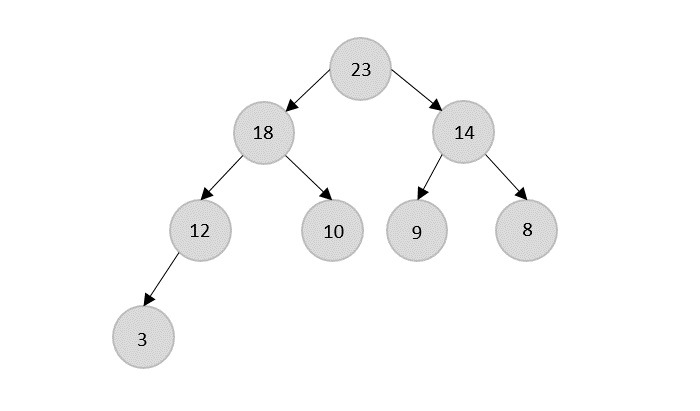
通过交换节点重新排列获得的二叉树,以形成堆数据结构。
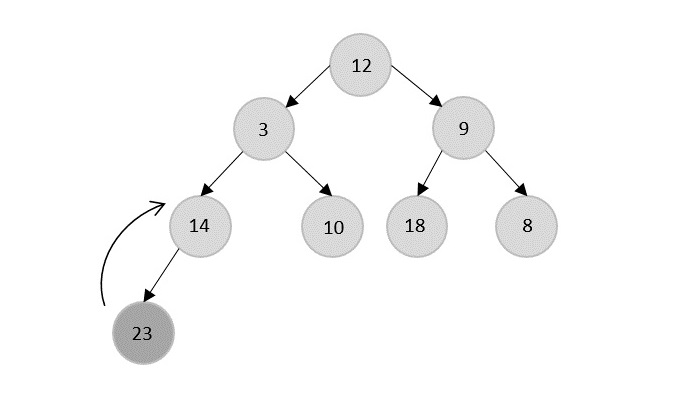
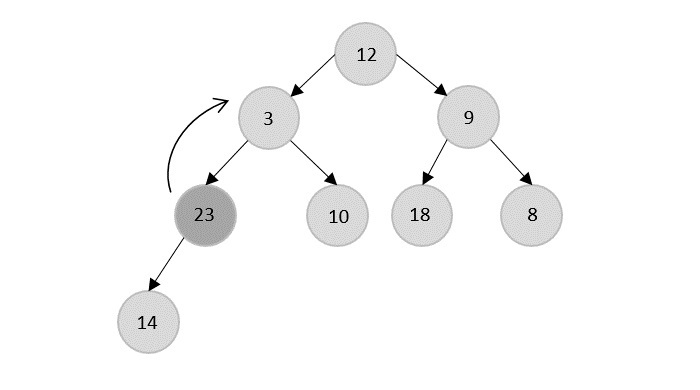
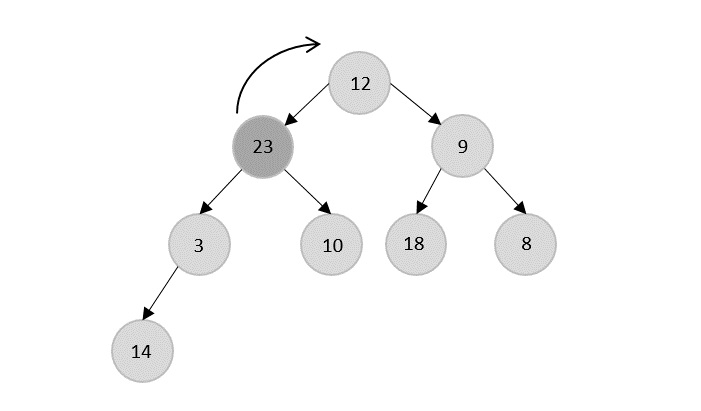
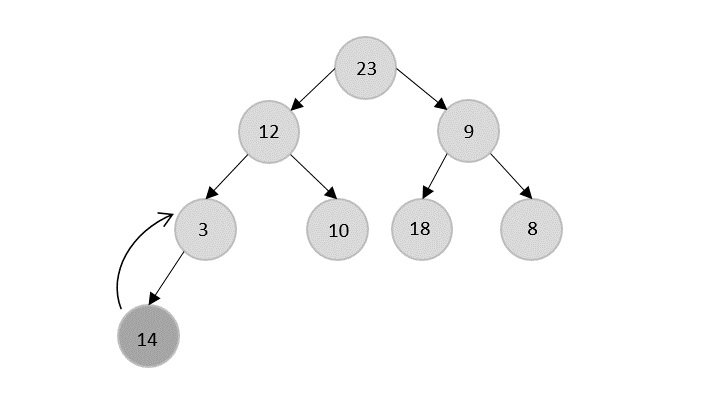
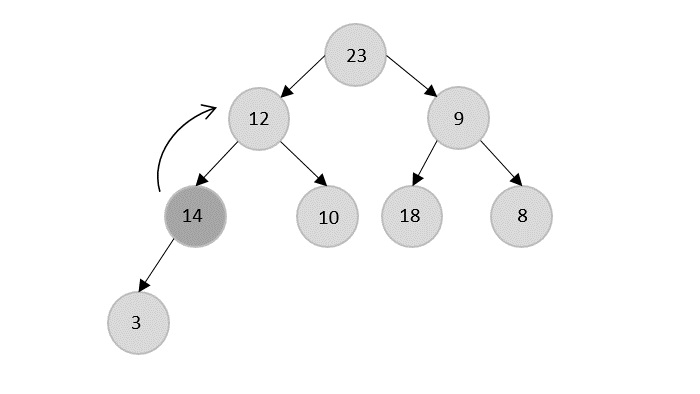
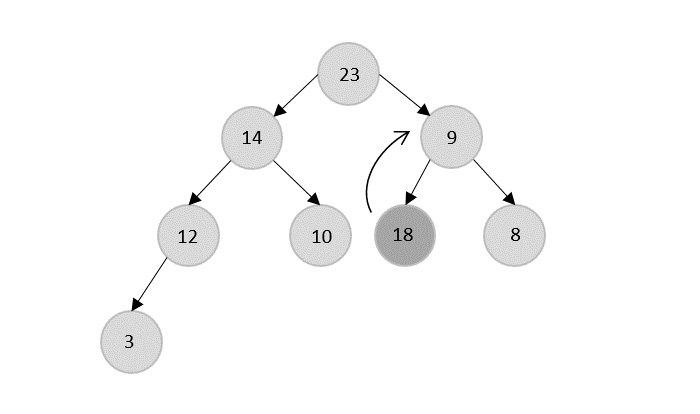
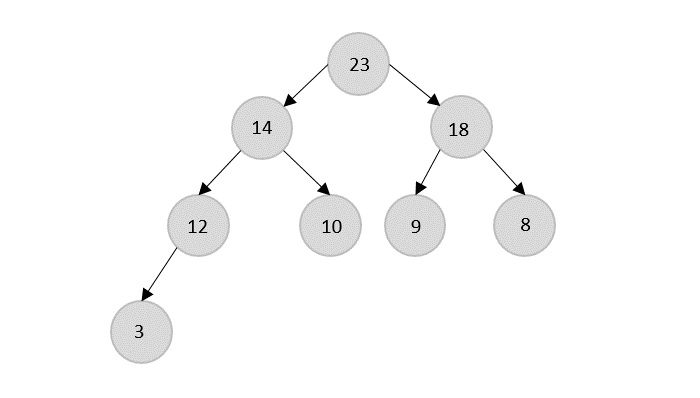
堆化算法
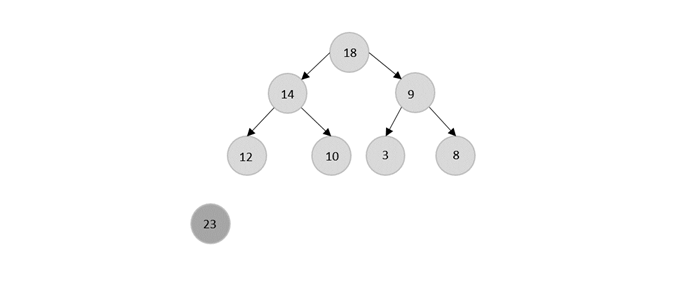
应用堆化方法,从堆中移除根节点,并将其替换为根节点的下一个直接最大值子节点。
根节点为 23,因此弹出 23并且 18 被设为下一个根节点,因为它是堆中的下一个最大节点。
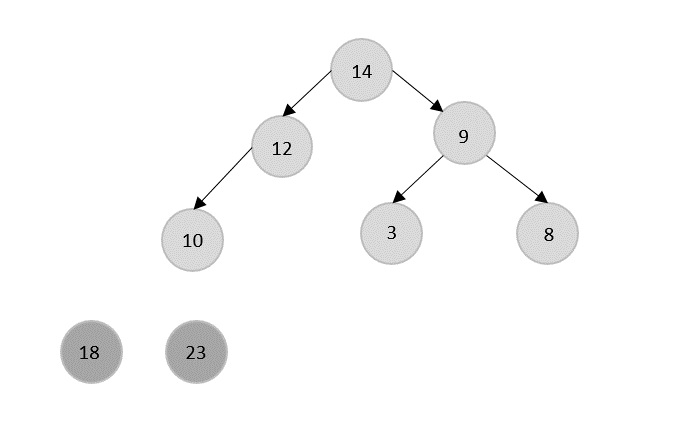
现在,18 在 23 之后弹出,并被 14 替换。
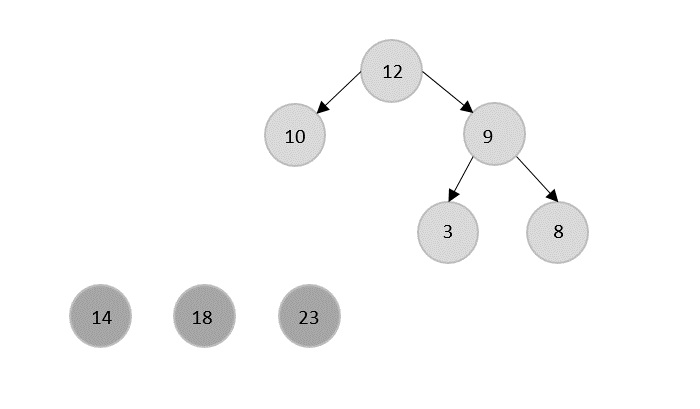
当前根节点 14 从堆中弹出,并被 12 替换。
12 被弹出并被 10 替换。
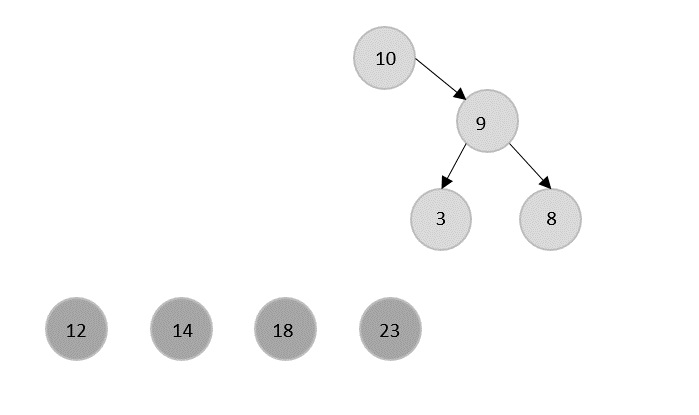
类似地,所有其他元素都使用相同的过程弹出。
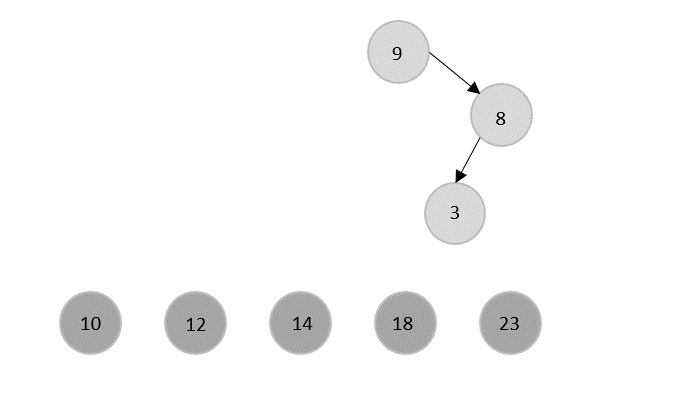
这里,当前根元素 9 被弹出,元素 8 和 3 保留在树中。
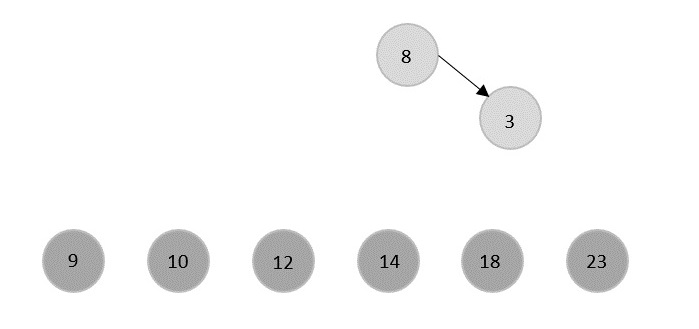
然后,元素 8 将被弹出,元素 3 留在树中。
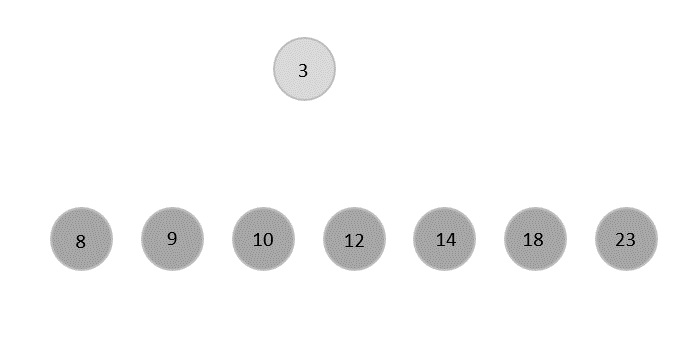
对给定的元素完成堆排序操作后堆,排序后的元素显示如下 −
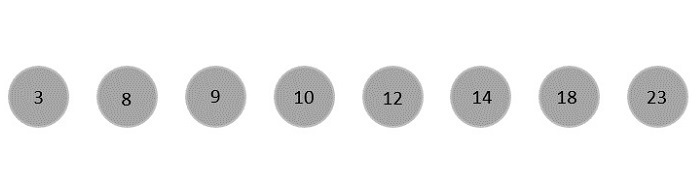
由于形成的堆数据结构是最大堆,因此每次弹出元素时,都会将其添加到输出数组的开头。但是,如果 heapify 方法将二叉树转换为最小堆,则将弹出的元素添加到输出数组的末尾。
最终排序后的列表为:
| 3 | 8 | 9 | 10 | 12 | 14 | 18 | 23 |
实现
堆排序实现的逻辑是:首先,基于最大堆属性构建堆数据结构,即父节点的值必须大于子节点的值。然后,从堆中弹出根节点,并将堆中的下一个最大节点移至根节点。该过程不断迭代,直到堆为空。
在本教程中,我们将展示四种不同编程语言的堆排序实现。
#include <stdio.h>
void heapify(int[], int);
void build_maxheap(int heap[], int n){
   int i, j, c, r, t;
   for (i = 1; i < n; i++) {
      c = i;
      do {
         r = (c - 1) / 2;
         if (heap[r] < heap[c]) { // 创建 MAX 堆数组
            t = heap[r];
            heap[r] = heap[c];
            heap[c] = t;
         }
         c = r;
      } while (c != 0);
   }
   printf("Heap array: ");
   for (i = 0; i < n; i++)
      printf("%d ", heap[i]);
   heapify(heap, n);
}
void heapify(int heap[], int n){
   int i, j, c, root, temp;
   for (j = n - 1; j >= 0; j--) {
      temp = heap[0];
      heap[0] = heap[j]; // 交换最大元素和最右边的叶元素
      heap[j] = temp;
      root = 0;
      do {
         c = 2 * root + 1; // 根元素的左节点
         if ((heap[c] < heap[c + 1]) && c < j-1)
            c++;
         if (heap[root]<heap[c] && c<j) { // 再次重新排列为最大堆数组
            temp = heap[root];
            heap[root] = heap[c];
            heap[c] = temp;
         }
         root = c;
      } while (c < j);
   }
   printf("
The sorted array is: ");

   for (i = 0; i < n; i++)
      printf("%d ", heap[i]);
}
int main(){
   int n, i, j, c, root, temp;
   n = 5;
   int heap[10] = {2, 3, 1, 0, 4}; //初始化数组
   build_maxheap(heap, n);
}
输出
Heap array: 4 3 1 0 2
The sorted array is: 0 1 2 3 4
#include <iostream>
using namespace std;
void heapify(int[], int);
void build_maxheap(int heap[], int n){
   int i, j, c, r, t;
   for (i = 1; i < n; i++) {
      c = i;
      do {
         r = (c - 1) / 2;
         if (heap[r] < heap[c]) { // 创建 MAX 堆数组
            t = heap[r];
            heap[r] = heap[c];
            heap[c] = t;
         }
         c = r;
      } while (c != 0);
   }
   cout << "Heap array: ";
   for (i = 0; i < n; i++)
      cout <<heap[i]<<" ";
   heapify(heap, n);
}
void heapify(int heap[], int n){
   int i, j, c, root, temp;
   for (j = n - 1; j >= 0; j--) {
      temp = heap[0];
      heap[0] = heap[j]; // 交换最大元素和最右边的叶元素
      heap[j] = temp;
      root = 0;
      do {
         c = 2 * root + 1; // 根元素的左节点
         if ((heap[c] < heap[c + 1]) && c < j-1)
            c++;
         if (heap[root]<heap[c] && c<j) { // 再次重新排列为最大堆数组
            temp = heap[root];
            heap[root] = heap[c];
            heap[c] = temp;
         }
         root = c;
      } while (c < j);
   }
   cout << "
The sorted array is : ";
   for (i = 0; i < n; i++)
      cout <<heap[i]<<" ";
}
int main(){
   int n, i, j, c, root, temp;
   n = 5;
   int heap[10] = {2, 3, 1, 0, 4}; //初始化数组
   build_maxheap(heap, n);
   return 0;
}
输出
Heap array: 4 3 1 0 2
The sorted array is : 0 1 2 3 4
import java.io.*;
public class HeapSort {
   static void build_maxheap(int heap[], int n) {
      for (int i = 1; i < n; i++) {
         int c = i;
         do {
            int r = (c - 1) / 2;
            if (heap[r] < heap[c]) { // 创建 MAX 堆数组
               int t = heap[r];
               heap[r] = heap[c];
               heap[c] = t;
            }
            c = r;
         } while (c != 0);
      }
      System.out.println("Heap array: ");
      for (int i = 0; i < n; i++) {
         System.out.print(heap[i] + " ");
      }
      heapify(heap, n);
   }
   static void heapify(int heap[], int n) {
      for (int j = n - 1; j >= 0; j--) {
         int c;
         int temp = heap[0];
         heap[0] = heap[j]; // 交换最大元素和最右边的叶元素
         heap[j] = temp;
         int root = 0;
         do {
            c = 2 * root + 1; // 根元素的左节点
            if ((heap[c] < heap[c + 1]) && c < j-1)
               c++;
            if (heap[root]<heap[c] && c<j) { // 再次重新排列为最大堆数组
               temp = heap[root];
               heap[root] = heap[c];
               heap[c] = temp;
            }
            root = c;
         } while (c < j);
      }
      System.out.println("
The sorted array is: ");
      for (int i = 0; i < n; i++) {
         System.out.print(heap[i] + " ");
      }
   }
   public static void main(String args[]) {
      int heap[] = new int[10];
      heap[0] = 4;
      heap[1] = 3;
      heap[2] = 1;
      heap[3] = 0;
      heap[4] = 2;
      int n = 5;
      build_maxheap(heap, n);
   }
}
输出
Heap array:
4 3 1 0 2
The sorted array is:
0 1 2 3 4
def heapify(heap, n, i):
   maximum = i
   l = 2 * i + 1
   r = 2 * i + 2
   # if left child exists
   if l < n and heap[i] < heap[l]:
      maximum = l
   # if right child exits
   if r < n and heap[maximum] < heap[r]:
      maximum = r
   # root
   if maximum != i:
      heap[i],heap[maximum] = heap[maximum],heap[i] # swap root.
      heapify(heap, n, maximum)
def heapSort(heap):
   n = len(heap)
   # maxheap
   for i in range(n, -1, -1):
      heapify(heap, n, i)
   # 元素提取
   for i in range(n-1, 0, -1):
      heap[i], heap[0] = heap[0], heap[i] # swap
      heapify(heap, i, 0)
# main
heap = [4, 3, 1, 0, 2]
heapSort(heap)
n = len(heap)
print("Heap array: ")
print(heap)
print ("The Sorted array is: ")
print(heap)
输出
Heap array:
[0, 1, 2, 3, 4]
The Sorted array is:
[0, 1, 2, 3, 4]