
二叉搜索树
A二叉搜索树 (BST) 是一种所有节点都遵循以下属性 −
节点的左子树的键小于或等于其父节点的键。
节点的右子树的键大于或等于其父节点的键。
因此,BST 将其所有子树分为两部分:左子树和右子树,可以定义为 −
left_subtree (keys) ≤ 节点 (key) ≤ right_subtree (keys)
二叉树表示
BST 是以保持 BST 属性的方式排列的节点集合。每个节点都有一个键和一个关联的值。搜索时,会将所需的键与二叉搜索树 (BST) 中的键进行比较,如果找到,则检索关联的值。
以下是二叉搜索树 (BST) 的图示 −
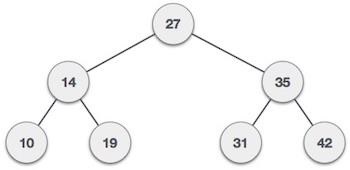
我们观察到,根节点键 (27) 的所有较低值键都在左子树上,而较高值键都在右子树上。
基本操作
以下是二叉搜索树 (BST) 的基本操作 −
搜索 − 在树中搜索元素。
插入 −在树中插入一个元素。
前序遍历 − 以前序方式遍历树。
中序遍历 − 以中序方式遍历树。
后序遍历 − 以后序方式遍历树。
定义节点
定义一个节点,用于存储一些数据以及对其左右子节点的引用。
struct node {
   int data;
   struct node *leftChild;
   struct node *rightChild;
};
搜索操作
每当要搜索元素时,都从根节点开始搜索。然后,如果数据小于键值,则在左子树中搜索元素。否则,在右子树中搜索元素。每个节点都遵循相同的算法。
算法
1. 开始
2. 检查树是否为空
3. 如果树为空,则无法搜索
4. 否则,首先搜索树的根节点。
5. 如果键与根节点中的值不匹配,
则搜索其子树。
6. 如果键的值小于根节点的值,
则搜索左子树
7. 如果键的值大于根节点的值,
则搜索右子树。
8. 如果在树中未找到键,则返回搜索失败。
9. 结束
示例
以下是此操作在各种编程语言中的实现 −
#include <stdio.h>
#include <stdlib.h>
struct node {
   int data;
   struct node *leftChild, *rightChild;
};
struct node *root = NULL;
struct node *newNode(int item){
   struct node *temp = (struct node *)malloc(sizeof(struct node));
   temp->data = item;
   temp->leftChild = temp->rightChild = NULL;
   return temp;
}
void insert(int data){
   struct node *tempNode = (struct node*) malloc(sizeof(struct node));
   struct node *current;
   struct node *parent;
   tempNode->data = data;
   tempNode->leftChild = NULL;
   tempNode->rightChild = NULL;

   //如果树为空
   if(root == NULL) {
      root = tempNode;
   } else {
      current = root;
      parent = NULL;
      while(1) {
         parent = current;

         //去树的左边
         if(data < parent->data) {
            current = current->leftChild;

            //插入到左侧
            if(current == NULL) {
               parent->leftChild = tempNode;
               return;
            }
         }//去树的右边
         else {
            current = current->rightChild;

            //插入到右侧
            if(current == NULL) {
               parent->rightChild = tempNode;
               return;
            }
         }
      }
   }
}
struct node* search(int data){
   struct node *current = root;
   while(current->data != data) {
         //去左边的树
         if(current->data > data) {
            current = current->leftChild;
         }//否则转到右边的树
         else {
            current = current->rightChild;
         }

         //not found
         if(current == NULL) {
            return NULL;
         }
      }
   return current;
}
void printTree(struct node* Node){
   if(Node == NULL)
      return;
   printTree(Node->leftChild);
   printf(" --%d", Node->data);
   printTree(Node->rightChild);
}
int main(){
   insert(55);
   insert(20);
   insert(90);
   insert(50);
   insert(35);
   insert(15);
   insert(65);
   printf("Insertion done");
   printf("
BST:
");
   printTree(root);
   struct node* k;
   int ele = 35;
   printf("
Element to be searched: %d", ele);
   k = search(35);
   if(k != NULL)
      printf("
Element %d found", k->data);
   else
      printf("
Element not found");
   return 0;
}
输出
Insertion done
BST:
 --15 --20 --35 --50 --55 --65 --90
Element to be searched: 35
Element 35 found
#include <iostream>
using namespace std;
struct Node {
   int data;
   struct Node *leftChild, *rightChild;
};
Node *root = NULL;
Node *newNode(int item){
   Node *temp = (Node *)malloc(sizeof(Node));
   temp->data = item;
   temp->leftChild = temp->rightChild = NULL;
   return temp;
}
void insert(int data){
   Node *tempNode = (Node*) malloc(sizeof(Node));
   Node *current;
   Node *parent;
   tempNode->data = data;
   tempNode->leftChild = NULL;
   tempNode->rightChild = NULL;

   //如果树为空
   if(root == NULL) {
      root = tempNode;
   } else {
      current = root;
      parent = NULL;
      while(1) {
         parent = current;

         //去树的左边
         if(data < parent->data) {
            current = current->leftChild;

            //插入到左侧
            if(current == NULL) {
               parent->leftChild = tempNode;
               return;
            }
         }//去树的右边
         else {
            current = current->rightChild;

            //插入到右侧
            if(current == NULL) {
               parent->rightChild = tempNode;
               return;
            }
         }
      }
   }
}
Node* search(int data){
   Node *current = root;
   while(current->data != data) {
         //去左边的树
         if(current->data > data) {
            current = current->leftChild;
         }//否则转到右边的树
         else {
            current = current->rightChild;
         }

         //not found
         if(current == NULL) {
            return NULL;
         }
   }
   return current;
}
void printTree(Node* Node) {
    if (Node == nullptr)
        return;
    printTree(Node->leftChild);
    cout << " --" << Node->data;
    printTree(Node->rightChild);
}
int main(){
   insert(55);
   insert(20);
   insert(90);
   insert(50);
   insert(35);
   insert(15);
   insert(65);
   cout<<"Insertion done";
   cout<<"
BST: "<<endl;
   printTree(root);
   struct node* k;
   int ele = 35;
   cout<<"
Element to be searched: "<<ele;
   Node* result = search(35);
   if(k != NULL)
      cout<<"
Element "<<result->data<<" found ";
   else
      cout<<"
Element not found";
   return 0;
}
输出
Insertion done
BST:
 --15 --20 --35 --50 --55 --65 --90
Element to be searched: 35
Element 35 found
import java.util.Scanner;
class BSTNode {
   BSTNode left, right;
   int data;
   public BSTNode(int n) {
      left = null;
      right = null;
      data = n;
   }
}
public class BST {
   static BSTNode root;
   public BST() {
      root = null;
   }
   private BSTNode insert(BSTNode node, int data) {
      if(node == null)
         node = new BSTNode(data);
      else {
         if(data <= node.data)
            node.left = insert(node.left, data);
         else
            node.right = insert(node.right, data);
      }
      return node;
   }
   private boolean search(BSTNode r, int val) {
      boolean found = false;
      while ((r != null) && !found) {
         int rval = r.data;
         if(val < rval)
            r = r.left;
         else if (val > rval)
            r = r.right;
         else {
            found = true;
            break;
         }
         found = search(r, val);
      }
      return found;
   }
   void printTree(BSTNode node, String prefix) {
      if(node == null)
         return;
      printTree(node.left , " " + prefix);
      System.out.print(prefix + "--" + node.data + " ");
      printTree(node.right , prefix);
   }
   public static void main(String args[]) {
      Scanner sc = new Scanner(System.in);
      BST bst = new BST();
      root = bst.insert(root, 55);
      root = bst.insert(root, 20);
      root = bst.insert(root, 90);
      root = bst.insert(root, 80);
      root = bst.insert(root, 50);
      root = bst.insert(root, 35);
      root = bst.insert(root, 15);
      root = bst.insert(root, 65);
      System.out.print("Insertion Done");
	  System.out.print("
BST:
");
      bst.printTree(root, "");
      int ele = 80;
      System.out.print("
Element to be searched: " + ele);
      System.out.println("
Element found: " + bst.search(root, 80));
   }
}
输出
Insertion Done
BST:
--15  --20   --35  --50 --55   --65  --80 --90
Element to be searched: 80
Element found: true
class Node:
   def __init__(self, data):
      self.left = None
      self.right = None
      self.data = data

# 插入方法创建节点
   def insert(self, data):
      if self.data:
         if data < self.data:
            if self.left is None:
               self.left = Node(data)
            else:
               self.left.insert(data)
         elif data > self.data:
            if self.right is None:
               self.right = Node(data)
            else:
               self.right.insert(data)
         else:
            self.data = data
# 搜索方法将值与节点进行比较
   def search(self, key):
      if key < self.data:
         if self.left is None:
            return str(key)+" Not Found"
         return self.left.search(key)
      elif key > self.data:
         if self.right is None:
            return str(key)+" Not Found"
         return self.right.search(key)
      else:
         print(str(self.data) + ' is found')

root = Node(54)
root.insert(34)
root.insert(46)
root.insert(12)
root.insert(23)
root.insert(5)
print(root.search(17))
print(root.search(12))
输出
17 Not Found
12 is found
None
插入操作
每当要插入元素时,首先找到其正确的位置。从根节点开始搜索,如果数据小于键值,则在左子树中搜索空位置并插入数据。否则,在右子树中搜索空位置并插入数据。
算法
1. 开始
2. 如果树为空,则插入第一个元素作为树的根节点。
树的后续元素将作为叶子节点添加。
3. 如果元素小于根值,则将其作为叶子节点添加到左子树。
4. 如果元素大于根值,则将其作为叶子节点添加到右子树。
5. 树的最后一个叶子节点指向 NULL 值作为其子节点。
6. 结束
示例
以下是此操作在各种编程语言中的实现 −
#include <stdio.h>
#include <stdlib.h>
struct node {
   int data;
   struct node *leftChild, *rightChild;
};
struct node *root = NULL;
struct node *newNode(int item){
   struct node *temp = (struct node *)malloc(sizeof(struct node));
   temp->data = item;
   temp->leftChild = temp->rightChild = NULL;
   return temp;
}
void insert(int data){
   struct node *tempNode = (struct node*) malloc(sizeof(struct node));
   struct node *current;
   struct node *parent;
   tempNode->data = data;
   tempNode->leftChild = NULL;
   tempNode->rightChild = NULL;

   //如果树为空
   if(root == NULL) {
      root = tempNode;
   } else {
      current = root;
      parent = NULL;
      while(1) {
         parent = current;

         //去树的左边
         if(data < parent->data) {
            current = current->leftChild;

            //插入到左侧
            if(current == NULL) {
               parent->leftChild = tempNode;
               return;
            }
         }//去树的右边
         else {
            current = current->rightChild;

            //插入到右侧
            if(current == NULL) {
               parent->rightChild = tempNode;
               return;
            }
         }
      }
   }
}
void printTree(struct node* Node){
   if(Node == NULL)
      return;
   printTree(Node->leftChild);
   printf(" --%d", Node->data);
   printTree(Node->rightChild);
}
int main(){
   insert(55);
   insert(20);
   insert(90);
   insert(50);
   insert(35);
   insert(15);
   insert(65);
   printf("Insertion done
");
   printf("BST:
");
   printTree(root);
   return 0;
}
输出
Insertion done
BST:
 --15 --20 --35 --50 --55 --65 --90
#include <iostream>
using namespace std;
struct node {
   int data;
   struct node *leftChild, *rightChild;
};
struct node *root = NULL;
struct node *newNode(int item){
   struct node *temp = (struct node *)malloc(sizeof(struct node));
   temp->data = item;
   temp->leftChild = temp->rightChild = NULL;
   return temp;
}
void insert(int data){
   struct node *tempNode = (struct node*) malloc(sizeof(struct node));
   struct node *current;
   struct node *parent;
   tempNode->data = data;
   tempNode->leftChild = NULL;
   tempNode->rightChild = NULL;

   //如果树为空
   if(root == NULL) {
      root = tempNode;
   } else {
      current = root;
      parent = NULL;
      while(1) {
         parent = current;

         //去树的左边
         if(data < parent->data) {
            current = current->leftChild;

            //插入到左侧
            if(current == NULL) {
               parent->leftChild = tempNode;
               return;
            }
         }//去树的右边
         else {
            current = current->rightChild;

            //插入到右侧
            if(current == NULL) {
               parent->rightChild = tempNode;
               return;
            }
         }
      }
   }
}
void printTree(struct node* Node){
   if(Node == NULL)
      return;
   printTree(Node->leftChild);
   cout<<" --"<<Node->data;
   printTree(Node->rightChild);
}
int main(){
   insert(55);
   insert(20);
   insert(90);
   insert(50);
   insert(35);
   insert(15);
   insert(65);
   cout<<"Insertion done
";
   cout<<"BST:"<<endl;
   printTree(root);
   return 0;
}
输出
Insertion done
BST:
 --15 --20 --35 --50 --55 --65 --90
import java.util.Scanner;
class BSTNode {
   BSTNode left, right;
   int data;
   public BSTNode(int n) {
      left = null;
      right = null;
      data = n;
   }
}
public class BST {
   static BSTNode root;
   public BST() {
      root = null;
   }
   private BSTNode insert(BSTNode node, int data) {
      if(node == null)
         node = new BSTNode(data);
      else {
         if(data <= node.data)
            node.left = insert(node.left, data);
         else
            node.right = insert(node.right, data);
      }
      return node;
   }
   void printTree(BSTNode node, String prefix) {
      if(node == null)
         return;
      printTree(node.left , " " + prefix);
      System.out.print(prefix + "--" + node.data);
      printTree(node.right , prefix + " ");
   }
   public static void main(String args[]) {
      Scanner sc = new Scanner(System.in);
      BST bst = new BST();
      root = bst.insert(root, 55);
      root = bst.insert(root, 20);
      root = bst.insert(root, 90);
      root = bst.insert(root, 80);
      root = bst.insert(root, 50);
      root = bst.insert(root, 35);
      root = bst.insert(root, 15);
      root = bst.insert(root, 65);
      System.out.print("Insertion done
");
      System.out.print("BST:
");
      bst.printTree(root, " ");
   }
}
输出
Insertion done
BST:
   --15  --20    --35   --50 --55    --65   --80  --90
class Node:
   def __init__(self, data):
      self.left = None
      self.right = None
      self.data = data

# 插入方法创建节点
   def insert(self, data):
      if self.data:
         if data < self.data:
            if self.left is None:
               self.left = Node(data)
            else:
               self.left.insert(data)
         elif data > self.data:
            if self.right is None:
               self.right = Node(data)
            else:
               self.right.insert(data)
         else:
            self.data = data
   def printTree(self, prefex):
       if self is None:
           return
       self.left.printTree(prefex + "") if self.left else None
       print(prefex + "--", str(self.data),"", end = "")
       self.right.printTree(prefex + "") if self.right else None
root = Node(54)
root.insert(34)
root.insert(46)
root.insert(12)
root.insert(23)
root.insert(5)
print("Insertion Done")
print("BST: ")
root.printTree('')
输出
Insertion Done
BST:
-- 5 -- 12 -- 23 -- 34 -- 46 -- 54
中序遍历
二叉搜索树中的中序遍历操作按以下顺序访问其所有节点 −
首先,遍历根节点/当前节点的左子树(如果有)。
接下来,遍历当前节点。
最后,遍历当前节点的右子树(如果有)。
算法
1. 开始
2. 递归遍历左子树
3. 然后,遍历根节点
4. 递归遍历右子树。
5. 结束
示例
以下是此操作在各种编程语言中的实现 −
#include <stdio.h>
#include <stdlib.h>
struct node {
   int key;
   struct node *left, *right;
};
struct node *newNode(int item){
   struct node *temp = (struct node *)malloc(sizeof(struct node));
   temp->key = item;
   temp->left = temp->right = NULL;
   return temp;
}

// 中序遍历
void inorder(struct node *root){
   if (root != NULL) {
      inorder(root->left);
      printf("%d -> ", root->key);
      inorder(root->right);
   }
}

// 插入操作
struct node *insert(struct node *node, int key){
   if (node == NULL) return newNode(key);
   if (key < node->key)
      node->left = insert(node->left, key);
   else
      node->right = insert(node->right, key);
   return node;
}
int main(){
   struct node *root = NULL;
   root = insert(root, 55);
   root = insert(root, 20);
   root = insert(root, 90);
   root = insert(root, 50);
   root = insert(root, 35);
   root = insert(root, 15);
   root = insert(root, 65);
   printf("Inorder traversal: ");
   inorder(root);
}
输出
Inorder traversal: 15 -> 20 -> 35 -> 50 -> 55 -> 65 -> 90 ->
#include <iostream>
struct node {
   int key;
   struct node *left, *right;
};
struct node *newNode(int item){
   struct node *temp = (struct node *)malloc(sizeof(struct node));
   temp->key = item;
   temp->left = temp->right = NULL;
   return temp;
}

// 中序遍历
void inorder(struct node *root){
   if (root != NULL) {
     inorder(root->left);
     printf("%d -> ", root->key);
     inorder(root->right);
   }
}

// 插入操作
struct node *insert(struct node *node, int key){
   if (node == NULL) return newNode(key);
   if (key < node->key)
     node->left = insert(node->left, key);
   else
     node->right = insert(node->right, key);
   return node;
}
int main(){
   struct node *root = NULL;
   root = insert(root, 55);
   root = insert(root, 20);
   root = insert(root, 90);
   root = insert(root, 50);
   root = insert(root, 35);
   root = insert(root, 15);
   root = insert(root, 65);
   printf("Inorder traversal: ");
   inorder(root);
}
输出
Inorder traversal: 15 -> 20 -> 35 -> 50 -> 55 -> 65 -> 90 ->
class Node {
   int data;
   Node leftChild;
   Node rightChild;
   public Node(int key) {
      data = key;
      leftChild = rightChild = null;
   }
}
public class TreeDataStructure {
   Node root = null;
   void inorder_traversal(Node node) {
      if(node != null) {
         inorder_traversal(node.leftChild);
         System.out.print(node.data + " ->");
         inorder_traversal(node.rightChild);
      }
   }
   public static void main(String args[]) {
      TreeDataStructure tree = new TreeDataStructure();
      tree.root = new Node(27);
      tree.root.leftChild = new Node(12);
      tree.root.rightChild = new Node(30);
      tree.root.leftChild.leftChild = new Node(4);
      tree.root.leftChild.rightChild = new Node(17);
      tree.root.rightChild.leftChild = new Node(56);
      System.out.println("Inorder traversal: ");
      tree.inorder_traversal(tree.root);
   }
}
输出
Inorder traversal:
4 ->12 ->17 ->27 ->56 ->30 ->
class Node:
   def __init__(self, data):
      self.left = None
      self.right = None
      self.data = data

# 插入方法创建节点
   def insert(self, data):
      if self.data:
         if data < self.data:
            if self.left is None:
               self.left = Node(data)
            else:
               self.left.insert(data)
         elif data > self.data:
            if self.right is None:
               self.right = Node(data)
            else:
               self.right.insert(data)
         else:
            self.data = data

# 打印树
   def Inorder(self):
      if self.left:
         self.left.Inorder()
         print(self.data, "->", end = " ")
      if self.right:
         self.right.Inorder()

root = Node(54)
root.insert(34)
root.insert(46)
root.insert(12)
root.insert(23)
root.insert(5)
print("Inorder Traversal: ")
root.Inorder()
输出
Inorder Traversal:
12 -> 34 -> 54 ->
前序遍历
二叉搜索树中的前序遍历操作会访问其所有节点。但是,首先打印根节点,然后打印其左子树,最后打印其右子树。
算法
1. 开始
2. 首先遍历根节点。
3. 然后递归遍历左子树。
4. 最后递归遍历右子树。
5. 结束
示例
以下是此操作在各种编程语言中的实现 −
#include <stdio.h>
#include <stdlib.h>
struct node {
   int key;
   struct node *left, *right;
};
struct node *newNode(int item){
   struct node *temp = (struct node *)malloc(sizeof(struct node));
   temp->key = item;
   temp->left = temp->right = NULL;
   return temp;
}

// 先序遍历
void preorder(struct node *root){
   if (root != NULL) {
      printf("%d -> ", root->key);
      preorder(root->left);
      preorder(root->right);
   }
}

// 插入操作
struct node *insert(struct node *node, int key){
   if (node == NULL) return newNode(key);
   if (key < node->key)
      node->left = insert(node->left, key);
   else
      node->right = insert(node->right, key);
   return node;
}
int main(){
   struct node *root = NULL;
   root = insert(root, 55);
   root = insert(root, 20);
   root = insert(root, 90);
   root = insert(root, 50);
   root = insert(root, 35);
   root = insert(root, 15);
   root = insert(root, 65);
   printf("Preorder traversal: ");
   preorder(root);
}
输出
Preorder traversal: 55 -> 20 -> 15 -> 50 -> 35 -> 90 -> 65 ->
#include <iostream>
struct node {
   int key;
   struct node *left, *right;
};
struct node *newNode(int item){
   struct node *temp = (struct node *)malloc(sizeof(struct node));
   temp->key = item;
   temp->left = temp->right = NULL;
   return temp;
}

// 先序遍历
void preorder(struct node *root){
   if (root != NULL) {
      printf("%d -> ", root->key);
      preorder(root->left);
      preorder(root->right);
   }
}

// 插入操作
struct node *insert(struct node *node, int key){
   if (node == NULL) return newNode(key);
   if (key < node->key)
      node->left = insert(node->left, key);
   else
      node->right = insert(node->right, key);
   return node;
}
int main(){
   struct node *root = NULL;
   root = insert(root, 55);
   root = insert(root, 20);
   root = insert(root, 90);
   root = insert(root, 50);
   root = insert(root, 35);
   root = insert(root, 15);
   root = insert(root, 65);
   printf("Preorder traversal: ");
   preorder(root);
}
输出
Preorder traversal: 55 -> 20 -> 15 -> 50 -> 35 -> 90 -> 65 ->
class Node {
    int data;
    Node leftChild;
    Node rightChild;
    public Node(int key) {
        data = key;
        leftChild = rightChild = null;
    }
}
public class TreeDataStructure {
    Node root = null;
    void preorder_traversal(Node node) {
        if(node != null) {
            System.out.print(node.data + " ->");
            preorder_traversal(node.leftChild);
            preorder_traversal(node.rightChild);
        }
    }
    public static void main(String args[]) {
        TreeDataStructure tree = new TreeDataStructure();
        tree.root = new Node(27);
        tree.root.leftChild = new Node(12);
        tree.root.rightChild = new Node(30);
        tree.root.leftChild.leftChild = new Node(4);
        tree.root.leftChild.rightChild = new Node(17);
        tree.root.rightChild.leftChild = new Node(56);
        System.out.println("Preorder traversal: ");
        tree.preorder_traversal(tree.root);
    }
}
输出
Preorder traversal:
27 ->12 ->4 ->17 ->30 ->56 ->
class Node:
   def __init__(self, data):
      self.left = None
      self.right = None
      self.data = data
# 插入方法创建节点
   def insert(self, data):
      if self.data:
         if data < self.data:
            if self.left is None:
               self.left = Node(data)
            else:
               self.left.insert(data)
         elif data > self.data:
            if self.right is None:
               self.right = Node(data)
            else:
               self.right.insert(data)
         else:
            self.data = data

# 打印树
   def Preorder(self):
      print(self.data, "->", end = "")
      if self.left:
         self.left.Preorder()
      if self.right:
         self.right.Preorder()
root = Node(54)
root.insert(34)
root.insert(46)
root.insert(12)
root.insert(23)
root.insert(5)
print("Preorder Traversal: ")
root.Preorder()
输出
Preorder Traversal:
54 ->34 ->12 ->5 ->23 ->46 ->
后序遍历
与其他遍历类似,后序遍历也会访问二叉搜索树中的所有节点并显示它们。但是,先打印左子树,然后打印右子树,最后打印根节点。
算法
1. 开始
2. 递归遍历左子树
3. 递归遍历右子树。
4. 然后,遍历根节点
5. 结束
示例
以下是此操作在各种编程语言中的实现 −
#include <stdio.h>
#include <stdlib.h>
struct node {
   int key;
   struct node *left, *right;
};
struct node *newNode(int item){
   struct node *temp = (struct node *)malloc(sizeof(struct node));
   temp->key = item;
   temp->left = temp->right = NULL;
   return temp;
}

// 后序遍历
void postorder(struct node *root){
   if (root != NULL) {
      printf("%d -> ", root->key);
      postorder(root->left);
      postorder(root->right);
   }
}

// 插入操作
struct node *insert(struct node *node, int key){
   if (node == NULL) return newNode(key);
   if (key < node->key)
      node->left = insert(node->left, key);
   else
      node->right = insert(node->right, key);
   return node;
}
int main(){
   struct node *root = NULL;
   root = insert(root, 55);
   root = insert(root, 20);
   root = insert(root, 90);
   root = insert(root, 50);
   root = insert(root, 35);
   root = insert(root, 15);
   root = insert(root, 65);
   printf("Postorder traversal: ");
   postorder(root);
}
输出
Postorder traversal: 55 -> 20 -> 15 -> 50 -> 35 -> 90 > 65 ->
#include <iostream>
struct node {
   int key;
   struct node *left, *right;
};
struct node *newNode(int item){
   struct node *temp = (struct node *)malloc(sizeof(struct node));
   temp->key = item;
   temp->left = temp->right = NULL;
   return temp;
}

// 后序遍历
void postorder(struct node *root){
   if (root != NULL) {
      printf("%d -> ", root->key);
      postorder(root->left);
      postorder(root->right);
   }
}

// 插入操作
struct node *insert(struct node *node, int key){
   if (node == NULL) return newNode(key);
   if (key < node->key)
      node->left = insert(node->left, key);
   else
      node->right = insert(node->right, key);
   return node;
}
int main(){
   struct node *root = NULL;
   root = insert(root, 55);
   root = insert(root, 20);
   root = insert(root, 90);
   root = insert(root, 50);
   root = insert(root, 35);
   root = insert(root, 15);
   root = insert(root, 65);
   printf("Postorder traversal: ");
   postorder(root);
}
输出
Postorder traversal: 55 -> 20 -> 15 -> 50 -> 35 -> 90 -> 65 ->
class Node {
    int data;
    Node leftChild;
    Node rightChild;
    public Node(int key) {
        data = key;
        leftChild = rightChild = null;
    }
}
public class TreeDataStructure {
    Node root = null;
    void postorder_traversal(Node node) {
        if(node != null) {
            postorder_traversal(node.leftChild);
            postorder_traversal(node.rightChild);
            System.out.print(node.data + " ->");
        }
    }
    public static void main(String args[]) {
        TreeDataStructure tree = new TreeDataStructure();
        tree.root = new Node(27);
        tree.root.leftChild = new Node(12);
        tree.root.rightChild = new Node(30);
        tree.root.leftChild.leftChild = new Node(4);
        tree.root.leftChild.rightChild = new Node(17);
        tree.root.rightChild.leftChild = new Node(56);
        System.out.println("Postorder traversal: ");
        tree.postorder_traversal(tree.root);
    }
}
输出
Postorder traversal:
4 ->17 ->12 ->56 ->30 ->27 ->
class Node:
   def __init__(self, data):
      self.left = None
      self.right = None
      self.data = data

# 插入方法创建节点
   def insert(self, data):
      if self.data:
         if data < self.data:
            if self.left is None:
               self.left = Node(data)
            else:
               self.left.insert(data)
         elif data > self.data:
            if self.right is None:
               self.right = Node(data)
            else:
               self.right.insert(data)
      else:
         self.data = data

# 打印树
   def Postorder(self):
      if self.left:
         self.left.Postorder()
      if self.right:
         self.right.Postorder()
      print(self.data, "->", end = "")

root = Node(54)
root.insert(34)
root.insert(46)
root.insert(12)
root.insert(23)
root.insert(5)
print("Postorder Traversal: ")
root.Postorder()
输出
Postorder Traversal:
5 ->23 ->12 ->46 ->34 ->54 ->
完整实现
以下是二叉搜索树在各种编程语言中的完整实现 −
#include <stdio.h>
#include <stdlib.h>
struct node {
   int data;
   struct node *leftChild, *rightChild;
};
struct node *root = NULL;
struct node *newNode(int item){
   struct node *temp = (struct node *)malloc(sizeof(struct node));
   temp->data = item;
   temp->leftChild = temp->rightChild = NULL;
   return temp;
}
void insert(int data){
   struct node *tempNode = (struct node*) malloc(sizeof(struct node));
   struct node *current;
   struct node *parent;
   tempNode->data = data;
   tempNode->leftChild = NULL;
   tempNode->rightChild = NULL;

   //如果树为空
   if(root == NULL) {
      root = tempNode;
   } else {
      current = root;
      parent = NULL;
      while(1) {
         parent = current;

         //去树的左边
         if(data < parent->data) {
            current = current->leftChild;

            //插入到左侧
            if(current == NULL) {
               parent->leftChild = tempNode;
               return;
            }
         }//去树的右边
         else {
            current = current->rightChild;

            //插入到右侧
            if(current == NULL) {
               parent->rightChild = tempNode;
               return;
            }
         }
      }
   }
}
struct node* search(int data){
   struct node *current = root;
   while(current->data != data) {
      if(current != NULL) {
         //去左边的树
         if(current->data > data) {
            current = current->leftChild;
         }//否则转到右边的树
         else {
            current = current->rightChild;
         }

         //not found
         if(current == NULL) {
            return NULL;
         }
      }
   }
   return current;
}

// 中序遍历
void inorder(struct node *root){
   if (root != NULL) {
      inorder(root->leftChild);
      printf("%d -> ", root->data);
      inorder(root->rightChild);
   }
}

// 先序遍历
void preorder(struct node *root){
   if (root != NULL) {
      printf("%d -> ", root->data);
      preorder(root->leftChild);
      preorder(root->rightChild);
   }
}

// 后序遍历
void postorder(struct node *root){
   if (root != NULL) {
      printf("%d -> ", root->data);
      postorder(root->leftChild);
      postorder(root->rightChild);
   }
}
int main(){
   insert(55);
   insert(20);
   insert(90);
   insert(50);
   insert(35);
   insert(15);
   insert(65);
   printf("Insertion done");
   printf("
Preorder Traversal: ");
   preorder(root);
   printf("
Inorder Traversal: ");
   inorder(root);
   printf("
Postorder Traversal: ");
   postorder(root);
   struct node* k;
   int ele = 35;
   printf("
Element to be searched: %d", ele);
   k = search(35);
   if(k != NULL)
      printf("
Element %d found", k->data);
   else
      printf("
Element not found");
   return 0;
}
输出
Insertion done
Preorder Traversal: 55 -> 20 -> 15 -> 50 -> 35 -> 90 -> 65 ->
Inorder Traversal: 15 -> 20 -> 35 -> 50 -> 55 -> 65 -> 90 ->
Postorder Traversal: 55 -> 20 -> 15 -> 50 -> 35 -> 90 -> 65 ->
Element to be searched: 35
Element 35 found
#include <iostream>
using namespace std;
struct node {
   int data;
   struct node *leftChild, *rightChild;
};
struct node *root = NULL;
struct node *newNode(int item){
   struct node *temp = (struct node *)malloc(sizeof(struct node));
   temp->data = item;
   temp->leftChild = temp->rightChild = NULL;
   return temp;
}
void insert(int data){
   struct node *tempNode = (struct node*) malloc(sizeof(struct node));
   struct node *current;
   struct node *parent;
   tempNode->data = data;
   tempNode->leftChild = NULL;
   tempNode->rightChild = NULL;

   //如果树为空
   if(root == NULL) {
      root = tempNode;
   } else {
      current = root;
      parent = NULL;
      while(1) {
         parent = current;

         //去树的左边
         if(data < parent->data) {
            current = current->leftChild;

            //插入到左侧
            if(current == NULL) {
               parent->leftChild = tempNode;
               return;
            }
         }//去树的右边
         else {
            current = current->rightChild;

            //插入到右侧
            if(current == NULL) {
               parent->rightChild = tempNode;
               return;
            }
         }
      }
   }
}
struct node* search(int data){
   struct node *current = root;
   while(current->data != data) {
         //去左边的树
         if(current->data > data) {
            current = current->leftChild;
         }//否则转到右边的树
         else {
            current = current->rightChild;
         }

         //not found
         if(current == NULL) {
            return NULL;
         }
   }
   return current;
}

// 中序遍历
void inorder(struct node *root){
   if (root != NULL) {
      inorder(root->leftChild);
      cout<<root->data<<" ->";
      inorder(root->rightChild);
   }
}

// 先序遍历
void preorder(struct node *root){
   if (root != NULL) {
      cout<<root->data<<" ->";
      preorder(root->leftChild);
      preorder(root->rightChild);
   }
}

// 后序遍历
void postorder(struct node *root){
   if (root != NULL) {
      cout<<" -> "<<root->data;
      postorder(root->leftChild);
      postorder(root->rightChild);
   }
}
int main(){
   insert(55);
   insert(20);
   insert(90);
   insert(50);
   insert(35);
   insert(15);
   insert(65);
   cout<<"Insertion done ";
   cout<<"
Preorder Traversal: ";
   preorder(root);
   cout<<"
Inorder Traversal: ";
   inorder(root);
   cout<<"
Postorder Traversal: ";
   postorder(root);
   struct node* k;
   int ele = 35;
   cout<<"
Element tonbe searched: "<<ele;
   k = search(35);
   if(k != NULL)
      cout<<"
Element "<<k->data<<" found";
   else
      cout<<"
Element not found";
   return 0;
}
输出
Insertion done
Preorder Traversal: 55 ->20 ->15 ->50 ->35 ->90 ->65 ->
Inorder Traversal: 15 ->20 ->35 ->50 ->55 ->65 ->90 ->
Postorder Traversal:  -> 55 -> 20 -> 15 -> 50 -> 35 -> 90 -> 65
Element tonbe searched: 35
Element 35 found
import java.util.Scanner;
class BSTNode {
   BSTNode left, right;
   int data;
   public BSTNode(int n) {
      left = null;
      right = null;
      data = n;
   }
}
public class BST {
   static BSTNode root;
   public BST() {
      root = null;
   }
   public boolean isEmpty() {
      return root == null;
   }
   private BSTNode insert(BSTNode node, int data) {
      if(node == null)
         node = new BSTNode(data);
      else {
         if(data <= node.data)
            node.left = insert(node.left, data);
         else
            node.right = insert(node.right, data);
      }
      return node;
   }
   public void delete(int k) {
      if(isEmpty ())
         System.out.println("TREE EMPTY");
      else if(search (k) == false)
         System.out.println("SORRY " + k + " IS NOT PRESENT");
      else {
         root=delete(root,k);
         System.out.println(k + " DELETED FROM THE TREE");
      }
   }
   public BSTNode delete(BSTNode root, int k) {
      BSTNode p, p2, n;
      if(root.data == k) {
         BSTNode lt, rt;
         lt = root.left;
         rt = root.right;
         if(lt == null && rt == null) {
            return null;
         } else if(lt == null) {
            p = rt;
            return p;
         } else if(rt == null) {
            p = lt;
            return p;
         } else {
            p2 = rt;
            p = rt;
            while(p.left != null)
               p = p.left;
            p.left = lt;
            return p2;
         }
      }
      if (k < root.data) {
         n = delete(root.left, k);
         root.left = n;
      } else {
         n = delete(root.right, k);
         root.right = n;
      }
      return root;
   }
   public boolean search(int val) {
      return search(root, val);
   }
   private boolean search(BSTNode r, int val) {
      boolean found = false;
      while ((r != null) && !found) {
         int rval = r.data;
         if(val < rval)
            r = r.left;
         else if (val > rval)
            r = r.right;
         else {
            found = true;
            break;
         }
         found = search(r, val);
      }
      return found;
   }
   void printTree(BSTNode node, String prefix) {
      if(node == null)
         return;
      printTree(node.left , " " + prefix);
      System.out.println(prefix + "--" + node.data);
      printTree(node.right , prefix + " ");
   }
   public static void main(String args[]) {
      Scanner sc = new Scanner(System.in);
      BST bst = new BST();
      root = bst.insert(root, 55);
      root = bst.insert(root, 20);
      root = bst.insert(root, 90);
      root = bst.insert(root, 80);
      root = bst.insert(root, 50);
      root = bst.insert(root, 35);
      root = bst.insert(root, 15);
      root = bst.insert(root, 65);
      bst.printTree(root, " ");
      bst.delete(55);
      System.out.println("Element found = " + bst.search(80));
      System.out.println("Is Tree Empty? " + bst.isEmpty());
   }
}
输出
--15
  --20--35
   --50
 --55
    --65
   --80
  --90
55 DELETED FROM THE TREE
Element found = true
Is Tree Empty? false
class Node:
   def __init__(self, data):
     self.left = None
     self.right = None
     self.data = data

# 插入方法创建节点
   def insert(self, data):
     if self.data:
       if data < self.data:
         if self.left is None:
            self.left = Node(data)
         else:
            self.left.insert(data)
       elif data > self.data:
         if self.right is None:
            self.right = Node(data)
         else:
            self.right.insert(data)
       else:
         self.data = data

# 搜索方法将值与节点进行比较
   def search(self, key):
     if key < self.data:
       if self.left is None:
         return str(key)+ " Not Found"
       return self.left.search(key)
     elif key > self.data:
       if self.right is None:
         return str(key)+" Not Found"
       return self.right.search(key)
     else:
       print(str(self.data) + ' is found')

# 打印树
   def Inorder(self):
     if self.left:
       self.left.Inorder()
     print(self.data , " ->", end = " ")
     if self.right:
       self.right.Inorder()

# 打印树
   def Preorder(self):
     print(self.data, " ->", end = " ")
     if self.left:
       self.left.Preorder()
     if self.right:
       self.right.Preorder()

# 打印树
   def Postorder(self):
     if self.left:
       self.left.Postorder()
     if self.right:
       self.right.Postorder()
     print(self.data, " ->", end = " ")

root = Node(54)
root.insert(34)
root.insert(46)
root.insert(12)
root.insert(23)
root.insert(5)
print("Insertion Done")
print("Preorder Traversal: ")
root.Preorder()
print("
Inorder Traversal: ")
root.Inorder()
print("
Postorder Traversal: ")
root.Postorder()
ele = 17
print("
Element to be searched: ", ele)
print(root.search(ele))
输出
Insertion Done
Preorder Traversal:
54  -> 34  -> 12  -> 5  -> 23  -> 46  ->
Inorder Traversal:
5  -> 12  -> 23  -> 34  -> 46  -> 54  ->
Postorder Traversal:
5  -> 23  -> 12  -> 46  -> 34  -> 54  ->
Element to be searched:  17
17 Not Found

